Sperm are from Mars, Eggs from Venus

Biological mysteries always drew me in, so it was natural to choose a career in research with the egg as its main subject. Remember the mythological sphinx with a human head and a lion’s body in Ancient Egypt? It guarded the temple secrets. Eggs may look plain and pure, but next time pause before you smash the shell of a biological sphinx on your breakfast table!

U.K. Egg Marketing Board. Ad from 1950s

U.K. Egg Marketing Board. Ad from 1950s

Eggs are the largest, the rarest, and the most paradoxical cells in the body. They possess contradictory characteristics: as ancestors of all other cells they are generalists, but also arch-specialists for no other cell engages in fertilization, except of course a sperm. You might think that these biological curiosities would keep young scientists employed in some quiet, arcane corner for their whole lives, but soon after wading into eggs they get into deep water.

sphinx_of_Taharqo, British museumI should have known better when I started because there were Egg and Sperm Wars as far back as the 18th Century. Scientists and philosophers were speculating whether it is the egg or sperm that makes the baby. For a while the Spermists were winning because no one had ever seen eggs in any mammal, let alone a human being – there was nothing like a hen’s egg. But when the tiny mammalian egg was found in 1827 the Ovists counterattacked and soon afterwards it was known that eggs must be fertilized with a sperm, so both cells are needed. This settled a conflict that had been dangling since Aristotle’s days,* and put storks out of business.

But eggs can sometimes go it alone without help from a sperm. Some animals reproduce by virgin birth (parthenogenesis), but no mammal. That we are among the exceptions was an enigma until an old colleague showed that a subset of genes (fewer than 1%) are “imprinted” to make them behave differently in the sexes. Imprinted genes in sperm carry responsibility for the placenta whereas in eggs others are needed for the embryo. So that neatly explained why we always need fathers and mothers. Perhaps sperm are from Mars and eggs from Venus.

During fertilization male genetic material is injected into an egg, and if we think of the combined genes as hardware of the future embryo, the bulky cytoplasmic goo in the egg contains the clever software. So eggs and sperm make equal genetic contributions, but eggs are more equal than sperm!

Dolly the sheep came from Venus. Looking like any other in the flock outside Edinburgh, she was the only one to nuzzle in your pocket for a treat and the only celebrity there. My colleagues named her for Dolly Parton who once said of her second most important asset, “I wanted to be the first woman to burn her bra, but it would have taken the fire department four days to put it out.” Dolly the sheep was cloned from an adult udder cell.

Her arrival in 1996 shook modern biology. I remember receiving a call from a London newspaper asking for comments about the breakthrough, but I knew nothing because the secret was so closely kept.  Dolly was created by removing the genetic material from an egg which was replaced by that from the udder cell. After delivering an electric jolt to the “Frankenegg”, a new creature was conceived and time’s arrow was reversed. She was a clone of a deceased animal.

Afterwards there was a furore whether humans should ever be cloned … or had been cloned!  There were a few attention-seekers raising their megaphones to claim that several cloned babies already existed around the world. We found their stories preposterous, and it was just as unbelievable that the profession did not oust those doctors.

Cloning was momentous for science because by cracking the sphinx-like egg we can peep past the door into the temple of regenerative medicine. We can hope to create to order cells of a certain type and matching a particular patient who needs organ or tissue replacement. There would be cardiac cells to patch up dead tissue after a heart attack, pancreatic islet cells to treat diabetes, retinal cells for macula degeneration, and so on throughout the body.

Human blastocyst

Human blastocyst

By an odd coincidence another hugely important breakthrough hit the stage just two years after Dolly. Human embryo stem cells were created. No other stem cell is as versatile as those from the embryo’s inner core, because they make every cell type in the body, except those specific to the placenta. These cells are harvested at the blastocyst stage from embryos donated by patients in in vitro labs. Although only a minority among 100 or so cells in a blastocyst, when released into a culture fluid and surrounded by feeder cells they grow rapidly – and almost indefinitely (movie courtesy of Nikica Zaninovic).

George Bush blocked federal dollars for this research, but progress that was hampered in the U.S. continued nonetheless elsewhere. In 2004 there was news from South Korea that after injecting human eggs with genetic material cloned “embryos” were generated. Since regenerative medicine was the aim, the clones were used to harvest stem cells. It almost seemed at the time as if the holy grail had been discovered, creating the chance to help patients who were suffering or might die without a transplant. But then we heard a whistle blowing.

The Korean research director was accused by some of his associates of making fraudulent claims. His fortunes changed precipitately, absolutely, and irreversibly when this particular f-word was voiced, and to say that the innocent helpers around him had egg on their faces is an understatement. They suffered anyway because science is the most unforgiving profession when lied to. Moreover, the tide of hope was ebbing because no other lab had been successful, and public confidence was being lost. We even wondered if cloning was a biologically impossible feat in humans.

But soon after that low point, Shinya Yamanaka announced an amazing breakthrough that offered another path, and one that avoided bitter arguments about the use of human embryos. Like the rest of us, he had been intrigued when Dolly proved the molecular goo in eggs can reprogram the genetic software of body cells. For my part, then working at McGill, we were building an inventory of all the proteins in the egg, hoping to identify those with reprogramming potential. It was like looking for needles in a haystack, but Yamanaka succeeded because he took a clever short-cut to find four molecules needed to turn back the clock of adult cells, making them think they were embryos and avoiding the controversial use of human eggs and embryos. He called the cells treated with these molecules, induced pluripotent stem cells or iPS cells, and no one was surprised when last year he received flight tickets to Stockholm for a Nobel Prize.

But were we only sitting on a see-saw, not making as much headway as we thought? Are iPS cells too close to cancer for comfort? Could stem cells develop abnormalities after a sojourn in culture? Are they as good as embryo stem cells, if those cells can be made? They can. This year we heard that scientists in Oregon have succeeded in making stem cells from human clones after a long, labyrinthine struggle. So now there are two players for the prize, with supporters on both sides.

I wonder how I will regard this post in a year or two? Progress is accelerating with hopeful news of stem cell applications announced every month. I sometimes wish I were back in the lab squeezing pipettes again, but science is becoming more of a young man’s sport than for graybeards. At least we have a long view, remembering how biology turned out to be so much more plastic than we ever thought, but knowing there are always ups as well as downs before we know whether iPS cells or embryo stem cells open the door to revolutionary medical care.

Eggs are mothers of all stem cells but it is better to avoid controversy with human embryos and hope that iPS cells will succeed.  But wait a minute! iPS cells are very similar to embryo stem cells, and improvements in technology bring them ever closer.  On the other side of the same coin, they could be put to the same use as embryo stem cells – which can be made into babies, with genetic modification if desired, using a technique known as tetraploid complementation. For every bright side of a coin there is often a spooky opposite in science. The egg that started us down this road is not perhaps so much like the benign Egyptian sphinx but more the treacherous  Greek variety.

*Read the full story in my article in Biology of Reproduction by email request and which will be publicly accessible online from 2014. To be published in fall 2013: The Oocyte: Biology, Pathology and Technology, Edited by Alan Trounson, Roger Gosden, and Ursula Eichenlaub-Ritter. Cambridge University Press. I doubt any of my readers has an appetite for this 450 page tome.

 Next Post: Dear Jean
Posted in Other | Comments Off on Sperm are from Mars, Eggs from Venus

Baby’s First Picture

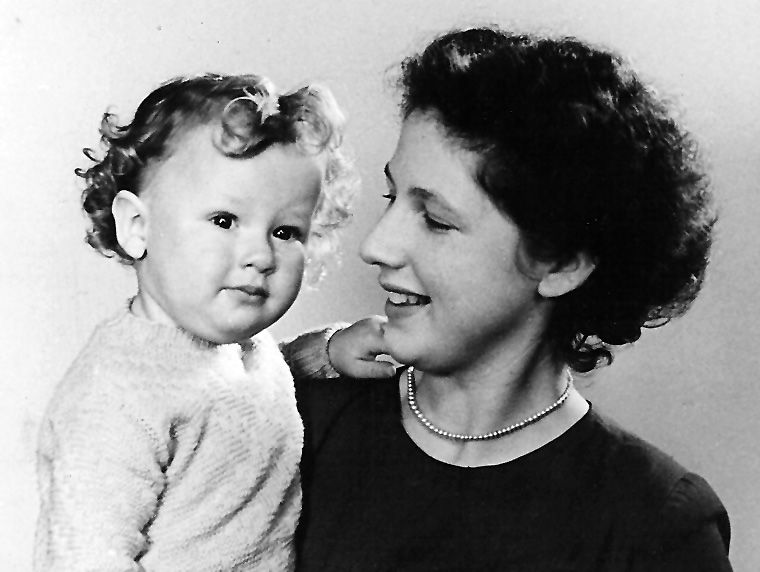
The first picture of a baby is usually in the mother’s arms soon after delivery, and becomes pasted into an album for posterity.  My mother missed out on that snapshot since I was born in austere post-war London when a box Brownie camera was a luxury my parents couldn’t afford. Roger and MumBut nowadays the picture is taken earlier and with a much more expensive camera.  My granddaughter, Pippa, was snapped by an ultrasound scanner when she was barely past the fishy stage in her mother’s womb. The next picture taken a few weeks later showed her looking like a real child, and the obstetrician could confirm everything was fine, including beating heart and nuchal transparency. Pictures reassure us all is well, even if we can’t put absolute trust in them.Pippa 3 month fetus

The first picture can be taken even earlier nowadays – in fact, as early as can be. For most of her thirty years as an embryology lab director, Lucinda gave prospective parents of IVF children a picture of their embryos which she had taken immediately before medical staff transferred them to their Mom’s body. These were embryos that had been fertilized in a Petri dish and grown to a ball of about 8 cells in three days, or had formed a blastocyst with about a hundred cells after a slightly longer incubation. Giving these photos to patients is now a common courtesy in fertility clinics, and more and more couples are having this extraordinary preview. Last year there were over 60,000 babies born after IVF procedures in the USA alone, or 1% of all births.

Human 8-cell embryo

Human 8-cell embryo

For such couples (and single mothers undergoing the same treatment) pictures of their embryos probably find a temporary place of honor on a kitchen bulletin-board until the next picture at the six week ultrasound scan – or taken down if the pregnancy test proves negative. But for embryologists and physicians, pictures of embryos are records of the best-looking in the bunch which they hope stand the best chance of getting Mom pregnant.  Generally one or two are chosen (sometimes three) for transfer from the half-a-dozen eggs (more or less) that were fertilized, but these pictures say so much less about the embryos’ prospects than my first picture or Pippa’s, and even ours hardly say anything about things that most matter to us – future health, vigor, brains, and beauty.

Upwards of 50% of all human embryos conceived in the IVF lab (and probably the same in the body) have abnormal sets of chromosomes, and therefore no chance of making a healthy child. It is possible to genetically screen embryos so that only the healthy ones are placed in the uterus, but although this can be helpful it is far from foolproof. Some embryos are mixtures of normal and abnormal cells, meaning that a test produces misleading results if only one cell is removed, which is all that most embryologists dare take. And then there is the unanswered question of whether certain kinds of abnormalities can correct themselves spontaneously, implying that embryos could be discarded unnecessarily.

The upshot of this uncertainty is that deciding which one to transfer is still mainly based on how they look at the time when the photo is taken. It’s a beauty contest which Machiavelli would have derided because “men in general judge more from appearances than from reality.” Unfortunately, “reality” is much too deep to plumb, and so, despite the best efforts, the embryos with the best chances of success are not always chosen.

A single snapshot at the end of a growth process that had been going on for days mostly unseen inside the lab incubator is not much to go on. We wondered if a picture is worth a thousand words, perhaps a thousand pictures would better convey the whole story.

Back in the 1990s Lucinda had already started making movies of embryos in Petri dishes, but had to build her own equipment and record them on magnetic tapes. When I joined the project some years later, digital time-lapse recorders, more advanced microscopes, and miniature incubators were available for the job. We could take a snapshot of individual embryos every few minutes, which over five days added up to over two thousand frames. Imagine how eager we were to compile them for a motion picture of the first days of human embryo development! But we didn’t anticipate surprises, accustomed as we were only to static images, but the embryos educated us.

On the first day nothing seemed to be happening, although appearances are deceptive because there was a lot of activity at the sub-microscopic level. But the next day the fertilized eggs made an almighty heave and in a strange contortion never to be repeated divided into two equal halves within their shells. They tolerate only so much fragmentation of cells at this stage, which you can see in the movie. The next division to make four cells started later in the day, and more divisions created a ball of tiny cells without any net increase in overall size. Clinics are now using customized equipment to monitor the rate of embryo development to help to choose which to transfer.

On the fifth day, healthy embryos became blastocysts, hollow balls of cells with a tiny knot at one side that make up the embryo proper. The movies revealed that blastocysts undergo cycles of swelling and collapse rather like a beating heart, although far more slowly and not from muscles contracting because no such cells exist yet. Just as a heart sound or pulse is a sign of life, the blastocyst’s beat is a sign, and probably a better token of vitality than a static picture ever gave.

We had another surprise after pressing the PAUSE button at a random frame if the embryo looked sick, its cells more opaque and less plump. Sometimes it really was unhealthy and had reached the end of the road to development, but in other cases when we pressed RESUME the embryo would shrug off its frumpy appearance to continue growing, often even turning out to be a beauty. So Plato was right for embryos too – beauty really is in the eye of the beholder. A sad-looking embryo might have been discarded or, at the very least, frozen in reserve if its fate had hung on only one picture. Besides, we already knew that, like judges scrutinizing models on a catwalk, embryologists don’t always agree on their scores for embryos. They can tell you stories about patients who produced only a very few scrawny-looking embryos which were transferred to wombs “just in case”, only to find that at least one was successful and made a bonnie baby.

What about the rest, the ones that never survived long enough to be photographed? We seldom mourn things that pass beyond the focus of our eye or camera lens, nor give a moment’s thought to the far, far greater slaughter going on day-in and day-out in the wombs of the world where most embryos never thrive. Embryos may have started out looking hopeful after fertilization and even grow some, only to perish in the dish unnamed and unknown in a Greek tragedy of their own.

Sometimes I am moved to wonder about wasteful nature. I wonder why I can watch in deep sympathy a bee writhing after it has strayed into an insecticide spray or an earthworm wriggling its last as it dries out on the pavement, while we never spare a thought for the anonymous multitudes ending their lives prematurely by being trampled physically or chemically.

I suppose it is the connection with individuals, especially at tender ages, that makes the difference. No matter how alien to the subject we feel there is a biological link and by witnessing the life and death struggle of another creature we are jolted into thinking about our own. Patrick Steptoe (1913-88), who was Bob Edwards’ clinical partner in pioneering IVF, pondered the same thoughts as I do in idle moments. I remember him playing at a conference his musical elegy, For a Dying Embryo. Steptoe_PCS Before striking a key he told us he was sad for the couple who would never have that proud picture of their offspring, but he also had some sort of feeling for the embryo in his care, wondering what it might have become and achieved. Thank goodness Pippa and have pictures so we can muse in the future how we got here.

Next Post: Stem Cell Stuff

Posted in Biomedical | Tagged , , , , , , , | 2 Comments

Bertie’s Latest Poem

The first time we met Bertie she was sitting behind bottles of apple butter and pickled vegetables laid out on a wooden table in the green outside Sharp’s Store in West Virginia. The bottles were lined up in serried ranks, just as I imagine soldiers in gray uniforms had probably stood there when Robert E. Lee was served tea by the Sharp family.

Sharp's Store, Rte 219, Slaty Fork WV

Sharp’s Store, Rte 219, Slaty Fork WV

“I’ll have one of those,” I said, pointing at a bottle reflecting the golden afternoon of early fall.”

“Y’all from otha parts?”

“Not at all.” I said, before realizing my reply must’ve sounded really stupid with a BBC accent. “We have a place down Dry Branch where we love spending time.”

She noticed Lucinda was flicking through pages of a little book from a pile carefully laid beside the bottles. It was titled, Poems by Bertie Jane Cutlip, on the lemon yellow cover.

“They’s ma poems.”

When Lucinda paused at a page, I craned to read over her shoulder.

“I’d like to buy one of your booklets too,” I said. While opening my wallet she inscribed the title page: Thanks, your friend Bertie Jane.

After I read the poems at home I squeezed the thin booklet on a shelf where it was lost from sight between tomes of my favorite poets – Tennyson, Eliot, Frost, among others. I had almost forgotten our casual encounter with the country poet on the Seneca Trail until last week when I returned to the store.

A gray-bearded man in leathers whose Harley was parked outside was checking something in a display on the counter. After he had finished I drifted over to see what had caught his attention. It was a collection of Bertie’s work. There was the original volume in the same yellow cover, and beside it were four more volumes containing over seventy new poems in all. I opened the original book first, remembering how it had triggered the memory of a book I had once made for a school project, stapled inside a paper cover and complete with typing errors. There was an imprint on the title page of her book, © Bertie Jane Cutlip, which she was probably advised to add as the minimum flag to protect her rights.

Five poetry booksThe covers of her new books were in different colors and inside there was some artwork and grainy photographs. They were more polished productions than the first volume, although still looked home-made. I opened a random page from Book 4 to read a poem called, Sago Mines. The sixth verse goes:

There has been an explosion

At this mine as the miners were going in

Some of them got back out

But some were trapped within.

One of Bertie’s sons was working in the mine that day, but not on that fateful shift. Something about her art tugged at me, so I took copies of all four new volumes to the counter where Tom the store owner, a friend of ours, was waiting.

“Last time I heard Bertie reciting her poems a big, grizzly-looking mountain man was reduced to tears,” Tom informed me as we closed the sale. It didn’t sound from the description that he was an aficionado, but the image of the man was more touching than amusing.  After hearing that her poems can move mountains I asked Tom how Bertie was doing, but he hadn’t seen her since she had been in the hospital in Charleston. He hoped for the best as she was a sweet lady whom he said should be nominated as poet laureate for the state.

After that endorsement of her poems, or perhaps it was after reading the new ones, I felt a strange impulse to call Bertie. I didn’t have to wait long for a reply. Yes, she was feeling better, thank you, and recovering slowly after surgery. No, she wouldn’t mind signing the other books if I visited her the next day.

Bertie lives along a quiet country road which is barely wide enough for vehicles to pass (nearly all trucks). It had recently received its first coating of asphalt over the gravel, which I heard was intended to make it safer but had in fact raised the average speed by 30 mph! The road wound round the low mountains following a bubbling creek lined by low trees and long grass where the sunlight broke through the canopy. Anyone who knows Appalachia can imagine it.

Bertie homeAs I pulled up on the grass verge beside her mailbox I saw an arm waving in a window, and returned the greeting. I admit I was surprised to find her living in a mobile home, but it was a foolish thought because so many folk in those parts do and many are comfortable. Yet I felt sad that in old age, and now infirm, she was confined in that remote spot, and often cut off by heavy snowfalls in winter. But on that warm summer day it was a pleasant, even inspiring, arrival, with a nicely clipped lawn and orchard trees fringing the creek – perhaps the very ones that yielded fruit for the apple butter.

Bertie didn’t recognize me as she swung open the screen door, nor should she after a brief Bertie closeupencounter long ago. She nevertheless beckoned me inside without hesitation like a friendly neighbor, leading me past bottles of fruit and beans readied for sale to the sofa beside a window.

When she disappeared for a minute, I had an opportunity to look round at the framed pictures hanging on her walls, wondering how many of the subjects had figured in her poems. Was that her mother who now rests in the family cemetery at Silver Creek? Were those her children, two who had already passed away, and Chad the foster boy who was killed in a road accident? Surely there was the son who worked in the mine? And perhaps that was her Sunday school, and over there the old abandoned home where she grew up?  If tragedy and loss lubricate a poet’s pen, she had plenty of ink. And the heartbreaking history of Appalachia at large provides so much more to write about – from early entanglements with Indians to the Civil War which split West Virginia to the carpet-baggers arriving afterwards to mining and logging disasters, and now the despoliation of beautiful landscapes by blowing up mountaintops for coal.

Bertie had been in her tiny kitchen and when she reappeared she offered to prepare something for me to eat. I begged her not to go to any trouble because I had only come for her signature and to check how she was doing. It is so much more rare and precious nowadays for strangers to be received with such natural hospitality, and without any trace of suspicion.

I began to feel guilty because she was still recuperating, but she put me at ease by saying that I had come on an important day. It was the one hundred and fiftieth anniversary of the founding of West Virginia, her beloved state.

“Did you read ma Ode to West Virginia?” she asked.

I knew it was one of the poems in the yellow book, composed in the 1970s, so I nodded. Without more ado she took a deep breath, lifted her head, and began to recite the poem, giving her whole heart to it, like the hermit thrush that sings outside our home. Afterwards she told me she knew all her poems by heart, nearly a hundred of them, and had recited most of them to other patients in Charleston. On the day she had packed her bag to leave the hospital four doctors lined up in the corridor refusing to let her go until she had recited “just one more.”

I then remembered Tom’s remark about making her a candidate for poet laureate and wondered if she really was qualified.  If creativity and productivity were touchstones, then, yes, she was worthy. And if admirers were needed, then, sure, she already had plenty. But if the laureate must write in a fashionable or erudite style that required a second or even a third reading to “get a poem,” then she would never be given a place on the short list of candidates. Anyway I mused, I am rather glad she probably doesn’t even care to know that she composes her work in heroic couplets of rhymed lines of iambic pentamer, or that she often writes in the common ballad meter. She expresses the pure and unaffected feelings of a country woman for things she cares deeply about – nature, joy, grief – her art tumbling out spontaneously in old-fashioned rhyme. She’d get my vote every time, for she has the poet’s heart.

She casually mentioned that she must go back to the hospital again soon. I tried to make light of it by saying that her doctors needed her as much as she needed them, but perhaps she was hiding a concern because she had lost a lot of weight and her old energy was gone. When I stood up to leave, she held up a hand to stop me while the other reached for a sheet of paper that had been carefully placed in advance close-by.

“I’ve got something for you,” she said, passing it to me. I sensed it was important so I read it aloud to make sure I understood her unfamiliar hand-writing. It was a poem titled, A True Story.

“I like this story about the raccoon very much,” I said, handing it back.

“It’s my last poem”, she said, refusing to take it. “I want you to put in book number six.”

“Not your last – you mean you’re latest poem? I can’t possibly take something so precious.” But she was quite insistent. I don’t know why someone who is almost a stranger to her should have been given this commission, but the poem now rests in a more honored place than the original book on my poetry shelf.

[Bertie approved this post. The following is my favorite poem]

Posted in Memoir | Tagged , , | 7 Comments

Seventeen Year Itch

Back in 1996, Bill Clinton was still in his first term of office, Charles and Diana agreed to divorce, the Unabomber was apprehended, and Ella Fitzgerald died. That year I hadn’t even dreamed of moving permanently to North America: I was living in Yorkshire where mad cow disease was seizing the headlines in England. While so much history has flowed through newspaper presses since then, Brood II cicadas were all the while secretly sucking at tree roots waiting for the calendar to flip over to 2013.

I encountered the brood a couple of weeks ago at a rest area on the I-64 west of Richmond.  The first thing travelers noticed after stepping out of their cars was a chirping racket coming from every direction. I had heard the sound only once before when a 13-year brood of cicadas was emerging near home in 2011. This year it is the turn of the 17-year ensemble to sing.cicada on grass

For a few weeks every 17 years local residents have sleepless nights. The noise can be as loud as a passing truck, and at 90 decibels reaches a level at which the Occupational and Safety Administration warns we should not be exposed to for more than 8 hours a day to avoid hearing damage. Not being respecters of regulations, male cicadas chirp round the clock.

They are among the great wonders of the insect world, but not only because they have one of the longest life cycles. The question that intrigues me more is how they manage to coordinate mass emergence.  When ground temperatures rise above 64 °F (18 °C) in the Year of the Brood, the fossorial cicada nymphs start to burrow upwards, breaking the surface first at the southern edge of their range (North Carolina) and progressively towards northern limits (Connecticut).  Soon there are incalculable billions above ground, more than a million per acre, but during intervening years you are unlikely to see any at all.  So precise is their timing that local residents can plan when to be on vacation in 2030 during the next big pulse.

They look scary and are the biggest of their kind. They are an inch-and-a-half long with bulging red eyes, orange wing veins and leg stripes, and through their transparent wings you can see a black cigar-shaped body.  They look like bugs in zoot suits and were given the marvelous scientific name, Magicicada septendecim.

I was a member of a naturalist group heading for a wildlife center in the Blue Ridge, but the cicadas in the car park – not you would think the most auspicious place to watch wildlife – were the most memorable sights of the day. They were thought to be a bad omen by superstitious early colonists, who assumed (wrongly) that they were the same as locusts in the Bible which warned in the Book of Revelation: “Then from the smoke came locusts on the earth …” I guess that every seventeen (or thirteen years) there were particularly fiery sermons from the pulpit about the seven last plagues of Armageddon.

For all their fearsome appearance, they are harmless insects. They don’t bite or sting, nor do they eat vegetation as true locusts do. They can cause minor tree damage from “flagging” (browning) during nest-building, but are generally rather beneficial. Soon after mating and egg-laying the adults die, providing food for critters and fertilizing the soil. The only remaining cicadas are immature “instar larvae” hatched from eggs. These nymphs fall from the tree canopy to the ground where those that avoid predation burrow underground to find juicy roots to suck on … and on … and on until the calendar turns.

For the most part, the distribution of 17-year broods and 13-year broods don’t overlap, although they evolved from a common stock a few million years ago.  Today there are 15 broods in North America, twelve with 17-year cycles and three with 13-year, and you will not find them anywhere else.  Of the 3,000 species of cicada worldwide, only seven have periodical behavior.

Burrows and shells from which cicadas emerged in the car park

Burrows and shells from which cicadas emerged in the car park

We watched hordes of them lumbering up tree trunks and walls; we saw many flying unsteadily like old flying boats, often crashing into branches or to the ground where robins were waiting to pounce. For a small bird, a cicada is hamburger-sized (and probably just as nutritious), so the eaters were soon sated. Everywhere across the hard-trodden ground there were holes, about ten to the square yard and a little larger than earthworms make. These were the burrows from which cicadas had recently emerged, and scattered close by were the transparent brown shells (exuvia) which they had worn for so many years underground. They gave us a spectacle I may never see or hear again.

The greatest enigmas are how they know the time, and why coordinate their emergence instead of being independent like most insects. We know of genes that regulate daily cycles in animals, but I can’t understand how molecules make a 17-year timer. And if cicada nymphs were synchronizing eruption by communicating with each other underground, it stumps my imagination.  Perhaps it serves to overwhelm the appetites of predators so that at least some survive to breed, although that theory is controversial. A similar explanation has been offered for mast seeding of long-lived plants. Last year was a mast year for oaks, with acorns lying so thick in our yard that every step sounded like walking on cornflakes.  But mast years are unpredictable – they can be consecutive or after long gaps – whereas cicada years can be written into almanacs for years, even centuries, ahead.cicada on blue

There are few pat answers in nature and the life sciences. That was frustrating when I was a student preparing for exams, but now I think the mysteries are far more wonderful than the facts.

Next Post: Baby’s first picture

Posted in Animalia | Tagged , , , , , , , , , | 7 Comments

The Good, the Bad, and the Cannibals

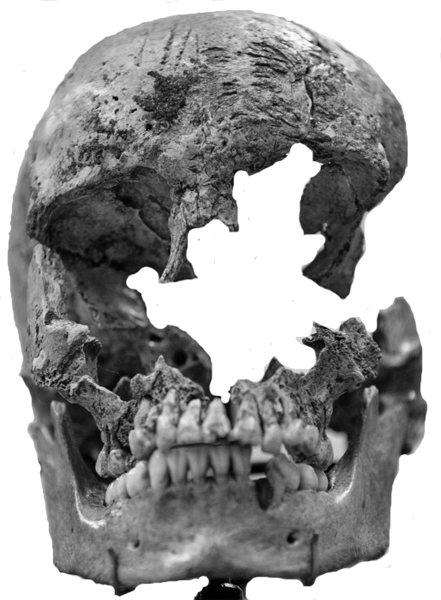
The cannibal hungrily carved muscle from the girl’s body; then he broke “Jane’s” skull open to scoop out brain matter. But it was neither in New Guinea nor in the Amazon jungle that her corpse was plundered; it happened in old Jamestowne, Virginia, just two miles from home.

"Jane's" skull

“Jane’s” skull

Her four hundred year-old remains have been on display at the Historic Jamestowne center since their discovery was announced, rather conveniently at the start of this year’s tourist season.  After the story broke I visited the center jostling with visitors eager to see the spectacle in a glass cabinet.  Old bones seldom attract much attention, except those of famous personages, but as a victim of cannibalism “Jane” has drawn more public curiosity than had she been just another victim of murder most foul. Suddenly the forgotten teenager has become a historical celebrity, like King Richard III whose skeleton was recently exhumed in the English Midlands.

I wonder why the consumption of human remains should attract so much more attention than the dire circumstances endured by people like “Jane” during their lives? And since modern society approves of dissecting cadavers for medical education and research, I am puzzled why we are so repulsed by eating them to save life? Perhaps I am straying into the treacherous territory of becoming an apologist for cannibalism, but sometimes the practice gets an unfair rap!

When “Jane” arrived in Jamestowne in 1609 after a perilous sea voyage from England she joined a pioneer colony, then numbering only a few hundred souls. The following winter was so hard it was remembered as the “Starving Times”. With bad weather preventing ships from resupplying the colony, ignorance about indigenous food, and deteriorating relations with the Indians, the inhabitants of Jamestowne fort starved. Only a quarter survived to the following summer. It is hard for us who have never been in wont of food to imagine what it feels like to starve, or to understand how it undermines character. After the colonists had supped their last meat and vegetables, they were so desperate that they began eating boot leather and some fell ravenously on deceased neighbors, including the girl. One of them even killed and ate his pregnant wife. According to George Percy, one of the community leaders:

And now famin beginneinge to looke gastely and pale in every face that notheinge was spared to mainteyne lyffe and to doe those things wch seame incredible.

Stories about people eating people still turn up in modern times. In a true account that was made into the movie, Alive (1993), an airplane carrying a Uruguayan rugby team crashed in the Andes. When search parties failed to find the wreck, the survivors starved after exhausting the little food on board. That any survived the four month ordeal, and that two successfully hiked out of the mountains for help, was due to their overcoming a natural revulsion against eating the dead, who were their friends and team mates. The survival impulse trumps civilized taste and etiquette.

Animals have no such scruples about eating their own. There are numerous examples ranging from sexual cannibalism in spiders and mantises to stress cannibalism in mammals and even “tribal” cannibalism in chimpanzees. You may have seen pet mice or rats eating their own pups. At first sight it seems so utterly perverse, but as a reaction to disturbing their nest or other threats it makes biological sense to recycle valuable nutrients for creating a new litter when conditions are more propitious. A far stranger case is when babies eat each other before they are even born.

Female sand tiger sharks are promiscuous, with mating starting with a dominant male.

Sand tiger shark. Photo by Jeff Kubina

Sand tiger shark. Photo by Jeff Kubina

Eventually they become pregnant with embryos from a series of ovulations and different fathers. The first embryos develop ahead of the rest, one in each of the twin forks of the uterus, and when the mother’s nutrient supply becomes strained the pair eat their siblings (they grow teeth precociously). Of the two embryos surviving to birth, researchers found they are almost always fathered by a dominant male. Evidently cannibalism in utero has an evolutionary advantage in this species because it guarantees that only the fittest genes will be represented in the next generation. It is hard however to find any merit in eating human flesh except to preserve life.

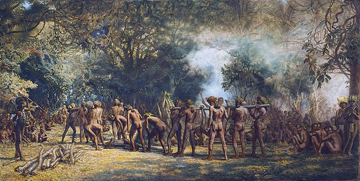
Cannibal feast, New Hebrides, by Charles Frazer (1863-1899). Private collection

Cannibal feast, New Hebrides, by Charles Frazer (1863-1899). Private collection

Everyone knows that cannibalism and head-hunting were practiced in New Guinea into modern times. It was in the Fore tribe of Papua New Guinea that Daniel Gajdusek discovered in the 1960’s the first prion disease (kuru), which was transmitted by eating the brains of deceased relatives (kuru is related to mad cow disease). When I made plans for a couple of solo visits to the Highlands of the other (Indonesian) half of New Guinea in the 1990’s, some people felt they should discourage me, otherwise I might become “fresh meat on the mountain for uncivilized brutes.”  I had long doubted tall tales I had heard were brought home by returning travelers to impress eager listeners, but I never imagined the people I would meet there would be as kind and hospitable as anywhere on Earth.

My 1997 visit coincided with a dreadful famine in the Highlands caused by the effects of El Nino. People were dying of starvation, if not driven to the extremes recorded in Jamestown. Although I was visiting ostensibly to see birds-of-paradise, a missionary friend urged me to report back about the food supply in remote villages so he could arrange to drop sacks of rice from the air where necessary. I set off into “cannibal country” more embarrassed at being a well-fed Westerner than feeling trepidation.

West PapuaThe “old” man in the picture was the first traditional Dani tribesmen I met in the bush, and one of the better-nourished.  He greeted me with “Na-yak” and the long Highland hand-shake. I guessed the parang (machete) carried in the other hand was used for tending his garden of sweet potatoes. We shared my tin of sardines and some candy before heading over a mountain pass, for which I sometimes needed his helping hand in the thin equatorial air. As we climbed, the string tied around his waist jangled a suspended horim (penis sheath) and waggled a large leaf covering his rear cleavage. Among other traditional dressers I soon felt the old man out, especially when a lady in a grass skirt fell into fits of laughter when she saw me. I was the strange object to stare at.

Nights were spent in uncomfortable shelters and the most memorable one was in a communal men’s hut after struggling on a journey for which I was naïve and poorly-equipped. Despite being just skin and bone they shared a cook-up of sweet potato greens (the few tubers were inedible from blight), and I wished I had brought more provisions. We bedded down on the packed earth around a flickering fire, sleepless eyes flashing inquisitively at each other. My eyes watered from smoke that failed to rise through the roof hole, or perhaps it was the emotion of a grateful traveler. Joy springs from wonder, and is the beginning of love.

So many years later, I still think about those people, even say a little prayer for them. I never found out when that village had its last cannibal feast, and it seemed crass to inquire when I got back to the missionary base. If anyone asks me where is cannibal country today I would not show them my travel log, I’d gaze out the window towards Jamestown Road and say, “You’re living in it.”

Next Post: Seventeen year anniversary

Posted in Memoir | Tagged , , , , | 7 Comments