A Hunter’s Heart

Of all the things I remember about being in Boy Scouts, the stories told by Akela, our scout leader, about how to survive in the wilderness have stayed with me over the years. Suburban London children didn’t need to know which wildflowers are good to eat, or how to hunt and dress a deer, or escape from a prowling tiger, but the lessons were no less fascinating for being irrelevant. And on nights when foul weather kept us inside the troop hut, he stirred our imagination by reading extracts from The Jungle Book, which we then play-acted. But those stories are only shadows compared to memories of real outdoor activities.

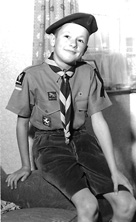
We made shelters from tree branches overlaid with ferns in which we sometimes camped overnight, usually sleepless and scratching at itches.  We cooked “twists” of flour dough on green twigs over open fires. We learned how to track “dangerous” animals by following pugmarks left by the rector’s corgi after its morning walk along muddy paths. And we had “wide games” in which a team of boys was sent into the woods to hide after leaving trails for others to track them down. That was an activity I excelled in. I often succeeded in jumping on an unsuspecting boy crouched under a bush after stealthily approaching him. I won my Stalkers badge before my teen years, though it’s not something I can proudly wear on my sleeve nowadays!

Boy Scout Stalker badge (bottom right)

Boy Scout Stalker badge (bottom right)

There was (and still is) a Green Belt of countryside around London. The boundary was a mere twenty minute walk from home, so I had plenty of opportunities to practice stalking in the “wilds” of Kent. I wandered around woods and fields in a khaki shirt and short pants with binoculars dangling around my neck. I hoped for a close-up view of some unsuspecting target—perhaps a bird on its nest or a badger blinking at the setting sun after emerging from underground .

One afternoon in late summer I was wading through a grassy field up to my waist, the plumes of seed-heads gently rocking in the breeze around me. It seemed impossible that anything could disturb the peace of that moment. But then I heard a low moaning noise that made me pause to listen intently.  When I lifted my binoculars I was none the wiser, although a patch of grass had been beaten down some twenty yards ahead.

I guessed it was a deer fawn hiding in the grass calling for its mother. Not wishing to disturb it, I got down on my belly to crawl forward, my arms parting grass stalks to make a path. After creeping for several minutes, I was close to my target and could even hear dry stems crackling, but I still couldn’t see the striped coat of a fawn.

Suddenly, a man’s head and shoulders exploded above the grass and he gazed in my direction. I jumped to my feet immediately because it was no good pretending that I hadn’t been spotted. I was waiting to hear him roar something like—“What the hell are you doing, boy?”—or riper language, but he ducked down, mumbling, “I saw you.”

Taking a couple of steps forward, I saw him sprawled on the ground, his shirt askew, and with four arms, not two. A woman’s face briefly appeared from under his chest, then she quickly hid again.

I jabbered, “Got the time, sir?” It wasn’t such an odd request in different circumstances. I often stopped grown-ups before my thirteenth birthday when I was given my first wrist watch.  By the time the man had crooked his arm to tell the time I was already turning to scarper back home over the flattened grass. I didn’t understand then why I felt embarrassed intruding on them, nor did I know until much later the expression, in flagrante delicto.

That is the land of lost content,   I see it shining plain, The happy highways where I went  And cannot come again. A.E. Housman

That is the land of lost content,
I see it shining plain,
The happy highways where I went
And cannot come again. A.E. Housman

I already knew it was much harder to stalk wildlife than humans.  The challenge became acute when I bought a camera for nature photography. I could only afford one with a fixed focal length of 50 mm, and didn’t graduate to a SLR and telephoto lens until I became a working adult. Consequently, my early attempts to capture animals or birds on camera were mere landscape compositions, and a magnifying glass was needed to spot the intended subject which was supposed to grace a prizewinning picture. But my frustration with the camera led to discovering how to get closer to my targets. Instead of stalking wildlife, I sauntered forth in their general direction pretending to be oblivious of them and, most importantly, avoiding gazing in their direction.

If I wandered past a squirrel or an owl sitting on a branch they often ignored me, giving me a chance to discreetly squint from the side of my near eye to get a closer view. They then seemed convinced that I was not a hunter—or at worst a dimwitted one.  Alas, if I turned to raise my camera for a snap they were off immediately, and all I captured on film was a disappearing blur of fur or feathers.

Eighty years ago, the New York surgeon-naturalist, Robert Morris, observed in his autobiography how animals can sense our intentions: “… wild animals in the woods instinctively know whether one who goes among them is carrying a gun heart or a camera heart. In the days when I eagerly hunted for bear, moose, caribou, or deer they were seldom found within easy rifle range. They often seemed to have just departed from a locality after leaving abundant signs for my aggravation. Now with a camera instead of a rifle I can get right among these animals at short range. It seems almost uncanny at times.

“When a hunter goes through woods or fields hundreds of eyes are turned on him without his knowledge. Birds, mice, and squirrels, to say nothing of larger animals, are looking right at him all day long from their points of safe vantage, but he does not know it. Something of his hunting attitude is doubtless passed along the line, a sort of woods’ telegraph, ‘Look out for a killer coming!’ A kind of thought-transference appears to go along the line in exactly the same way when one carries into the woods a sympathetic and kindly interest in all wildlife.”

It is my hunch that animals read intentions in our eyes. A head rotating or eyes roving in their direction are alarm signals. I wonder if dark glasses could fool them, and will try the experiment one day.

Besides hunters and animal predators, subordinates and potential prey must avoid eye contact sometimes, like young wolves who avoid the gaze of an alpha male or female in their pack. I remember a path through the grounds of another school in my district through which my friend and I liked to take a short-cut to home. Few dared because boys at that school had a reputation for persecuting those who trespassed on their territory. Once when we marched boldly through the premises we were taken hostage and tied up for several hours, but after learning our lesson we were allowed to pass unhindered provided we walked submissively with our heads bowed.  I had tried valor and found humiliation was smarter.

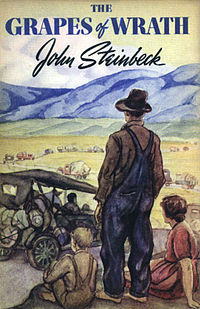
The Jungle Book#2There are many old stories about the power of staring. In The Jungle Book, Mowgli found that if he looked hard at any wolf, it could not meet his eyes and looked away. He thought this was funny and did not understand that he was different from the wolves.

“The wolves are my brothers,” he said. “Why will they want to send me away?”

“Look at me,” said Bagheera, and Mowgli looked at him hard between the eyes. The big black cat turned his head away quickly. “Not even I can look in your eyes. That is why they want to kill you. You are clever. You are a man.”

Rudyard Kipling probably took the story from a Victorian poem in which nine white wolves coming ‘over the wold’ were defeated by a wandering man who turned to stare them in the eye. Mowgli hoped to subjugate dangerous animals, including the tiger Shere Khan, by simply glaring at them. But if you try this on a tiger or a grey wolf next time you visit the zoo, I guarantee they won’t avert your gaze, except in boredom. And next time you encounter a Rottweiler or German shepherd while walking through an unfamiliar neighborhood don’t try it!

Next Post:  A Tree for Hugging

Posted in Animalia | Tagged , , , , , | Comments Off on A Hunter’s Heart

Nose to Proboscis

Nose to probscis#1Dogs get really close when they want to check something out. Noses twitch and nares gape when air is being drawn from an object of curiosity across their olfactory epithelium, which can sense far more odors than we can ever imagine. We depend more on eyes than noses to perceive things, and rarely get so close, although a friend who was registered blind held papers so near his face that he could smell the ink.

If our golden retriever could speak she would probably scold me for pretending to know about wildlife from observing it only at a distance. “So you think you are a naturalist now?” she would growl. If she could, Lilah would tell me what butterflies smell like, why they like some flowers instead of others, and what they look like at very close quarters. So the other day I crept up to a flight of butterflies in our garden to see if I was missing something.

Zebra swallowtail

Zebra swallowtail

This has been a bumper year for swallowtails in Virginia (monarchs are scarce). Most sunny days, there are more than a dozen from four species hovering over the Lantana and Zinnia before alighting on a flower. Although among the strongest flyers of their family, they allowed me to inch towards them as they rested to feed until I was so close to one of them that my eyes were straining.

Eastern tiger swallowtail

Eastern tiger swallowtail

It is a long time since I have had that close a communion with an insect; I normally never get nearer than crunching a cockroach underfoot. But the head-to-head encounter with an Eastern tiger swallowtail almost felt personal, although I wonder what it made of me through ommatidial lenses of its compound eyes. The butterfly remained unruffled for several minutes until it had drained the nectaries of a flower and moved to the next; as calm as when I sidle up to the bar beside a taphouse customer who has an absorbing interest in his beer and doesn’t want to be disturbed.

The butterfly’s proboscis lashed back and forth like a whip, reaching its targets deep inside flower bells with amazing precision. Every sweep reached a new floret from which it could drink. Compared to this delicate tool-user, an expert fly-fisherman looks like a clumsy fool casting for trout in a pool.

Spicebush swallowtail

Spicebush swallowtail

Under the microscope, you would see the proboscis is formed from two parts that are zippered together to make a tube. It is an extension of an insect’s mouth, and nothing like the noses of elephants and monkeys that are sometimes called proboscises. Since it looks like a flexible drinking straw, you might think that butterflies suck nectar into their bodies, but the effort of drawing the viscous fluid through a high resistance canal would be futile. New research shows that sucking is secondary: butterflies use capillary action like a paper towel to soak up fluid, which does not require expending any energy. Had I not stooped that day to watch the aerial plumber, I would never have wondered how it manages to feed, never run back to peruse an entomology journal, and never marveled more at the vigor and beauty of a wild creature. Wonder is an unexpected reward when you get close enough to something that spikes your curiosity. Not since I used to sketch and paint have I gazed so intently at any creature. That seems a shameful admission for a biologist, although it is all too common to become careless of things that once inspired us.

Our traveling microscope. R. Wasserlein, Berlin (c. 1880)

Our traveling microscope. R. Wasserlein, Berlin (c. 1880)

In the Nineteenth Century, many gentlemen took up nature study as an absorbing pastime. It was an era of greater leisure and fewer distractions, when explorers were bringing home weird and wonderful specimens from remote lands, and there was feverish excitement about new scientific theories. We have a small collection of scientific artifacts from that period. I imagine a Victorian gentleman packing one of our traveling microscopes in his trunk for a journey by stagecoach or train. He would have taken it to study specimens collected on his trip—parts of a flower head, lichen prized from a rock, scales on a butterfly’s wing, and so on. He wanted a closer encounter with things that nudged his curiosity. Nowadays, we can explore a much wider world through smart phones and tablets that connect us with the WWW, but although I love those gadgets they are no substitute for directly engaging the senses with the real objects of our interest.

Opening your phone in Starbucks to visit a butterfly website is unlikely to attract attention from other customers, but if you pulled out a microscope from your bag to examine a bug floating on your coffee you would turn heads. And if you were seen lying spread-eagled in a meadow watching the microfauna creeping between stalks, like a Gulliver observing Lilliputians, you might be called eccentric. But there should be no embarrassment when curiosity stirs us to draw close for a better view, only pity if we become estranged from the very things that at one time aroused our imagination, and perhaps to such a pitch that it had lifelong impact or led to a career. Like a marriage strained by work, there are many distractions that conspire against the personal engagement we once had.

A medical researcher burdened with grant applications, manuscripts, faculty meetings, and lectures may no longer have time to study under the microscope or to interview patients, but depend on a second-hand connection with his subjects provided by assistants. A landscape artist may lose the inclination to set up an easel en plein air, but paints instead from photographs. A busy surgeon has few opportunities to speak to his patients because he usually encounters them anesthetized. A teacher who is promoted to administration rarely sees kids any more. And a politician who becomes a hot-shot spends less time face-to-face with constituents.

Nose to probscis#2It is hard casting aside distractions, especially when they are so abundant, and so easy to forget the things that once impelled us. For me, it took stepping out of a career and a dog nosing a butterfly to remind me about the wonder of nature.

Next Post: A Hunter’s Heart

Posted in Animalia | Tagged , , | 5 Comments

Star-struck

Few people are star-struck these days—unless you mean a movie- or rock-star. How could they be when the nightly spectacle is veiled by light pollution?

That expression might strike you as perverse, even as a non sequitur, for isn’t “light” good and “pollution” bad?  In the Bible, people who walked in darkness were the bad guys (them), while the good were in the light (us). In the Land of Mordor, the Dark Lord sat “where the Shadows lie”, far from Bilbo sunning himself at Bag End. Sadly, real human misery is still caused by labeling people as either dark or light.

Since incandescent bulbs were first turned on well over a century ago, darkness is being progressively banished around the world. Hardly anyone wants to go back to when lives were dictated by the dark hours, and our ancestors had to pore over a candle to read, sometimes burning the house down! But lighting is not quite the black and white matter it seems, although it is an uphill struggle to explain.

Something precious that fed the human spirit for eons has been extinguished by universal lighting—a pristine night sky. Few people mourn the loss. Gazing from your window, yard, or a local park in urban North America, Europe, and Japan, you can only see a tiny fraction of the stars and planets that were visible to naked eyes in the past. Two-thirds of Americans now live in places where our own galaxy, the Milky Way, cannot be seen because of sky-glow and air pollution, and the fraction grows as more and more lights go on around the globe. Does it really matter?

Isn’t it another dimension in which we are becoming spiritually disconnected from nature? Richard Louv was thinking of life on our planet when he coined the expression, “nature deficit disorder”, in Last Child in the Woods, and I wonder if we are also impoverished by missing the experience of seeing the wild sky except through the lens of electronic media and science. The philosopher, Immanuel Kant, said, “Two things fill the mind with ever new and increasing admiration and awe … the starry heavens above me and the moral law within me.”

Stars were heavily used as metaphors by writers of the Bible and Quran, but are more familiar today as expressions in conversation and literature than as heavenly bodies in plain sight: how often do you hear star-turn, starlit, star-dust, stardom, star-crossed, Star-Trek, Star-Spangled Banner, etc? Until recently, voyagers used celestial navigation to reach their destination, but a star (read supernova/ comet/ conjunction of planets) can no longer lead the Magi to the manger if it was, say, in Brooklyn.

Detail of Nativity Window. Trinity Church, Boston. Edward Byrne-Jones

Detail of Nativity Window. Trinity Church, Boston. Edward Byrne-Jones

In the past, a night sky studded with stars and planets was familiar to everyone, and those who could interpret mystical meaning in the constellations were hoisted up to become sages. Ever since the Babylonians, people have consulted astrological charts to predict their fate, and farmers and gardeners used the lunar calendar. I read that I should plant onions under a waxing moon and they, like me, are under the sign of Libra.

The brightness of the night sky is reckoned by astronomers on the Bortle scale up to a maximum of 9. Metropolitan corridors, like Washington DC to New York, register 8 to 9, and small developed countries, including England and the Netherlands, are high on the scale even in rural areas. Our small town of Williamsburg in Virginia is 4-5, and most of our National Parks have significant light pollution from the glow of distant cities. National observatories were created in the early Twentieth Century for optical astronomy in dark regions of California, but have had to be moved to mountaintops in Hawaii and Chile.

A perfectly dark sky is hard to find anywhere in eastern North America now, but there is a dark spot rated 1 or 2 on the scale in West Virginia where we have a home in the Monongahela National Forest. The night sky there owes its continuing virginity to a low population density and the fact that most homes and highways are not ablaze with lights. The only places I remember with more dazzling starlight were in New Guinea and Africa, which is still a dark continent and something to celebrate.

If you sat on our deck in West Virginia for half-an-hour after night settles in the forest your eyes would be fully dark-adapted and able to see the faintest celestial glimmers. I recommend sitting inclined on a bank to avoid getting a stiff neck for viewing the azimuth. I’m told that at least 15,000 stars are visible in the Milky Way, plus planets, and other stars and galaxies at distances that defy comprehension. You don’t have to pay or be an astronomer to enjoy this show, although binoculars or, better still, a telescope enrich the spectacle.

Even on moonless nights, there is enough starlight to pick your way along a forest trail or across a meadow, but when clouds are too dense to be pierced by stars or a ghostly moon, it is so dark that you cannot even see your hands or feet. That is Pitch-dark.

The blackouts in European cities during bombing campaigns in World War II and the widespread power outages in north-eastern USA and Canada in 1965 and 2003 were urban lessons in what darkness means. When I lived in a West Yorkshire village the residents refused to allow the council to install street lighting. The main street was pretty dark, but still about 4 on the scale. It is likely, if somewhat exaggerated, that outside lighting helps to deter crime, but the villagers were adamant even during the years when the Yorkshire Ripper prowled the district.

Most people probably won’t object to a darker sky, and some might welcome it. Since thirty percent of outdoor lights point upwards, more directed lighting would reduce sky-glow, save money, and have other benefits. Migrating wildlife is disoriented by nightlights, and perhaps plant growth and even human health are affected. There is increasing evidence that our sleep rhythms are affected by excessive light, although most of it is admittedly from indoor lamps and glaring TV screens and computer monitors, which I am using as I write.

Not many people talk about light pollution though I am not alone because an International Dark-Sky Association exists with chapters in sixteen countries. Perhaps more widespread use of directed lighting will help to reverse sky-glow in future, and janitors will turn off lights in skyscrapers after work. But I doubt that we will ever again hear someone banging on our door like the A.R.P. wardens during the Blitz in London, “Put that light out!”

Next Post: Nose to Proboscis

Posted in Other | Tagged , , , , , | Comments Off on Star-struck

A Scythe for all Seasons

Cyrus McCormick

Cyrus McCormick

Old Cyrus thought he had killed off the scythe for good when he invented the mechanical reaper. The scythe has mowed hay for fodder and harvested grain for bread since the Roman Empire, and its diminutive cousin, the sickle, was used in the times of Cyrus the Great and the Ancient Egyptians. No one lamented its passing, least of all Cyrus whose patents made him a fortune, and the little factories that manufactured the Anglo-American type closed one by one. Until its resurrection, the scythe only provided service in Reaper stories.

In Terry Pratchett's zany Discworld, Reaper Man takes Windle Poons to his just reward

In Terry Pratchett’s zany Discworld, Reaper Man takes Windle Poons to his just reward

I bought a scythe from an old man for $20. Its blade was rusty and the snath riddled with woodworm, but a grindstone restored a keen edge. After casting it across swaths of stiltgrass, I leaned back to look at the weeds leveled in neat swatches around me, but it was heavy work and the bent snath forced me to stoop unnaturally. I doubt if a farmer who had hung up his scythe in the 19th Century could foresee a time when suburban man might take it down again, except as a museum piece.

Without mechanization, prairie farms would still be tiny, and how would we have harvested enough food for a burgeoning population? Besides, machines liberated field labor for more agreeable pursuits. But scythes are mowing again. They may never return as a tool of a trade, but scythes offer healthy exercise for sedentary suburbanites (instead of pulling levers in expensive sports clubs) at the same time as fresh air and sounds of nature (instead of being drowned out with a smoky, gas-guzzling weed-whacker). Farmers of yore who swayed while singing hymns in little white churches would be amazed to see the new piety of suburban man rolling with his scythe over devilish weeds. But I admit that any virtuous feelings I ever had of being in tune with nature and drawing energy from my silent internal combustion engines (mitochondria) vanished after a half-hour workout, leaving my limbs aching and stiltgrass insolently upright. Were pre-Industrial age farmers Herculean? I hung up my scythe to forget about it.

Never underemployed in this job

Never underemployed in this job

Then I discovered another type of scythe, one that really could sustain virtue—the Austrian scythe! It became my favorite tool. It made me an ardent enthusiast. It gave me a new vocabulary of almost obsolete terms: honing, peening, snath, tang, and chine. Every part and corner of the scythe—from nib to toe—was carefully named by folk for whom it brought home their daily bread.

It is a cool tool but Lederhosen, suspenders, and a felt Alpine hat are not mandatory garb for users. And, being so much lighter than the Anglo-American type, women can swing with it too. The blade is razor sharp, but this isn’t a dangerous tool like a sickle which like its sister, the machete, can accidentally clip a passer-by or even yourself in a weed frenzy. It was never used as a weapon, being too ungainly and designed to be swept like a broom an inch over the ground. My new scythe is a breeze to use since it was custom-made for my height and arm-length. Cut half-an-acre of hay a day? No bother, mate. Cut brush, ditches, even mow the lawn with the grass blade. Piece of cake. The rhythm of the blade swings to a mowing song.agriculture-in-ancient-Egypt5

One man went to mow

Went to mow a meadow;

One man and his dog, Spot,

Went to mow a meadow.

Two men went to mow …

The Scythesman by John Prescott Knight, 1852. Trustees of the British Museum.

The Scythesman by John Prescott Knight, 1852. Trustees of the British Museum.

A new Austrian scythe admittedly costs a tad more than $20, but you are buying something that has been hand-forged by a craftsman after a lengthy apprenticeship in a European foundry going back centuries. The cutting edge is drawn out by hammering on a peening jig, and finished by honing with a whetstone. More than an heirloom, more than a good tool, it is an object of beauty.

Austrian scythes have a straight snath

Austrian scythes have a straight snath

Modern scything is heading for cult status in parts of North America and Europe, encouraged by associations and competitions that are springing up. Don’t imagine it is the pedestrian equivalent of a quaint steam tractor chugging into a state agricultural show—a fit man can match a motor-mower or weed-whacker in leveling a grass field. Perhaps there is an Olympic sport in the making, though Old Cyrus would shake his head.


***********************

SHARPENING. These scythes should not be sharpened on a grindstone. They were hand-wrought and should be hand-sharpened. While working the scythe the blade is kept keen by regular honing with a whetstone, but eventually its edge is no longer drawn to a thin taper and needs to be hammered out (peened), as I demonstrate here.


Next Post: Star-struck

Posted in Other | Tagged , | Comments Off on A Scythe for all Seasons

Tiny Terrors

Peel back the soft green cover, and you might find menace skulking in a Virginia garden. A neighbor picked up a copperhead by its tail, which turned round to bite him (can you blame it?). Large wolf spiders enjoy nipping me while gardening (so far I have avoided black widows in our wood piles). As for brushes with poison ivy, I lather cortisone cream every week.

But it is not the bigger things that always hurt us most: sometimes we should fear the tiny ones even more (words are like that too.) Yersinia pestis slew more Europeans during the four peak years of bubonic plague than all the swords, pikes, bows and arrows of the Hundred Years War; the smallpox virus slaughtered more native Americans than the Winchester rifle; the Spanish flu killed more people than all the bombs, bullets, and gas grenades in the preceding First World War; and David Livingstone died from tropical diseases, not the mauling from a lion.

Poison ivy- "leaves of three let it be"

Poison ivy- “leaves of three let it be”

After breakthroughs with pencillin, sulfonamides, and new vaccines, there was a short period of medical hubris—it was believed that infectious diseases were in retreat and would soon be eliminated. The dream was quickly scuttled by the arrival of HIV-AIDS and drug-resistant bacilli, and now we have something else to worry about. TICKS.

They were always part-and-parcel of a tramp across a heather moor in northern Britain or through dense underbrush in the mid-Atlantic States. Back in the mid-1970s, I had heard that Rocky Mountain spotted fever was carried by ticks, but it sounded far away and nothing to worry about. Around the same time, there was news of a danger prowling backyards and woods where children play in Lyme, Connecticut. We learned that the new disease rides inside a tick as a spirochaete bacterium, Borrelia burgdorferi. (Taxonomists, please choose more memorable names, like, Lyme horribilis).

The first reports did not sound particularly alarming. The problem was rare and localized, and the symptoms mild. None of this is now true. Lyme took 20 years to reach Virginia and is spreading to all points of the compass and overseas (where it may have originated). We were told that if we removed a biting tick within 24 hours we would be fine even if was infected. If too late, then we were urged to rush to the doctor’s office for a course of tetracycline to stop the infection, whose signature is a bull’s eye rash, fever, and fatigue. Treated in time, we could forget about it—until the next bite. But if untreated, Lyme would likely progress to arthritis and painful joints.

That was the medical consensus, but untold numbers of people whose lives have been wracked with pain and wrecked by permanent tiredness never had a positive lab test result, even if they had good reason to suspect they had Lyme. Perhaps the disease agent had become disseminated to parts of the body that drugs and antibodies hardly reach?  This is where the controversy called “Chronic Lyme” started. When tests are negative (even admittedly poor tests), doctors presume an ailment probably has another cause and are understandably reluctant to start a long course of antibiotic treatment. Those doctors moved by their patients to go against standard medical protocols by providing aggressive i.v. antibiotics invoked the wrath of their own profession. There are many touching stories online of students who had to withdraw from school and adults who quitted work because of a suspected tick-borne illness, and so many more less well-known cases, like a young father we know of who died from complications of Lyme. It is natural to come down on the patients’ side of the argument, especially when they frustrated at being sidelined by mainline medicine and suspected of being malingerers or having a problem “all in their head.” To us, it seemed like a rerun of the doubts that used to surround chronic fatigue syndrome, of which our family has first-hand experience. For her remarkable book, Cure Unknown, the science writer, Pamela Weintraub, dug exhaustively into the science and sociology of Lyme, drawing too from the tragedy it brought to her own family.

Perhaps the storm is beginning to pass since the CDC announced last week that Lyme is an emerging public health crisis that is ten-times more prevalent than assumed because it has been under-reported and under-diagnosed. Every year in the United States alone there are 300,000 new cases, and numbers are probably going to rise.

The deer tick is mainly held responsible for transmitting Lyme, although it is not the only tick that feeds on deer, and deer are not the only animals that infect ticks. Even more complicated, ticks often carry more than one type of pathogenic bacterium, and the deer tick may not even be the worst of the bunch. Not much is plain and simple in parasitology.

Drag for ticks

Drag for ticks

One of my fellow master naturalists had hundreds of ticks on him after hiking in local woods in advance of a school party (the party was canceled). My record is a mere 16 ticks after mowing the lawn. I save them in alcohol until the end of the year when I identify the species to alert me to hazards. A more scientific way of surveying ticks is to drag a cotton sheet across a field or woodland floor, to which they cling hoping it leads to a meal.  Half of the ticks I found in our yard last year were lone star ticks, 10 % were “deer” ticks, 2% were dog ticks, and the rest were nymphs (too small to identify species).

Lone star tick James Gathany: CDC

Lone star tick
James Gathany: CDC

Lone stars are not named for Texas (though they are found there as well) but because the females (the big-eaters) have a single white spot on their shield-like back. They probably don’t transmit Lyme or Rocky Mountain spotted fever, but are vectors of a small menagerie of bacteria, some of which are definitely pathogenic. Ehrlichia chaffeensis causes human monocytic ehrlichiosis in which the first symptoms resemble Lyme (generally without the bull’s eye) with pain, a blunted immune response, and even toxic shock syndrome. Half the cases can be serious enough to require hospital treatment, and according to the CDC the mortality rate peaked at 3.7% in 2003 (close to Spanish flu).

E. chaffeensis inside a white blood cell. CDC

E. chaffeensis inside a white blood cell. CDC

Now the good news is that not every tick is infected, but you never know which ones can be safely ignored. They can however be tested for genetic tell-tales of the bacteria they harbor. At the College of William & Mary, Matthias Leu is leading a study of the distribution of ticks in the Virginia Peninsula and is testing lone stars for E. chaffeensis using an extremely sensitive and specific DNA test (PCR). So far, he has found that almost 10% of the samples were positive for this bacterium, and most of them were found in public parks and recreation areas. Why there?

Well-fed lone star tick James Gathany: CDC

Well-fed lone star tick
James Gathany: CDC

He found that in places where ticks are abundant so are the deer, but birds are scarce (they predate ticks). The Virginia Peninsula was originally a blanket of almost unbroken forest, but development is breaking it into small wooded fragments. As more woodland edges are formed, vegetation grows up that deer love. Throughout the East, the white-tailed deer population density has exploded; some biologists estimate there are 10- or even 100-times as many as in pre-colonial times. Not only have developers created ideal habitats for deer, but the major predators have been extirpated, hunting is limited, gardens are salad-bars for deer, and sometimes they are even fed deliberately.

white-tailed buck on the move

white-tailed buck on the move

When deer move into new areas they bring disease with them. Ticks become infected with the disease and the bacteria pass through their life cycle into other mammals, including mice, which become a disease reserve without suffering from it themselves. Setting up tree stands for hunters or bringing back wolves probably won’t make the problem go away. Chickens can help by gobbling up ticks and copperheads by swallowing rodents, but when we started tampering with nature we set in motion ecological changes that are hard or even impossible to reverse.

I wish I could end on a more optimistic note, but in the near future only constant vigilance will provide peace of mind. Those who venture out into woods and gardens during the warm months of the year should cover up with permethrin-treated clothes, but indiscriminate spraying is a bad idea because it kills our good friends, the pollinators. Each of us needs an intimate friend for daily inspections of our crooks and curves that we cannot see for ourselves. Choose someone with good sight because the tiny nymphs responsible for most cases are not much larger than the period at the end of this sentence. Antibiotics used promptly are safeguards, but people who pick up ticks most days can’t use them forever. We need a vaccine, but the only one available is for dogs. Smith Kline Beecham withdrew their human anti-Lyme vaccine years ago after lawsuits claiming it caused arthritis. We may want to knock government down in size, but we need it to step in for vaccine development where big pharma fears to tread.

Next Post: A Scythe for All Seasons


Posted in Animalia, Biomedical | Tagged , , , , , | 2 Comments