Tiny Terrors

Peel back the soft green cover, and you might find menace skulking in a Virginia garden. A neighbor picked up a copperhead by its tail, which turned round to bite him (can you blame it?). Large wolf spiders enjoy nipping me while gardening (so far I have avoided black widows in our wood piles). As for brushes with poison ivy, I lather cortisone cream every week.

But it is not the bigger things that always hurt us most: sometimes we should fear the tiny ones even more (words are like that too.) Yersinia pestis slew more Europeans during the four peak years of bubonic plague than all the swords, pikes, bows and arrows of the Hundred Years War; the smallpox virus slaughtered more native Americans than the Winchester rifle; the Spanish flu killed more people than all the bombs, bullets, and gas grenades in the preceding First World War; and David Livingstone died from tropical diseases, not the mauling from a lion.

Poison ivy- "leaves of three let it be"

Poison ivy- “leaves of three let it be”

After breakthroughs with pencillin, sulfonamides, and new vaccines, there was a short period of medical hubris—it was believed that infectious diseases were in retreat and would soon be eliminated. The dream was quickly scuttled by the arrival of HIV-AIDS and drug-resistant bacilli, and now we have something else to worry about. TICKS.

They were always part-and-parcel of a tramp across a heather moor in northern Britain or through dense underbrush in the mid-Atlantic States. Back in the mid-1970s, I had heard that Rocky Mountain spotted fever was carried by ticks, but it sounded far away and nothing to worry about. Around the same time, there was news of a danger prowling backyards and woods where children play in Lyme, Connecticut. We learned that the new disease rides inside a tick as a spirochaete bacterium, Borrelia burgdorferi. (Taxonomists, please choose more memorable names, like, Lyme horribilis).

The first reports did not sound particularly alarming. The problem was rare and localized, and the symptoms mild. None of this is now true. Lyme took 20 years to reach Virginia and is spreading to all points of the compass and overseas (where it may have originated). We were told that if we removed a biting tick within 24 hours we would be fine even if was infected. If too late, then we were urged to rush to the doctor’s office for a course of tetracycline to stop the infection, whose signature is a bull’s eye rash, fever, and fatigue. Treated in time, we could forget about it—until the next bite. But if untreated, Lyme would likely progress to arthritis and painful joints.

That was the medical consensus, but untold numbers of people whose lives have been wracked with pain and wrecked by permanent tiredness never had a positive lab test result, even if they had good reason to suspect they had Lyme. Perhaps the disease agent had become disseminated to parts of the body that drugs and antibodies hardly reach?  This is where the controversy called “Chronic Lyme” started. When tests are negative (even admittedly poor tests), doctors presume an ailment probably has another cause and are understandably reluctant to start a long course of antibiotic treatment. Those doctors moved by their patients to go against standard medical protocols by providing aggressive i.v. antibiotics invoked the wrath of their own profession. There are many touching stories online of students who had to withdraw from school and adults who quitted work because of a suspected tick-borne illness, and so many more less well-known cases, like a young father we know of who died from complications of Lyme. It is natural to come down on the patients’ side of the argument, especially when they frustrated at being sidelined by mainline medicine and suspected of being malingerers or having a problem “all in their head.” To us, it seemed like a rerun of the doubts that used to surround chronic fatigue syndrome, of which our family has first-hand experience. For her remarkable book, Cure Unknown, the science writer, Pamela Weintraub, dug exhaustively into the science and sociology of Lyme, drawing too from the tragedy it brought to her own family.

Perhaps the storm is beginning to pass since the CDC announced last week that Lyme is an emerging public health crisis that is ten-times more prevalent than assumed because it has been under-reported and under-diagnosed. Every year in the United States alone there are 300,000 new cases, and numbers are probably going to rise.

The deer tick is mainly held responsible for transmitting Lyme, although it is not the only tick that feeds on deer, and deer are not the only animals that infect ticks. Even more complicated, ticks often carry more than one type of pathogenic bacterium, and the deer tick may not even be the worst of the bunch. Not much is plain and simple in parasitology.
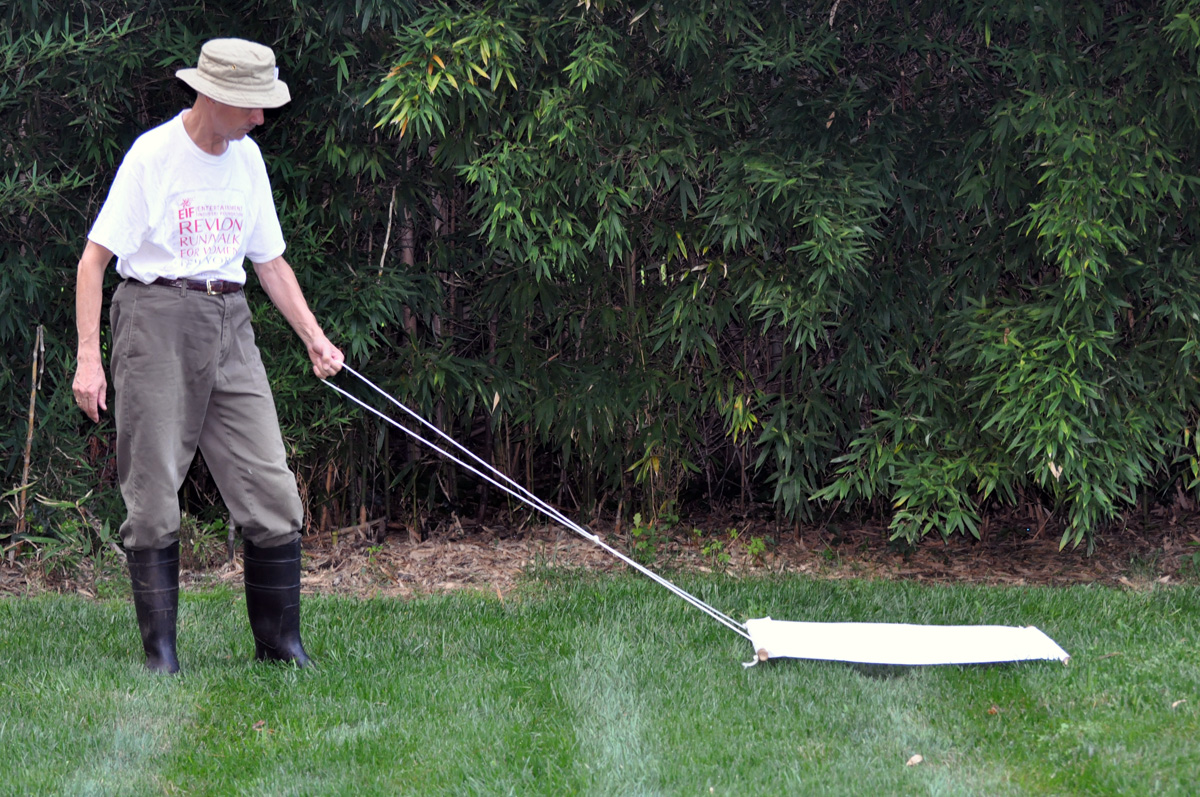
Drag for ticks

Drag for ticks

One of my fellow master naturalists had hundreds of ticks on him after hiking in local woods in advance of a school party (the party was canceled). My record is a mere 16 ticks after mowing the lawn. I save them in alcohol until the end of the year when I identify the species to alert me to hazards. A more scientific way of surveying ticks is to drag a cotton sheet across a field or woodland floor, to which they cling hoping it leads to a meal.  Half of the ticks I found in our yard last year were lone star ticks, 10 % were “deer” ticks, 2% were dog ticks, and the rest were nymphs (too small to identify species).
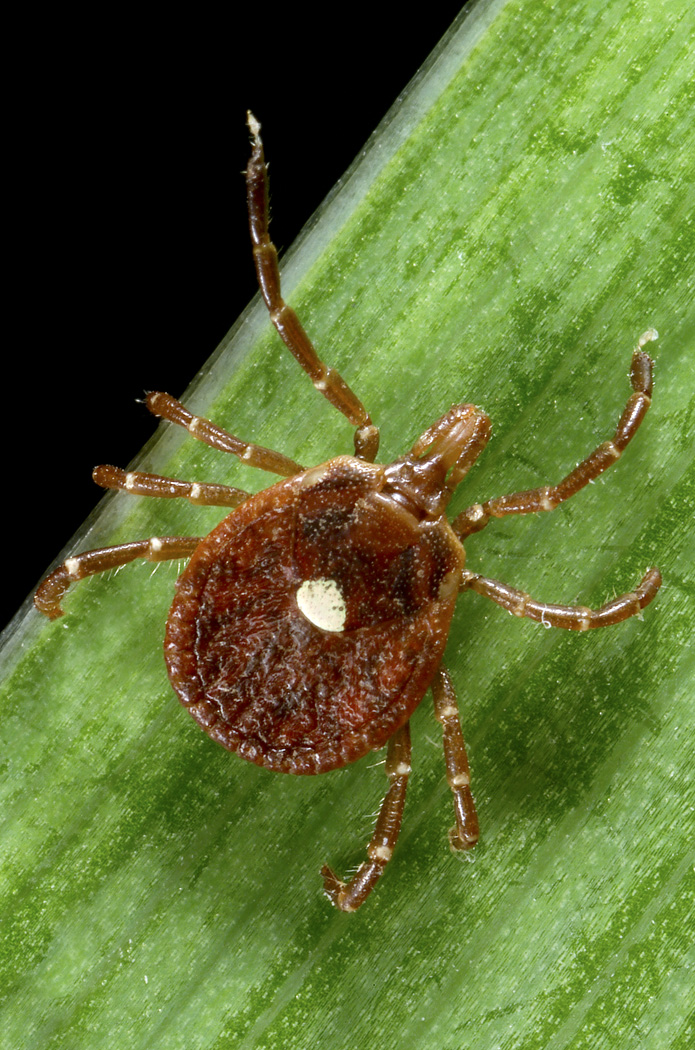
Lone star tick James Gathany: CDC

Lone star tick
James Gathany: CDC

Lone stars are not named for Texas (though they are found there as well) but because the females (the big-eaters) have a single white spot on their shield-like back. They probably don’t transmit Lyme or Rocky Mountain spotted fever, but are vectors of a small menagerie of bacteria, some of which are definitely pathogenic. Ehrlichia chaffeensis causes human monocytic ehrlichiosis in which the first symptoms resemble Lyme (generally without the bull’s eye) with pain, a blunted immune response, and even toxic shock syndrome. Half the cases can be serious enough to require hospital treatment, and according to the CDC the mortality rate peaked at 3.7% in 2003 (close to Spanish flu).
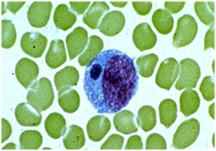
E. chaffeensis inside a white blood cell. CDC

E. chaffeensis inside a white blood cell. CDC

Now the good news is that not every tick is infected, but you never know which ones can be safely ignored. They can however be tested for genetic tell-tales of the bacteria they harbor. At the College of William & Mary, Matthias Leu is leading a study of the distribution of ticks in the Virginia Peninsula and is testing lone stars for E. chaffeensis using an extremely sensitive and specific DNA test (PCR). So far, he has found that almost 10% of the samples were positive for this bacterium, and most of them were found in public parks and recreation areas. Why there?
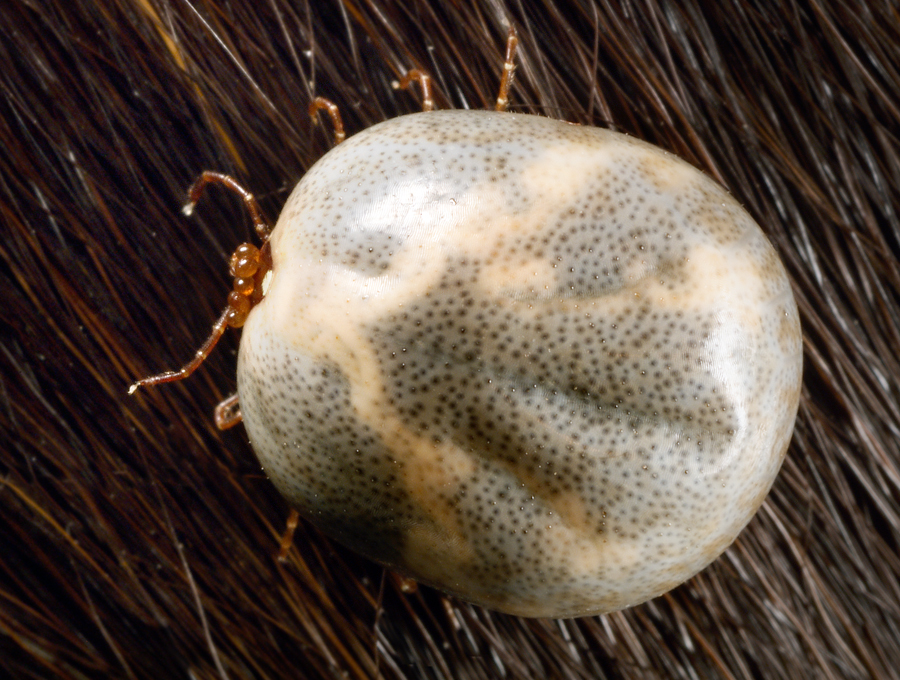
Well-fed lone star tick James Gathany: CDC

Well-fed lone star tick
James Gathany: CDC

He found that in places where ticks are abundant so are the deer, but birds are scarce (they predate ticks). The Virginia Peninsula was originally a blanket of almost unbroken forest, but development is breaking it into small wooded fragments. As more woodland edges are formed, vegetation grows up that deer love. Throughout the East, the white-tailed deer population density has exploded; some biologists estimate there are 10- or even 100-times as many as in pre-colonial times. Not only have developers created ideal habitats for deer, but the major predators have been extirpated, hunting is limited, gardens are salad-bars for deer, and sometimes they are even fed deliberately.

white-tailed buck on the move

white-tailed buck on the move

When deer move into new areas they bring disease with them. Ticks become infected with the disease and the bacteria pass through their life cycle into other mammals, including mice, which become a disease reserve without suffering from it themselves. Setting up tree stands for hunters or bringing back wolves probably won’t make the problem go away. Chickens can help by gobbling up ticks and copperheads by swallowing rodents, but when we started tampering with nature we set in motion ecological changes that are hard or even impossible to reverse.

I wish I could end on a more optimistic note, but in the near future only constant vigilance will provide peace of mind. Those who venture out into woods and gardens during the warm months of the year should cover up with permethrin-treated clothes, but indiscriminate spraying is a bad idea because it kills our good friends, the pollinators. Each of us needs an intimate friend for daily inspections of our crooks and curves that we cannot see for ourselves. Choose someone with good sight because the tiny nymphs responsible for most cases are not much larger than the period at the end of this sentence. Antibiotics used promptly are safeguards, but people who pick up ticks most days can’t use them forever. We need a vaccine, but the only one available is for dogs. Smith Kline Beecham withdrew their human anti-Lyme vaccine years ago after lawsuits claiming it caused arthritis. We may want to knock government down in size, but we need it to step in for vaccine development where big pharma fears to tread.

Next Post: A Scythe for All Seasons

 

Posted in Animalia, Biomedical | Tagged , , , , , | 2 Comments

Gold in my Garden

Colonial Williamsburg staff in 18th Century garb draw your eye and a fife and drum band may turn your ear, but never on a Saturday morning when a farmer’s market takes over Duke of Gloucester Street. The ancient street is lined with white canvas harboring wooden tables where local produce is on display—fruit, vegetables, eggs, and meat from Peninsula farms; seafood from the Chesapeake Bay; honey from county apiaries; homemade loaves and pies from local ovens. At the center of a vortex of food gathering, a group of Master Gardeners sit like sage Indian chiefs under an awning where they offer advice for people like me who grow their own.

Williamsburg Farmer's Market

Williamsburg Farmer’s Market

Those coming early with swinging baskets will stagger away to the car park under the deadweight of the best meat and vegetables. Late-comers regret their sleep-in when they find only pickings have been left by the early birds, but at least they can enjoy chin-wagging with a stranger and the antics of dogs paraded by owners. A farmer’s market is so much more than buying and selling: it feels cool to be in the throng, and a world apart from joyless tramping around a supermarket. It is a place to stroll and gaze, to pause for the violin outside the Cheese Factory; it is a venue for meeting and making friends in a genteel society. If Thomas Gainsborough could set up his easel in the street, he’d capture a 21st Century version of the gentlefolk in The Mall in St. James’s Park.

Is this the future of food shopping? Are the headquarters of Industrial Foods America Inc. quaking as shop-troops dissatisfied with the victus quo walk the Street in green wellies, baskets raised against agri-business?

Well, not really! Farmers markets and community gardens are growing, but barely 2% of food grown in America is sold locally. Nor are the patrons (“locavores”) a typical cross-section of society. And how could they be when filet mignon sells at $28 and ground bison at $10 per lb? This is not an epicurean revolution, but it is a reaction by consumers who can afford to buy what they believe is more wholesome fare.

It probably is better, depending on how you measure quality, and you have to scratch around like a free range hen to find tidbits of data you can believe in. The food industry, driven by competition and a never-ending reach for higher yields, has transformed farmland and food-processing, and hence what we eat. Food is amazingly cheap, but there is another price—chemical spraying, agricultural run-off, virulent new strains of bacteria, and the obesity epidemic. Despite these concerns, people are becoming more doubtful whether government and nutritionists are effective, or even impartial, watchdogs over our food supplies. Remember their advice to replace butter with margarine, dietary fat with carbs, raw products with nutrient-rich processed products, and their sweet recommendations to enjoy refined sugar and high-fructose corn syrup?

It is a characteristic of most experts that they rarely apologize for blunders, as Michael Pollan points out In Defense of Food, his masterly critique of the food industry. They are also coy about admitting how little we really understand about the relationship between food and health, and a friend who is an authority on vitamins even admitted that it is “kitchen science.” Since Hippocrates advised, Let food be thy medicine, you might expect doctors to be fountains of nutritional knowledge. Don’t believe it. Have you heard platitudes like, “Mr. Brown, you must reduce saturated fat and cholesterol in your diet.” I remember some of my students at the Edinburgh Medical School asking to include more lectures about nutrition in the curriculum, but the faculty continued to serve them gruel, like Oliver Twist. As a physiologist, I ought to know what is best for health, but I simply follow Grandma into the garden.

Food was so much simpler and heartier in Grandma’s day, before it was industrialized and politicized, before drive-in counters and TV dinners, before we were bombarded with food ads and government advice. She enjoyed pulling lettuce and squash in her garden and buying local produce in season from a family-owned store. If it looked fresh, she trusted the rest—after all, who was she to question the quality of God’s bounty?

If dear old Grandma could parachute from her cloud she would be astonished today. Most of the little farms she knew have disappeared, weeds are now scarce in crop fields, fewer animals graze the meadows, stark factory farms and feedlots have sprouted up, raw milk is banned, eggs are sterilized with chlorine, fresh strawberries are available year-round, tomatoes are ripened with industrial ethylene. And if I explained how crops and animals are being genetically engineered, she would call it the devil’s business and ignore protestations that not every technology is bad. Nevertheless, we would agree, and sadly, that beside all those changes a precious culture is vanishing—the family mealtime when both body and spirit were nourished. Repeats of The Waltons are among the last preserves of this ritual.

I wish Grandma could join us on another trip to Polyface farm, which you would call “organic.” It is open for public viewing and the sort of farm that supplies our local market, but it is far away under the shadow of the Allegheny Mountains in the Shenandoah Valley. Rather surprising for a quiet corner of Virginia, the farmer’s voice booms across country. Joel Salatin is an iconoclast rallying troops that loathe the impact of industrialization and government control over local foods and farms. Describing himself as a “libertarian, environmentalist, capitalist, lunatic” would normally discourage me from opening his book, Folks, This Ain’t Normal, but after I had gotten past his rants about politics and the temptation to start up my wood-burning stove, I found the road-map to healthy and enjoyable food quite absorbing, and mostly persuasive. Salatin explains the challenges for small farmers, and doesn’t shrink from saying that we have to pay more for quality. Most memorably, he engaged university chemistry labs to compare his “pastured” meat and eggs with products from a leading company. The healthy differences were so striking that they should provoke a much larger study. Grandma would, of course, just nod sagely. And even if a study showed the nutrient content of, say, supermarket apples was the same as those grown “organically”, she would quip that those in her garden taste so much better.

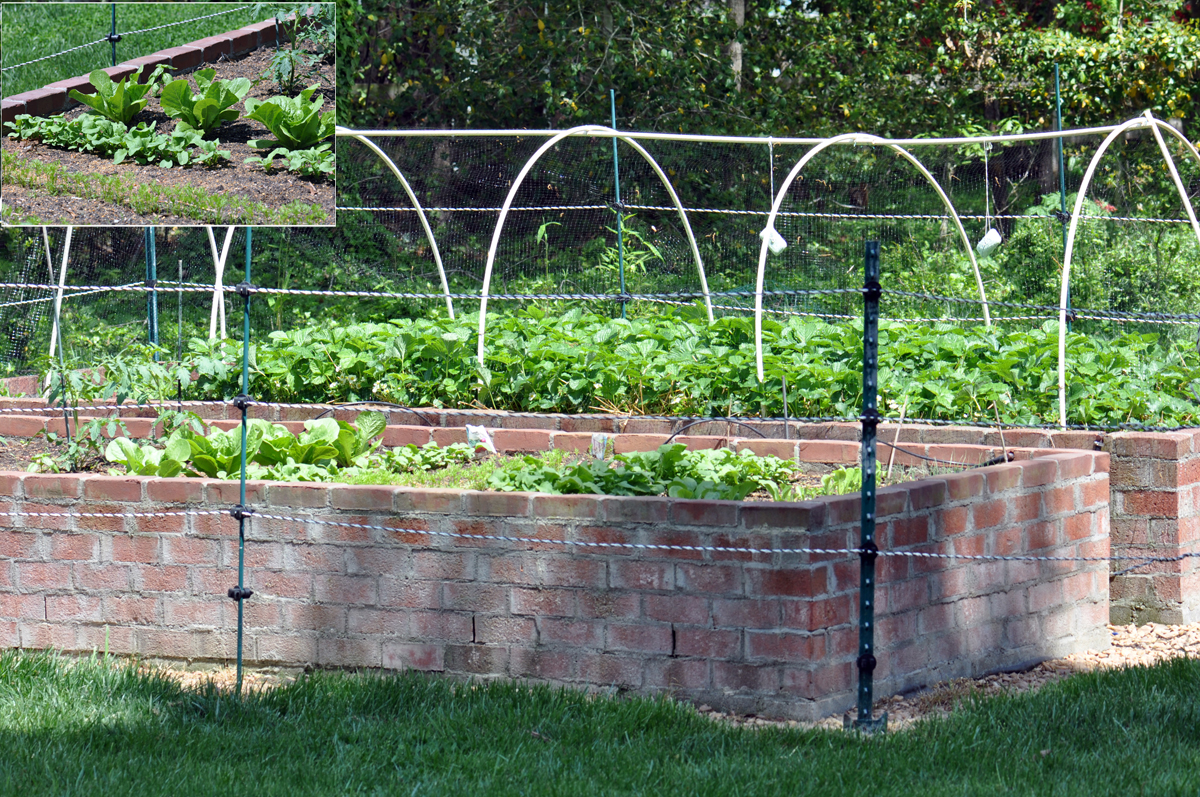
Virginia vegetables sleep better in raised beds

Virginia vegetables sleep better in raised beds

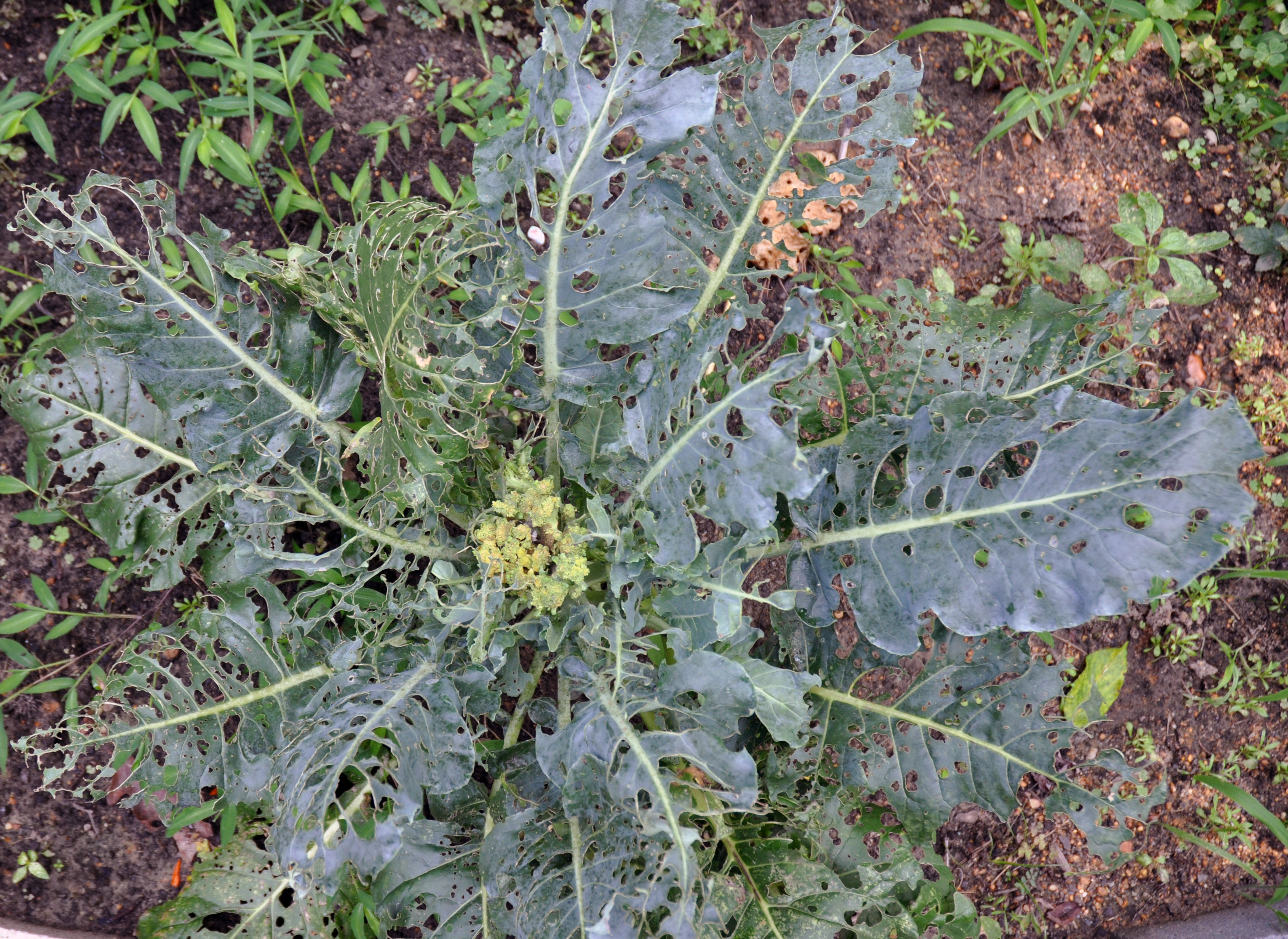
As lads, my brothers and I were encouraged to help tend the garden. Few teenagers today can understand why it never felt like a duty, and in hindsight the contact with nature stimulated a curiosity that led to a job in the life sciences. But the immediate feelings were pure triumph as we hauled in our own, displaying the best in bowls as art objects that would have inspired the Impressionists. More than sweet and splendor, gardening also delivered life-lessons. Contending with heat, mud, and bugs for a reward that is never guaranteed demands hardiness for facing disappointments. It takes bloody-mindedness to grow carrots in Virginia clay, only to find the whole crop rotting in a storage bin. And after weeks of encouraging the broccoli (in whispers in case a neighbor called my wife), it is heart-breaking to discover grubs had visited them overnight, leaving only skeleton stems … Ahhh!

Broccoli tears

Broccoli tears

But the gardener shouldn’t feel crushed for long; he can do better next season, fortified with cabbage wisdom! And, meantime, there is the euphoria of plucking some victories from the earth—vine tomatoes before an invasion of ground hogs, crisp romaine before slugs slime up stems, and fingerling potatoes like yellow nuggets in my dirty palm. Gardener’s who can grow this gold never need buy at a farmer’s market.

A gold-digger's reward

A gold-digger’s reward

Next Post: Ticks and other Terrors

Posted in Other | Tagged , , | Comments Off on Gold in my Garden

Dear Jean

Dear Jean

I couldn’t leave my students to say farewell. Our friends told me it was one of those miserable days before the daffodils bloom along the Cambridge College Backs: Scots would call it a “dreich day”. Pronounced correctly, everyone knows exactly what they mean.

So much water passed under the bridge in thirty years. You’d be amazed to see my hair now—but better a silver noggin than a shiny nut.

As summer grows old, I’m feeling sentimental and looking back on salad days again. I never forgot the first time you showed me a human embryo. Alive! Gazing down the microscope I needed your help to see the tiny ball of cells floating in a pink ocean of culture fluid. You hovered behind me, probably worried that a green student might spill the precious mite you had just created by in vitro fertilization. It took five more years of struggling research until your breakthrough with the embryo that became Louise Brown. Now there are millions like her.

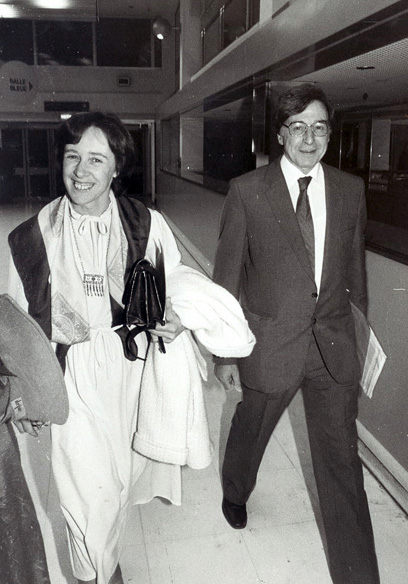
Jean and Bob arriving at Gare du Nord, Paris, for a conference

Jean and Bob arriving at Gare du Nord, Paris, for a conference

Did you ever mind standing in Bob Edwards’ shadow? He was generous with compliments, saluting you as the third pioneer of IVF beside Patrick Steptoe and himself, but as the assistant to a famous scientist and a gynecologist (and being female) you didn’t have much visibility with biographers and the press. The longer you are away the deeper the mystery of your part in the program, and now that both men are gone there is no one left to tell the full story.

Why did you quit nursing? Why did you switch to a lab job for which you were hardly qualified? Of course it wasn’t any ordinary job. Bob’s goal was no less than to forge a medical revolution, and Patrick was aiming to help infertile couples that his profession had virtually abandoned because it had nothing to offer them. Your work was accused of being unethical, “playing God,” and was excoriated in the press, by doctors, and from church pulpits. I wondered what your friends said, what your family thought, and how you coped with it all.

All those struggles were quickly forgotten when it all came right, but then you couldn’t foresee the triumph at the end of the tunnel of nearly ten disappointing years of trials, working long hours and often away from home until Louise was born. Besides the immense challenge of nurturing embryos in the dish and the thicket of critics, you had to glue two different personalities together, for if Bob and Patrick had parted nothing would have been achieved.

I guess you seasoned the setbacks and stresses with humor. I remember you used to laugh when we goofed in the lab, and when you struggled to spell the name of the Philadelphia biologist, Beatrice Mintz, you posted attempts on your bulletin board. It’s funny how trivial things get stuck in my memory. Visitors would remark about your “humor station” before Mintzstepping past to Bob’s office for some heavy scientific discussion. Once when I was sitting in his office soon after Louise was born and you were setting up Bourn Hall Clinic I asked him how he managed to publish his huge tome, said to be the bible of reproductive medicine. He nodded towards your desk, which you leant over, cracking a cheeky smile that was so endearing.

I always knew you had a sterner spirit under the sunny exterior. One day during the public hullaballoo about banning the South African national sports teams from international tournaments I saw you in a heated debate with an overseas visitor who was defending apartheid. Afterwards, I realized you felt the same passion for patients depending on you, and Bob had hired you over more qualified assistants because he saw what you were made of.

I wish I had asked if you ever wanted to be famous. Had you stayed you would have been queen of the realm—earning awards, dinners in your honor, and guest lectureships everywhere. I guess you were happy to be spared that kind of attention, preferring the undisturbed backroom where you could counsel patients and care for their embryos. You were content for Bob and Patrick to be the front men. Bob will go down in history as a scientific pioneer. Patrick passed away too soon to share the Nobel Prize and earn a knighthood, but won’t be forgotten. I’m told that quite a few patients from Bourn Hall still wander across the lawn to stand reverently at his graveside outside the chapel. He’s lying just 15 minutes away from you, but no one makes that journey.

Some of our nurses in America inquired about your story a few years ago. They only knew you were first in the field, but that was enough to create the Jean Purdy Visionary Award. I shared everything I knew for their introductory speech for award-winners, but my knowledge was threadbare and I never managed to find your family to fill the gaps. They have vanished. I found an unrelated woman called Jean Purdy in London; she works as a magician, but you were the real thing. The award was a wonderful naming legacy and I’m terribly sorry that it too has disappeared. You would just put your arm over my shoulder to console me, saying it doesn’t really matter.

If I could go back in time I would love to ask how you felt when you started working with human embryos. The first were experimental because you needed to check they were healthy before Patrick dared to give them a chance of making a pregnancy. I heard you had a devout faith, though I didn’t know your church denomination. Did you ever have qualms about making and destroying embryos? For myself, I believe they deserve respect, but could never understand people who wanted to endow full human rights from the moment of fertilization. Moral philosophers and theologians are still arguing the point, although every nation I can think of has either legitimized IVF or turned a blind eye to the practice. Since your time, embryos have been used to create stem cells for regenerative medicine, which Bob dreamt about half-a-century ago and George W. Bush tried to can a dozen years ago. Although it really started in your lab, I doubt you ever imagined that your work might one day help to cure the incurable. If you read nothing else in this post I would want you to know your endeavors weren’t wasted.

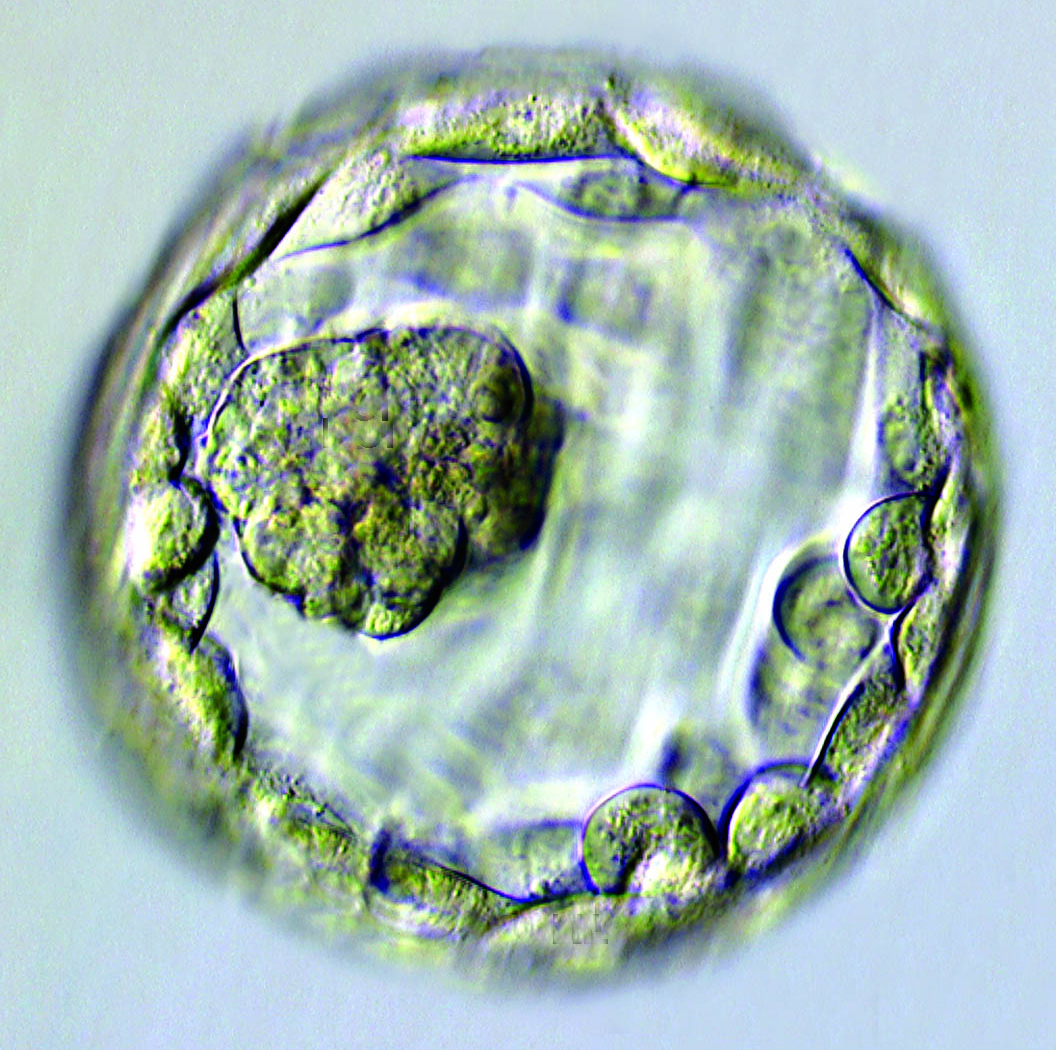
Human blastocyst

Human blastocyst

When I asked a friend at the Hall where I could find you she offered to drive me to Grantchester. I hadn’t visited the village since I was a student. Then I used to cycle over from college or punt on the Granta against the stream, feeling I deserved a drink at The Green Man when I arrived. It was mead in those days. Sometimes I joined students enjoying a cream tea under the apple trees in The Orchard, which is still associated with Rupert Brooke. His patriotic war poems fell out of popularity long ago, but his own tragedy still draws me to his romantic verse, even the schmaltz about his Grantchester home.

The church at Grantchester. Thanks to Kay Elder

The church at Grantchester. Thanks to Kay Elder

And laughs the immortal river still

Under the mill, under the mill?

Say, is there Beauty yet to find?

And Certainty? and Quiet kind?

Deep meadows yet, for to forget

The lies, and truths, and pain? . . . oh! yet

Stands the Church clock at ten to three?

And is there honey still for tea?

The Old Vicarage, Grantchester by Rupert Brooke (1912)

I ask myself why it has taken so long to write to you, and why now? Perhaps Bob’s passing is prompting me (Blog date April 2013). Perhaps news of Louise’s 35th birthday last month nudged me. But I think it is because the book I finished today jogged something in my unconscious. You might have enjoyed the life story of a remarkable but long forgotten New York surgeon.* Had I more data, I might have started your biography next. Stories of people who made a difference but now lounge in obscurity fascinate me so much more than those still celebrated. They resonate with the last lines George Eliot wrote in her tribute to Dorothea, … the effect of her being on those around her was incalculably diffusive: for the growing good of the world is partly dependent on unhistoric acts; and that things are not so ill with you and me as they might have been, is half owing to the number who have lived faithfully a hidden life, and rest in unvisited tombs.

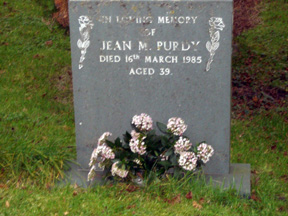
When we reached Grantchester churchyard I could imagine the dreich day when you were laid under the grass beside your mother. It’s a rather unkempt, inauspicious corner with nothing to draw the eye of casual visitors who meander between the stones. Had I been asked to order your memorial I would have insisted on a granite carving, Here lies Jean Purdy, the World’s First IVF Nurse and Embryologist, died 1985 aged 39. But your name painted on a gray headstone is being eaten away by rain and wind, the plastic flowers the most cheerful feature of that bleak spot. Rupert Brooke would have walked over from his rooms at the Vicarage to compose an ode.

Jean's grave

*A Surgeon’s Story by Roger Gosden and Pam Walker will be available on Amazon soon. See Jamestowne Bookworks for news.

Next Post: Gold in my Garden

Posted in Memoir | Tagged , , , , , , , | 4 Comments

Sperm are from Mars, Eggs from Venus

Biological mysteries always drew me in, so it was natural to choose a career in research with the egg as its main subject. Remember the mythological sphinx with a human head and a lion’s body in Ancient Egypt? It guarded the temple secrets. Eggs may look plain and pure, but next time pause before you smash the shell of a biological sphinx on your breakfast table!

U.K. Egg Marketing Board. Ad from 1950s

U.K. Egg Marketing Board. Ad from 1950s

Eggs are the largest, the rarest, and the most paradoxical cells in the body. They possess contradictory characteristics: as ancestors of all other cells they are generalists, but also arch-specialists for no other cell engages in fertilization, except of course a sperm. You might think that these biological curiosities would keep young scientists employed in some quiet, arcane corner for their whole lives, but soon after wading into eggs they get into deep water.

sphinx_of_Taharqo, British museumI should have known better when I started because there were Egg and Sperm Wars as far back as the 18th Century. Scientists and philosophers were speculating whether it is the egg or sperm that makes the baby. For a while the Spermists were winning because no one had ever seen eggs in any mammal, let alone a human being – there was nothing like a hen’s egg. But when the tiny mammalian egg was found in 1827 the Ovists counterattacked and soon afterwards it was known that eggs must be fertilized with a sperm, so both cells are needed. This settled a conflict that had been dangling since Aristotle’s days,* and put storks out of business.

But eggs can sometimes go it alone without help from a sperm. Some animals reproduce by virgin birth (parthenogenesis), but no mammal. That we are among the exceptions was an enigma until an old colleague showed that a subset of genes (fewer than 1%) are “imprinted” to make them behave differently in the sexes. Imprinted genes in sperm carry responsibility for the placenta whereas in eggs others are needed for the embryo. So that neatly explained why we always need fathers and mothers. Perhaps sperm are from Mars and eggs from Venus.

During fertilization male genetic material is injected into an egg, and if we think of the combined genes as hardware of the future embryo, the bulky cytoplasmic goo in the egg contains the clever software. So eggs and sperm make equal genetic contributions, but eggs are more equal than sperm!

Dolly the sheep came from Venus. Looking like any other in the flock outside Edinburgh, she was the only one to nuzzle in your pocket for a treat and the only celebrity there. My colleagues named her for Dolly Parton who once said of her second most important asset, “I wanted to be the first woman to burn her bra, but it would have taken the fire department four days to put it out.” Dolly the sheep was cloned from an adult udder cell.

Her arrival in 1996 shook modern biology. I remember receiving a call from a London newspaper asking for comments about the breakthrough, but I knew nothing because the secret was so closely kept.  Dolly was created by removing the genetic material from an egg which was replaced by that from the udder cell. After delivering an electric jolt to the “Frankenegg”, a new creature was conceived and time’s arrow was reversed. She was a clone of a deceased animal.

Afterwards there was a furore whether humans should ever be cloned … or had been cloned!  There were a few attention-seekers raising their megaphones to claim that several cloned babies already existed around the world. We found their stories preposterous, and it was just as unbelievable that the profession did not oust those doctors.

Cloning was momentous for science because by cracking the sphinx-like egg we can peep past the door into the temple of regenerative medicine. We can hope to create to order cells of a certain type and matching a particular patient who needs organ or tissue replacement. There would be cardiac cells to patch up dead tissue after a heart attack, pancreatic islet cells to treat diabetes, retinal cells for macula degeneration, and so on throughout the body.

Human blastocyst

Human blastocyst

By an odd coincidence another hugely important breakthrough hit the stage just two years after Dolly. Human embryo stem cells were created. No other stem cell is as versatile as those from the embryo’s inner core, because they make every cell type in the body, except those specific to the placenta. These cells are harvested at the blastocyst stage from embryos donated by patients in in vitro labs. Although only a minority among 100 or so cells in a blastocyst, when released into a culture fluid and surrounded by feeder cells they grow rapidly – and almost indefinitely (movie courtesy of Nikica Zaninovic).

George Bush blocked federal dollars for this research, but progress that was hampered in the U.S. continued nonetheless elsewhere. In 2004 there was news from South Korea that after injecting human eggs with genetic material cloned “embryos” were generated. Since regenerative medicine was the aim, the clones were used to harvest stem cells. It almost seemed at the time as if the holy grail had been discovered, creating the chance to help patients who were suffering or might die without a transplant. But then we heard a whistle blowing.

The Korean research director was accused by some of his associates of making fraudulent claims. His fortunes changed precipitately, absolutely, and irreversibly when this particular f-word was voiced, and to say that the innocent helpers around him had egg on their faces is an understatement. They suffered anyway because science is the most unforgiving profession when lied to. Moreover, the tide of hope was ebbing because no other lab had been successful, and public confidence was being lost. We even wondered if cloning was a biologically impossible feat in humans.

But soon after that low point, Shinya Yamanaka announced an amazing breakthrough that offered another path, and one that avoided bitter arguments about the use of human embryos. Like the rest of us, he had been intrigued when Dolly proved the molecular goo in eggs can reprogram the genetic software of body cells. For my part, then working at McGill, we were building an inventory of all the proteins in the egg, hoping to identify those with reprogramming potential. It was like looking for needles in a haystack, but Yamanaka succeeded because he took a clever short-cut to find four molecules needed to turn back the clock of adult cells, making them think they were embryos and avoiding the controversial use of human eggs and embryos. He called the cells treated with these molecules, induced pluripotent stem cells or iPS cells, and no one was surprised when last year he received flight tickets to Stockholm for a Nobel Prize.

But were we only sitting on a see-saw, not making as much headway as we thought? Are iPS cells too close to cancer for comfort? Could stem cells develop abnormalities after a sojourn in culture? Are they as good as embryo stem cells, if those cells can be made? They can. This year we heard that scientists in Oregon have succeeded in making stem cells from human clones after a long, labyrinthine struggle. So now there are two players for the prize, with supporters on both sides.

I wonder how I will regard this post in a year or two? Progress is accelerating with hopeful news of stem cell applications announced every month. I sometimes wish I were back in the lab squeezing pipettes again, but science is becoming more of a young man’s sport than for graybeards. At least we have a long view, remembering how biology turned out to be so much more plastic than we ever thought, but knowing there are always ups as well as downs before we know whether iPS cells or embryo stem cells open the door to revolutionary medical care.

Eggs are mothers of all stem cells but it is better to avoid controversy with human embryos and hope that iPS cells will succeed.  But wait a minute! iPS cells are very similar to embryo stem cells, and improvements in technology bring them ever closer.  On the other side of the same coin, they could be put to the same use as embryo stem cells – which can be made into babies, with genetic modification if desired, using a technique known as tetraploid complementation. For every bright side of a coin there is often a spooky opposite in science. The egg that started us down this road is not perhaps so much like the benign Egyptian sphinx but more the treacherous  Greek variety.

*Read the full story in my article in Biology of Reproduction by email request and which will be publicly accessible online from 2014. To be published in fall 2013: The Oocyte: Biology, Pathology and Technology, Edited by Alan Trounson, Roger Gosden, and Ursula Eichenlaub-Ritter. Cambridge University Press. I doubt any of my readers has an appetite for this 450 page tome.

 Next Post: Dear Jean

Posted in Other | Comments Off on Sperm are from Mars, Eggs from Venus

Baby’s First Picture

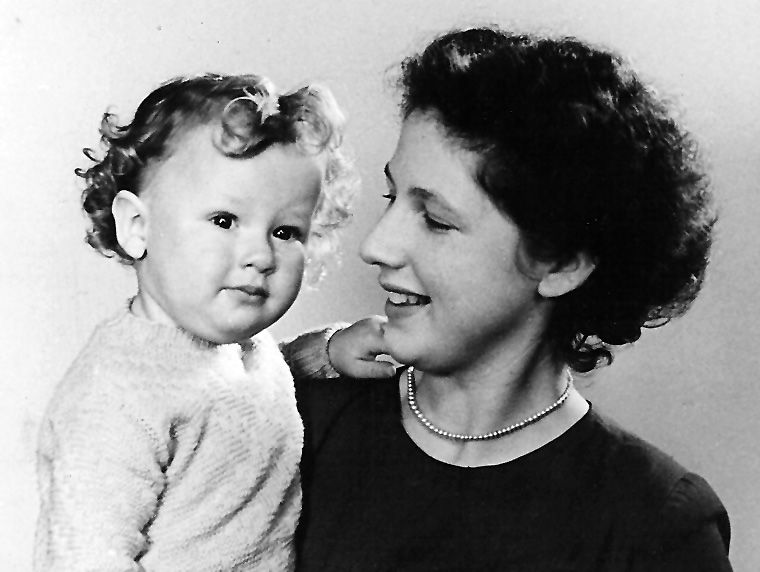
The first picture of a baby is usually in the mother’s arms soon after delivery, and becomes pasted into an album for posterity.  My mother missed out on that snapshot since I was born in austere post-war London when a box Brownie camera was a luxury my parents couldn’t afford. Roger and MumBut nowadays the picture is taken earlier and with a much more expensive camera.  My granddaughter, Pippa, was snapped by an ultrasound scanner when she was barely past the fishy stage in her mother’s womb. The next picture taken a few weeks later showed her looking like a real child, and the obstetrician could confirm everything was fine, including beating heart and nuchal transparency. Pictures reassure us all is well, even if we can’t put absolute trust in them.Pippa 3 month fetus

The first picture can be taken even earlier nowadays – in fact, as early as can be. For most of her thirty years as an embryology lab director, Lucinda gave prospective parents of IVF children a picture of their embryos which she had taken immediately before medical staff transferred them to their Mom’s body. These were embryos that had been fertilized in a Petri dish and grown to a ball of about 8 cells in three days, or had formed a blastocyst with about a hundred cells after a slightly longer incubation. Giving these photos to patients is now a common courtesy in fertility clinics, and more and more couples are having this extraordinary preview. Last year there were over 60,000 babies born after IVF procedures in the USA alone, or 1% of all births.

Human 8-cell embryo

Human 8-cell embryo

For such couples (and single mothers undergoing the same treatment) pictures of their embryos probably find a temporary place of honor on a kitchen bulletin-board until the next picture at the six week ultrasound scan – or taken down if the pregnancy test proves negative. But for embryologists and physicians, pictures of embryos are records of the best-looking in the bunch which they hope stand the best chance of getting Mom pregnant.  Generally one or two are chosen (sometimes three) for transfer from the half-a-dozen eggs (more or less) that were fertilized, but these pictures say so much less about the embryos’ prospects than my first picture or Pippa’s, and even ours hardly say anything about things that most matter to us – future health, vigor, brains, and beauty.

Upwards of 50% of all human embryos conceived in the IVF lab (and probably the same in the body) have abnormal sets of chromosomes, and therefore no chance of making a healthy child. It is possible to genetically screen embryos so that only the healthy ones are placed in the uterus, but although this can be helpful it is far from foolproof. Some embryos are mixtures of normal and abnormal cells, meaning that a test produces misleading results if only one cell is removed, which is all that most embryologists dare take. And then there is the unanswered question of whether certain kinds of abnormalities can correct themselves spontaneously, implying that embryos could be discarded unnecessarily.

The upshot of this uncertainty is that deciding which one to transfer is still mainly based on how they look at the time when the photo is taken. It’s a beauty contest which Machiavelli would have derided because “men in general judge more from appearances than from reality.” Unfortunately, “reality” is much too deep to plumb, and so, despite the best efforts, the embryos with the best chances of success are not always chosen.

A single snapshot at the end of a growth process that had been going on for days mostly unseen inside the lab incubator is not much to go on. We wondered if a picture is worth a thousand words, perhaps a thousand pictures would better convey the whole story.

Back in the 1990s Lucinda had already started making movies of embryos in Petri dishes, but had to build her own equipment and record them on magnetic tapes. When I joined the project some years later, digital time-lapse recorders, more advanced microscopes, and miniature incubators were available for the job. We could take a snapshot of individual embryos every few minutes, which over five days added up to over two thousand frames. Imagine how eager we were to compile them for a motion picture of the first days of human embryo development! But we didn’t anticipate surprises, accustomed as we were only to static images, but the embryos educated us.

On the first day nothing seemed to be happening, although appearances are deceptive because there was a lot of activity at the sub-microscopic level. But the next day the fertilized eggs made an almighty heave and in a strange contortion never to be repeated divided into two equal halves within their shells. They tolerate only so much fragmentation of cells at this stage, which you can see in the movie. The next division to make four cells started later in the day, and more divisions created a ball of tiny cells without any net increase in overall size. Clinics are now using customized equipment to monitor the rate of embryo development to help to choose which to transfer.

On the fifth day, healthy embryos became blastocysts, hollow balls of cells with a tiny knot at one side that make up the embryo proper. The movies revealed that blastocysts undergo cycles of swelling and collapse rather like a beating heart, although far more slowly and not from muscles contracting because no such cells exist yet. Just as a heart sound or pulse is a sign of life, the blastocyst’s beat is a sign, and probably a better token of vitality than a static picture ever gave.

We had another surprise after pressing the PAUSE button at a random frame if the embryo looked sick, its cells more opaque and less plump. Sometimes it really was unhealthy and had reached the end of the road to development, but in other cases when we pressed RESUME the embryo would shrug off its frumpy appearance to continue growing, often even turning out to be a beauty. So Plato was right for embryos too – beauty really is in the eye of the beholder. A sad-looking embryo might have been discarded or, at the very least, frozen in reserve if its fate had hung on only one picture. Besides, we already knew that, like judges scrutinizing models on a catwalk, embryologists don’t always agree on their scores for embryos. They can tell you stories about patients who produced only a very few scrawny-looking embryos which were transferred to wombs “just in case”, only to find that at least one was successful and made a bonnie baby.

What about the rest, the ones that never survived long enough to be photographed? We seldom mourn things that pass beyond the focus of our eye or camera lens, nor give a moment’s thought to the far, far greater slaughter going on day-in and day-out in the wombs of the world where most embryos never thrive. Embryos may have started out looking hopeful after fertilization and even grow some, only to perish in the dish unnamed and unknown in a Greek tragedy of their own.

Sometimes I am moved to wonder about wasteful nature. I wonder why I can watch in deep sympathy a bee writhing after it has strayed into an insecticide spray or an earthworm wriggling its last as it dries out on the pavement, while we never spare a thought for the anonymous multitudes ending their lives prematurely by being trampled physically or chemically.

I suppose it is the connection with individuals, especially at tender ages, that makes the difference. No matter how alien to the subject we feel there is a biological link and by witnessing the life and death struggle of another creature we are jolted into thinking about our own. Patrick Steptoe (1913-88), who was Bob Edwards’ clinical partner in pioneering IVF, pondered the same thoughts as I do in idle moments. I remember him playing at a conference his musical elegy, For a Dying Embryo. Steptoe_PCS Before striking a key he told us he was sad for the couple who would never have that proud picture of their offspring, but he also had some sort of feeling for the embryo in his care, wondering what it might have become and achieved. Thank goodness Pippa and have pictures so we can muse in the future how we got here.

Next Post: Stem Cell Stuff

Posted in Biomedical | Tagged , , , , , , , | 2 Comments