My Big Fat Neanderthal Family Wedding

Was there a population that never experienced discrimination?  Prejudice has an ancient pedigree, perhaps wired into the human psyche. I was musing whether Neanderthal people bore it first and endured the stigma longest.  Thirty thousand years after they mysteriously disappeared, they are still regarded as oafish cavemen.

But at least we regard them as human, while ridiculing their long noses, brow-ridges, and prow-mouths. Besides the evidence of fossilized skeletons and DNA, I wonder if their humanity is also defined by our prejudicial attitudes, because we only look down on our own kind. We never hold animals in the same contempt as people, because even the great apes are subordinate beasts! It is not because other people are so different that we discriminate, but because they are too similar. When we look down our noses at other races, both archaic and modern, we reveal our deeper insecurities, and perhaps anxieties about losing superiority and being swamped.

Social scientists and anthropologists have not always been totally objective in their estimation of other tribes and races. I doubt there was ever a researcher who found his own race was inferior in character or intelligence to another, or if he did he never published it!

Sometimes people who know better don’t admit the facts. Over twenty years ago, my department hosted a distinguished British anatomist, who shall be nameless. He denied that Neanderthals had a slightly larger cranial volume (hence, brain size) than ourselves. It was useless arguing with him because he was a ‘Sir’ and a Fellow of the Royal Society. If he had admitted that their larger brain was merely in proportion to a larger body, we might have drawn a truce rather than ending the exchange in sulky silence. But he refused to discuss the hypothesis that they might have been our equals.

Neanderthal skull versus modern human skull

How much does size matter?

Poor Neanderthals need publicity agents to throw back slurs based on ignorance. There is so much we don’t know, and may never know. Did our first great encounter with these people begin with the exchange of gifts or at the point of a spear? According to a common fairy story, the dim Neanderthals were doomed when our brilliant ancestors arrived on the scene. We flatter ourselves with triumphal tales, even though this one is grotesquely reminiscent of the way we treated people when colonizing their lands, subjugating them in the name of civilizing inferior natives.

On the first world voyage of H.M.S. Beagle (1826-1830), FitzRoy captured three natives in Tierra del Fuego and took them home to England. The Fuegians were dressed up as English folk, taught the language, instructed in the Christian faith, and even presented to the Royal Family. On the second voyage, with Charles Darwin as ship’s naturalist, the three were returned to their homeland where they quickly reverted to custom by throwing away their clothes and painting their skin with pigments. FitzRoy thought this behavior vindicated his theory that the gulf with civilized nations is too deep to cross.  Savages will always be savages, and always inferior.

Charles Darwin

Charles Darwin’s cranium – Neo-anderthal?

On the other hand, Darwin, an old-fashioned Whig or liberal, was awed by the mystery, “Whence have they come?” He accepted a hierarchy of human races, but believed it was moveable. He disagreed with Captain Fitzroy about most things, including slavery, which must have been awkward on a long voyage in a shared cabin. After they sailed home, immigrants started colonizing the southern tip of the continent. They treated the natives as feral humans, and those that survived epidemic diseases were otherwise exterminated.

Years later, Darwin was shown a skull excavated from a cave in Gibraltar (and is now at the Natural History Museum in London). This was the first fossil of an adult Neanderthal, and it predates by eight years another find in the Neander Valley which gave the people their name. Instead of sharing the general opinion that it represented a primitive brute, he cautioned, “Light will be thrown on the origin of man and his history.”  Human genealogy has rolled out slowly since his day because our fossils are rare, but molecular genetics reveals branches on our family tree that challenge the stories we were told.

Recently, pure DNA was extracted from fossil bones to obtain a nearly complete sequence of the Neanderthal genome. I doubt if many people expected that between one and four per cent overlaps the genomes of modern Europeans and Asians. Today’s Africans have none of it though, which implies that the fraction possessed by the rest of humanity is not a residue from a common ancestor hundreds of thousands of years earlier. That Neanderthal DNA exists in us today is because our ancestors coming out of Africa about 50,000 years ago met Neanderthals living in the Middle East, with whom they intermarried (call the coupling what you will). Fossil evidence confirms that we did co-exist with them for 5,000 years, so there was plenty of time for integration, and our Neanderthal heritage is not the result of sporadic mating. I guess it was mostly consensual because I find it hard to imagine a Neanderthal woman being carted away unwillingly from her menfolk, who were like the beefiest NFL players you could imagine! But I digress.

Analysis of my own DNA reveals that I inherited 2.7% from Neanderthals. That is close to average for my ethnicity, and more than I share with my third cousins. The news amused me until I mused that it was ‘good DNA,’ for otherwise it would never have lasted so long after the weddings. Some bits of the genome have persisted more than others. We have acquired many genes associated with skin and hair, which implies that Neanderthal adaptations to cold were advantageous for our ancestors too when the next Ice Age arrived. However, we also hung on to genes linked with modern diseases, which seems perverse. Perhaps they were not so bad in the past before we adopted our current lifestyle and diet. Genes encouraging fat storage, but predisposing us to adult-type diabetes and obesity, might have helped us to survive cycles of feast and famine, perhaps thanks to ‘thrifty DNA’ from Neanderthals.

The number of generations separating races of modern people from our common African ancestors is like a twig on the evolutionary tree compared with the much older branches shared with Neanderthals from whom we separated over half a million years earlier. Neanderthals are our cousins, but mutations and natural selection caused genomes to drift so far apart that geneticists suspect that hybridization was barely viable. When crosses are made between closely-related species like horses and donkeys, the products are usually sterile if any offspring can be produced at all. That hybrid humans may have had fertility problems is suggested by the absence of Neanderthal DNA in our genes that control the manufacture of sperm in testes. Perhaps it didn’t ‘fit’ there, and maybe absorption of Neanderthals into the new society contributed to their disappearance.

If the image of a Neanderthal man courting your beautiful greatetc-grandmother is repulsive, look at sculptures by the American paleo-artist, John Gurche. His art is based on careful studies of the physiognomy of archaic humans. He created a Neanderthal profile which is imposing, almost handsome, even noble.

phrenology

The Phrenological magazine

Appearance matters, but intelligence often carries greater weight in our estimation of others. In the Victorian Age, phrenology was in vogue and its adherents trotted around the globe measuring the size and shape of skulls of rich and poor, saints and sinners, civilized nations and primitive tribes. They expected these measurements would predict people who were inferior in character and intellect, who always turned out to be the most disadvantaged in their studies. The discovery of Neanderthal bones gave them a new opportunity for skullduggery. In 1880, The Phrenological magazine declared, “The Cro-Magnon skull is superior to the Neanderthal skull in regard to intellectual and moral development … he was indeed a savage.” We may never know for sure, but I doubt that Neanderthals were dim people, or less bright than ourselves. That may seem contrary to signs that their tools and culture hardly evolved over eons, but neither did those of our ancestors advance much until the recent Agricultural Revolution. Could Neanderthals have struck a smarter deal, opting for a more stable relationship with nature than we have?

The German lion of Darwinism, Ernst Haeckel (1834-1919), would be flustered by modern research and scholarship because he suggested that Neanderthals should be called Homo stupidus to distinguish them from our brilliant selves, Homo sapiens (literally, ‘wise man’). It was a proposal that revealed prejudice, but our cousins had fortunately been named already, and precedent counts in taxonomy. They were designated a new species, Homo neanderthalensis, although taxonomists continue to argue whether they were a distinct species or the subspecies, Homo sapiens neanderthalensis. I don’t understand the debate. To be a separate species, two populations must be reproductively isolated, either genetically (they can’t mate with each other) or geographically (they can’t hang out with each other). Since Neanderthal DNA exists in our genome, they ought to be regarded as a sub-species: more different than modern races are from each other, but inside the species fence.

The popular image of Neanderthals is gradually being turned upside down by advances in traditional and molecular paleontology. Contrary to the stereotypes, we now know they were fair-skinned with reddish hair, not strict carnivores but ate a mixed diet with cooked vegetables, probably had a language, and evidently created symbolic art on stone walls and decorated their bodies. Most touching of all is the suggestion of a tender humanity, and that they were not emotional icebergs. Since some of their skeletons have badly worn joints and are almost toothless, these people probably needed carers to help them to survive with disabilities. After death, their bodies were not discarded like carcasses of game animals, but given a respectful burial. Can you imagine last rites performed by a Neanderthal shaman?

This revisionary anthropology throws refreshing light on a maligned people, although over a century ago a Danish anthropologist, Hans Peter Steensby, rejected the impression of Neanderthals as ape-like, inferior beings. But prejudice is deeply imbedded, and despite efforts to exorcize the demon we easily express it unconsciously. The other day, I caught myself joking that I have less Neanderthal DNA than the rest of my family!

Next Post: Thanks given for Wild Turkeys

Posted in Other | Tagged , , , , , , , , , , | 2 Comments

Rehabilitating Rabbit

I lifted a sodden fur ball out of the pool skimmer one morning. It lay motionless in my hand with its life almost burned out. But when I peeled back an eyelid to check for the glazed eye of death, it winked.

It was a cottontail bunny, barely a month old, yet already independent of its mom. After falling into the pool overnight, it had scrambled (or swam, as rabbits can) to hold its head on a ledge above the cold water.

Cottontail rabbit

Drying out

Wrapping him in a towel, I laid Peter in a warm cardboard box with the lid folded over to cover him in darkness. All wild bunnies at our home are called ‘Peter’ for sentiment’s sake, notwithstanding my doubts about his sex. As a boy, I learned the distinction is tricky, and once (but never again) made the mistake of keeping two ‘brothers’ together in the same hutch.

Hours later, when Peter had dried out, he still looked lifeless. My wife started to nurse the bundle, hoping that her own body heat would revive him. But his adrenal glands had been pouring out corticosteroids and epinephrine in a shrinking effort to generate energy for thermoregulation, and he was tipping towards hypoglycemia, heart block, and ventricular fibrillation. What should one do with a hypothermic rabbit?

In Beatrix Potter’s story, “Peter Rabbit was not very well during the evening. His mother put him to bed, and made some camomile tea; and she gave a dose of it to Peter. One table-spoonful to be taken at bed-time.”

Peter was unconscious. I had to gently prize his mouth open to insert a dropper for feeding him a little honey diluted in warm water. I hoped it would strengthen him, but didn’t expect to find him alive the next morning.

What a strange species that cares for varmints (vermin)! Most days, the sight of rabbits grazing in the garden can bring on murderous thoughts. Herbaceous borders and veggie beds are cultivated for our benefit, not as help-yourself salad bars for plunderers. There are no free lunches in our yard, not if we can help it, though there are exceptions. If a critter is promoted to become a patient or a pet, it is fed bounteously, and, if necessary, we even dig in our pockets for a vet bill.

Luckless rabbits are not the only creatures that win the generosity of strangers. The same week, I disentangled a garter snake caught by its windings in a garden net. And, a day later, I screeched to a halt after narrowly driving past something crawling across the road, but I was too late to rescue it from becoming turtle soup under the wheels of a following vehicle.

Our ambiguous relationship to nature is deeply puzzling. We want to control wild nature, yet celebrate wildness. Despite our predatory instincts, it feels good to be merciful to animal casualties from road accidents and window strikes as well as orphans and victims of domestic pet attacks. We even adopt wild animals as if we had the duty of parents. Notwithstanding strange myths like Romulus and Remus, it is unlikely that role-reversal ever happened where an animal became the carer of a human dependent.

Our hearts are touched by the individual creature that falls into misfortune, but rarely by a herd or swarm or shoal. I can’t feel the same compassion for the anonymous rabbits in a whole warren as I did for Peter. We spare the individual and shoot the masses. When wee Peter plunged into our lives, his fluttering existence called on our compassion, and we happily submitted by welcoming him into our care for a few days. It seemed so natural and attractive to behave mercifully, even though it was against our nature to rescue a garden raider, and an edible one at that. Perhaps Peter was lucky to have his accident in our yard, and not next door in Mr. McGregor’s.

The Tale of Peter Rabbit by Beatrix Potter

First edition 1902, Frederick Warne & Co.

“Now my dears,” said old Mrs. Rabbit one morning (to the young bunnies), “you may go into the fields or down the lane, but don’t go into Mr. McGregor’s garden; your Father had an accident there; he was put in a pie by Mrs. McGregor” (The Tale of Peter Rabbit).

Our kindliness to animals is partly owing to our peculiar tendency to anthropomorphize them, and this may account for the greater tenderness shown them by young children. Peter Rabbit in Beatrix Potter’s Tales, and Hazel, Bigwig, and Cowslip in Watership Down, are all sympathetic characters modeled on our better selves. On the other hand, Napoleon, the Stalinist tyrant of Animal Farm, is a caricature of our grotesque side, which should greatly offend the civil porcine community.

St. Francis of Assisi

St. Francis: Sermon to the Birds (c. 1298) Formerly attributed to Giotto [Public domain], via Wikimedia Commons

Dreamers and writers have told utopian stories of making peace with the animal kingdom. Isaiah dreamt of the wolf living with the lamb, and the leopard lying with the kid; St. Francis delivered a sermon to the birds; we grow up with stories of animals who were friends of Tarzan, Mowgli and other heroes; and a bevy of cartoon animals living with humans have entertained us.

Maybe there is an even deeper reason why our sentimental selves are roused by the sight of a sick or dying animal? Perhaps Mr. Lockley in Watership Down put his finger on it. “Rabbits are like human beings in many ways. One of these is certainly their staunch ability to withstand disaster and to let the stream of their life carry them along, past reaches of terror and loss. They have … an intuitive feeling that Life is Now. A foraging wild creature, intent above all upon survival, is as strong as the grass.” When tragedy strikes, we share the mystery of mortality.

But returning to practical, if not legal, matters, as a law-abiding Virginia resident I ought to have handed Peter over for professional care. According to Virginia code, All persons caring for sick, injured, orphaned, or displaced wild animals are required to have a permit from the Virginia Department of Game and Inland Fisheries. It is illegal here to raise and treat wildlife without a permit. It seems odd that a critter that can be shot or poisoned with impunity cannot be cared for and rehabilitated except by authorization of the DGIF. Admittedly, there is a public safety argument (even rabbits can carry rabies), and it understandable for rare and endangered species, but for bunnies?

In fact, rabbits are among the most common species transferred to licensed ‘rehabbers.’ Across the state, there are over 300 trained rehabbers who care for injured, sick, orphaned and displaced wild animals with the goal of returning them to wild, or euthanizing those beyond help. These remarkable folk work for the love of animals at their own cost, with veterinary backup when surgery or medications are needed. Every species has its specific dietary and accommodation needs, so rehabbers can’t offer an ‘Ark’ service for every critter presented on their doorstep by the gentle public. Some specialize in hawks, owls and eagles; others care for reptiles and amphibians; some are devoted to the furry kind. And when large creatures need long-term care or cannot be released, they are transferred to specialized centers. The Wildlife Center of Virginia in Waynesboro has cared for 65,000 patients of many types since 1982.

Peter needed gentle handling because rabbits are high stress animals that easily die from shock. The fictitious Bigwig was less sentimental about the mortality of his relatives than we were for Peter. He thought that extreme measures to save them are not necessary because “a wild animal that feels that it no longer has any reason to live reaches in the end a point when its remaining energies may actually be directed toward dying.” Perhaps that’s why a live prey carried away in the gape of a fox or the claws of a hawk seems to give up the struggle by going limp before its death throes.

Peter Rabbit

Peter the Rabbit ready to run

Perhaps our Peter had already given up when I fished him out the pool. But, if he was yielding, I refused to accept his fate, and that brought his story to a happy ending. Maybe it was the warmth of strangers or the taste of honey, but something we did revived him. And, later that week, he could scamper off to the veggie bed and disappear among his kind.

Next Post: My Big Fat Neanderthal Family Wedding

Posted in Animalia | Tagged , , , , , , | 3 Comments

Ghost Story from West Virginia

MY NIGHT AT JOHN NORTH HOUSE

Aha! So that’s the house I heard rumors about. Surely my family can’t believe it’s haunted?

After parking on a steep rise above the town center I stared at the rambling brick mansion with Georgian windows and a balcony that overlooked the front porch where pumpkins were lined up like sentries that day. When I peered through a window I saw a huge fireplace and an oak table formally laid out with candlesticks. It was easy to imagine the gracious lives of its nineteenth century owners.

But the house is a brooding presence over a narrow street and harbors unhappy memories. Someone looking out of the window during the Civil War could have witnessed skirmishes and heard cannonballs whizzing overhead. They might even have seen Col. George Crook leading a cavalry charge through the town, and bodies lying in the street.

Lewisburg ghost story

John North House, Lewisburg, WV

Those thoughts quickly faded when Aimee and Paul swung the door to welcome me inside with open arms and to savory aromas from their kitchen. But after a hearty meal and chatting about old Lewisburg they gave me a book, saying, “Don’t let spooky stories keep you awake tonight!” I grinned like most scientists would. I was sure they were only tales and there was always an absence of evidence, although that does not necessarily mean evidence of absence.

Afterwards I climbed a steep staircase to my bedroom on the second floor. Apparently, it had not changed much over the years apart from a few modern paintings: a four-poster bed dominated the room with a night stand separating it from a large closet. I padded across the plank floor to pull aside a sheer curtain for cracking open the window. Looking through the darkness towards the sleeping town I remembered our earlier walk through the graveyard and the tourists standing in the unlit street below.

My family was settling down for the night, but I did not feel sleepy yet. After getting ready for bed I dove under the comforter and, pushing the book aside, turned over on my back to fix my eyes on the high ceiling and recall the evening.

Following dinner, Paul had invited me for a stroll around town with his nine-year-old son while the two younger boys were packed off to bed by Aimee. I took Alex by the hand while he carried his Magic Quest wand in the other. At our street corner we noticed a group of people huddled in the gathering dusk. One of the men who was pointing at the house and speaking stopped when they turned to stare at us.

“Who are they?” I asked.

“We are on the town ghost tour,” Paul said. “It’s popular at this time.”

“They looked at us like we are celebrities. I guess they are curious about who lives here.” I was tempted to ask them if they really believed in ghosts, but not wanting to spoil the entertainment for visitors I only waved. It was just a bit of fun, wasn’t it?

We strolled down the hill to the main street a couple of blocks away. It had shut down for the night. Stools were up-ended on tables in the coffee shop and someone was locking a restaurant door. The only signs of life were customers in an Irish pub where a trombone was being played loudly.

Lewisburg, WV

Old Stone Presbyterian Church

We turned down a side street past the glow of floodlights around the Carnegie Hall to reach the gloomier end of Church Street. Paul urged us to take a short cut past Old Stone Presbyterian Church, which is said to be the oldest west of the Alleghenies, and where the Confederate dead were laid out. Alex was reluctant to cross the graveyard at that hour, but he used his wand to zap things I never dreamt of.  As we wandered among the gravestones I told him that when I was a cub scout our parents let us walk home alone and we dared each other to cross the town cemetery. We didn’t want to be called “sissy.” No one ever saw anything eerie, of course, although when I grew up I wondered if I was insensible to the occult.

Now, after propping myself up in bed with a pillow, I opened the book to the story about the John North House where I was staying.  It told of a young woman who fell in love with a Union soldier garrisoned in her home town in South Carolina during the Civil War. After she tried to run off with him, her mother sent her to stay with relatives at this house until his regiment moved away. She hoped her daughter would forget him, but the lass was broken-hearted, shut herself away at the top of the house and  refused to join the family or attend church. On a visit back home for Christmas her parents were so alarmed to see how thin and depressed she had become that they invited the soldier to see her under strict supervision. But when they were distracted for a moment he whispered a plan to elope after she returned to Lewisburg.

When he was free to follow her, the relatives turned him away. He stood at the street corner every day hoping to see her at the window of the bedroom where I was now curled up inside. They never met again before he rejoined his regiment, though he asked local children to deliver fresh flowers to the house every day.

ghost story

The bedroom closet

As months passed without news she wondered if he had been killed in battle and sank back into despair. One day when she failed to reply to her uncle’s calling and could not possibly have left the house unnoticed, he came upstairs for her. He found her in the closet hanging by the cord of her robe. The story didn’t quite end there because a Union soldier (some say it was her lover) was shot afterwards in the street below. Passersby then began reporting the sight of a strange young woman on the second story of the house and a man’s apparition in the street, though never on the same day. The gossip continued into modern times.

Unhappy souls unable to rest during heart-rending times are usually the core of ghost stories and prone to exaggeration and invention, so it was time to put this one to rest. Closing the book, I drifted off but never sleep soundly in a strange bed and Paul’s stories kept breaking into my consciousness. Perhaps they disturbed me more because I know him well enough not to dismiss his talk lightly. The nightlight was still burning when I woke up with his stories on my mind….

He had told me that before marrying Aimee she was living in the house on her own. She sometimes heard banging at night as if doors were suddenly flying open for no reason, and a mysterious clip, clip, clip on the stairs sounded like the hard indoor soles women wore in the past. Other family members reported the same things, and a robust young man who helped them move furniture refused to enter the house because of its reputation. On one occasion she thought she heard a relative arriving late and was surprised he was gone by the morning. When she called him he denied ever being there…

As I continued to drift in and out of sleep other stories kept popping into my mind. After Aimee and Paul married, the house was flooded one day with water that seemed to come from nowhere, and a loud bang that sent their dog into a fit of barking was never explained.  On another occasion when an old transom broke in the porch where he was working and an upstairs window shattered soon afterwards he thought a boy was throwing rocks at the house, but the street was empty. Paul then decided to visit the previous owner, hoping he could throw light on these strange events.

“Neighbors sometimes saw an unfamiliar woman at the window or balcony,” the man said.  “And the young couple living in the house before you smelled fresh flowers when none had been brought in…”

I dozed off again, convinced there are always natural explanations if one only looks hard enough. Scientists are dismissive of the paranormal, just as I had been as a cub scout. But the next time I woke it was with a start, perhaps because the room was cold from a breeze billowing out the curtains. In the comfort of the bed I knew it was nothing, but perhaps one story that stuck in my mind had startled me in a dream.

Paul told me he had actually seen her one day while passing an open door. She was standing where I had sat in front of the fireplace. Barely five feet tall, the woman wore a full skirt of dark cotton gathered tightly around her waist and a light-colored blouse, her hair lifted up in an old-fashioned way. It all happened in the twinkling of an eye, but the shock sent him back to the previous owner.

“I’m not surprised,” he was told. “By the way, was she standing next to the mantel?”

I lay back in bed imagining the star-crossed lovers from long ago and wondered about it all.  When Paul described the encounter with the woman’s ghost his expression had seemed to appeal to me: please don’t think I’m flaky! I didn’t know what to think.

But then the nightlight suddenly went out on its own, making my heart race. Was it on a light timer? Now I began to feel spooked.WV South

My original story is published in WV South for Halloween


Posted in Other | Tagged , , , , , | Comments Off on Ghost Story from West Virginia

In Vitro Fertilization Comes to America by Howard W. Jones, Jr. M.D.

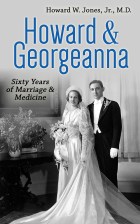
I am proud to announce that Jamestowne Bookworks will publish this month In Vitro Fertilization Comes to America by Dr. Howard W. Jones, Jr. of the Jones Institute in Norfolk, Virginia. His memoir describes the ordeals of leading a medical breakthrough, which was most signally marked by the birth of Elizabeth Carr, America’s first IVF baby. IVF and assisted reproductive technologies (ARTs) occupy such a central place in fertility treatment today that it is, perhaps, hard for a younger generation to imagine the hostility of years gone by, even from doctors and scientists in the same field.

Some objections were professional arguments in favor of a surgical option for repairing blocked fallopian tubes, although that procedure was never very effective and never offered the opportunity to overcome male infertility (by ICSI) or diagnose dire genetic abnormalities in embryos (by PGD), as IVF techniques can. Other objectors—some were Nobel prizewinners—feared that babies conceived in the Petri dish would be born with abnormalities, but in fact they are just as healthy as others. And there were also protests that IVF perverted God’s will.

This book is a personal view by a medical pioneer of how a controversial technology became orthodox practice. Dr. Jones interweaves memories of patients, clinicians, scientists, and opponents into a remarkable story of achievement. Yet, this medical revolution will not be complete while infertility treatment remains unavailable in some countries and officially denied to Roman Catholics.

In 1984, Dr. Howard was invited with his wife, Georgeanna Seegar Jones (1912-2005), to join a small working party of distinguished doctors and theologians in the Vatican City to advise Pope John Paul II whether IVF was ‘licit’ for practicing Roman Catholics. Their report was never published. It was probably quashed because the Holy Office had already made up its mind, and IVF remains forbidden in the church to this day, although as widely ignored as the doctrine against contraception. Official censure of IVF was publicized in a Papal Instruction, Donum Vitae (1987).

Dr. Howard Jones and IVF

Published by Jamestowne Bookworks (2014)

Dr. Georgeanna was one of the most outstanding clinician scientists of her generation. She cared for patients with infertility and hormonal problems throughout a long career at Johns Hopkins Medical School, from which she graduated in 1936. As a Christian doctor, she felt incensed not only because the Church was denying people a safe and effective remedy for family building, which is one of the greatest of human hopes, but also because the arguments were false.

She wrote an open letter to the Vatican which Dr. Howard has included in his book. I have reproduced it below in full because her arguments are so powerful and gracious. It is one of most memorable letters I have ever read, and is as valid today as when it was written in 1987.

“I write in response to the Vatican ‘Instruction on . . . Procreation’ as a member of the large majority of the non-Roman Catholic religious community, Christian and Jewish. I write as a practicing gynecologist with a long record of investigative work in reproductive physiology and endocrinology. Perhaps even more importantly, I speak as a wife of 46 years and the mother of three children with successful marriages of 19, 15, and 14 years, respectively.

In 1984, my husband Dr. Howard W. Jones, Jr., and I were invited to the Pontifical Academy of Science at the Vatican for the purpose of explaining the technical and scientific aspects of in vitro fertilization (IVF). We were delighted to participate—as non-Catholics. We acknowledge the Catholic Church as the largest organization for potential good in the world. We regarded the invitation as an expression of openness and genuine interest in the science of reproduction.

Two years earlier we had participated in an IVF symposium in Bari, Italy, at which the five major Italian universities had joined efforts to gain support for IVF from the Vatican and from the Italian Ministry of Health. There we had had the opportunity to discuss the ethical issues with Monsignor Carlo Caffarra, one of the very conservative theologians of the Vatican, and were amazed to learn that his ethical objection to IVF had nothing to do with abortion, which was the issue often raised in the United States. Rather, the ethical problem, as he saw it, was that IVF “is outside the bonds of conjugal love.” My query was, “Do I understand this that conjugal love is defined as intercourse?” The answer was, “Yes.” My response was then as it is now: “Monsignor Caffarra, in this Twentieth Century you must change your definition of conjugal love.”

Jones Institute, Norfolk, Virginia

Portrait of the Drs. Jones at the Jones Institute, Norfolk, Virginia

Pope Paul VI in the encyclical letter Humana Vitae (1968) sought to enlarge the definition of conjugal love as intercourse-for-reproduction by adding to the reproductive function the function of “unity.” This is defined by one theologian as “love union” and presumably means love or bonding between couples, but it still makes the conjugal act and conjugal love inseparable. The unitive and procreative functions of the conjugal act are not permitted to be separated (“Instruction,” Part 2B, Sec.4). Therefore, procreating without intercourse is illicit, and intercourse without the possibility of reproduction is illicit. In the Vatican document, the definition of conjugal love as intercourse unifies the ethical discussions of all topics related to reproduction. Contraception is prohibited because the act is no longer expressive of the procreative function. Artificial insemination and IVF are prohibited because the procreative function is not by the physical union of the husband and wife.

To me, this reasoning dehumanizes the definition of conjugal love—intercourse, if you will—by insisting that the physical and biological aspects of intercourse must be absolute. It is physiologically possible—and to me ethically permissible—in true conjugal love to separate the function of unity (I call it loving pleasure) from the procreative function, as in the postpartum lactation phase or in the menopause. It is certainly possible physiologically to separate the procreative function from intercourse either by artificial insemination or by IVF. But to me it is never ethical to separate the procreative function between two people from conjugal love. The strongest bonds of conjugal love are those between two loving individuals who are able to make responsible judgments in relation to family formation.

A definition which implies that intercourse is conjugal love, and that the sole function of intercourse is reproduction, does not differentiate between human beings and animals. It is unjust to burden Catholic couples with such a medieval definition. Conjugal love between two human beings should first be a bond of admiration, respect, and mutual interests that produces a lasting spiritual union usually consummated in the physical union of the conjugal act, intercourse.

Reproduction with family formation is surely one of the great pleasures and benefits resulting from the commitment made between two individuals joined in conjugal love and the act of intercourse is physically designed to assure successful culmination of the reproductive process. Because human reproduction is notoriously inefficient, the repetitiveness of the act must be ensured.

This link is made by enkephalin, a natural morphine secreted by the nervous system during intercourse, thereby rewarding us with a feeling of well-being and pleasure, and making intercourse addictive. If the process were otherwise, humanity would not have survived and flourished. This habit formation ensures us that intercourse will occur repetitively enough, in a species without a built-in ovulation signal, so that one intercourse during a month may be successfully timed, and often enough during a year so that one of the successfully timed ovulations will become fertile.

More importantly, in mature conjugal love, the physical act should be inseparable from the spiritual love and respect associated with one special individual in the marriage bond. The union of the pleasurable with the reproductive aspect of the conjugal act provides not only for successful reproduction but also for the stable family formation, which, in human beings as in the primates, is vital to the survival of the young.

The relative importance of these various aspects of intercourse changes as the individuals in a marriage grow older. When age prevents reproduction and when childrearing is completed, intercourse still furnishes—without the possibility of reproduction—its natural function of pleasure. So it is that intercourse from a scientific point of view has not one function but three: (1) reproduction in the early years, (2) a bond to maintain the family formation as childrearing becomes important, and finally, (3) solace to the elderly.

This returns us to the Vatican viewpoint that intercourse is licit only for the purpose of reproduction and that every intercourse must be open to the possibility of reproduction. If one carries this viewpoint to its extreme conclusion, no sterile man or woman should have intercourse. This would include the postmenopausal woman who, presumably with her spouse, would be condemned to abstinence. As this is so obviously impossible and illogical, exceptions have been made to include “unity,” for example, the menopause and known medical factors which interrupt fertility—excluding, of course, sterilization procedures. The necessity for the exceptions makes the fallacy of the premise apparent.

 If then, the premise—that reproduction without intercourse is illicit or intercourse without reproduction is illicit—is incorrect, Vatican pronouncements against contraception should be reviewed and revised. Although the Vatican has precluded contraception because it induces a condition in which intercourse is not open for reproduction, yet it has made an exception for rhythm contraception. Such an exception is a scientific fallacy and a contrivance, for it is a well-established fact that intercourse after ovulation has occurred—which is the only effective rhythm method—is never open to reproduction. What is the difference between this form of contraception and taking a pill to ensure a cycle “never open to reproduction?” The answer is that the pill is “unnatural,” therefore alien to God’s laws. But certainly prohibiting intercourse in a marriage blessed by true conjugal love is unnatural.

The majority opinion of the theologians attending the symposium of the Pontifical Academy to investigate the scientific and ethical aspects of IVF was that basic IVF is an ethical consensus. Monsignor Caffarra was the sole dissenter from this consensus. His final statement was that accepting the IVF procedure as ethical would demand reconsideration of all past pronouncements on the subject of reproduction. The next theologian to speak pointed out that if accepting IVF as ethical meant that the Vatican needed to review and possibly revise all former pronouncements on reproduction, perhaps the time had arrived to do just that.

Those in attendance were to receive the final draft of the scientific and ethical discussions for their review and, if necessary, corrections prior to presentation of the document to the Pope for his enlightenment. But no such document was circulated. We therefore conclude that His Holiness is not acquainted with the scientific discussions by the physicians or the ethical judgments of the theologians convened for the express purpose of evaluating the scientific and ethical considerations of IVF. The recent Vatican publication therefore seems to make a mockery of this activity of the Pontifical Academy, which was established during the Renaissance to preclude another Galileo affair.

The Vatican would be well advised, as the twentieth century draws to close, to listen to the collective wisdom of the many dedicated and brilliant ethicists and scientists available within its walls. The Vatican should redefine conjugal love between human beings in terms that emphasize all-encompassing love instead of limiting it to sexual intercourse. The Vatican should realize the scientific factualness—naturalness if you will, God’s law as I prefer—of the two-fold function of intercourse reproduction, and pleasure, and the changing importance of the two functions in the lives of two individuals joined in conjugal love.

The pronouncements of natural law were expounded by the early pagan philosophers; in the Judeo-Christian ethic, the laws of nature were regarded as God’s laws. We seek to determine the scientific and logical explanation for all of these wonderful and beautiful examples of God’s laws. When our investigations indicate either additional functions, such as pleasure in intercourse, or additional therapeutic measures for correction of defects, such as IVF for the treatment of infertility, we should accept these findings as further evidence of God’s will for us to be inquisitive and rational. For this is a world of reason that God in His mercy has provided for us. When we know the fact, we must sometimes change our definitions—and even our minds.”

If the Pope ever read the letter it has made no difference to church doctrine, though that will surely change one day. Perhaps the subject will come up during the current synod on family life, and if so maybe Pope Francis will prove more progressive about contraception and fertility treatment than his predecessors.

Next Post: Ghost story from West Virginia

Posted in Biomedical | Tagged , , , , , , , | 2 Comments

Room for a Womb – a transplant story

It seems particularly fitting to congratulate a Swedish colleague who announced the world’s first successful uterine transplant the same week that the Nobel Prize for Physiology and Medicine is announced from Stockholm. Not that the transplant will earn him the Prize one day, which is awarded for a scientific breakthrough rather than a technical tour de force. Surgeons have long known how to hook up blood vessels, but have balked at challenges about transplant safety, longevity, and ethics.

Sherman Silber, M.D.

Roger Gosden discussing an experiment with Sherman Silber after a lecture

Mats Brannström has been working on the project for about fifteen years, or as long as I have known him. We used to chat at fertility preservation conferences when I was working on ovarian transplants. My goal was frozen-preservation of ovaries for young cancer patients who were likely to be sterilized by chemotherapy or radiation: when they were clear of disease we would transplant the thawed organs back to restore natural menstrual cycles and fertility. Around the globe, over thirty patients have conceived healthy children after an ovarian transplant. I also worked with the brilliant surgeon, Sherman Silber of St. Louis, who restored years of menstrual cyclicity and fertility to women who had an ovary donated by their genetically-identical twin sister. There is no greater satisfaction for a researcher than to witness their work leaping from the laboratory to the clinic.

uteru,s ovarian and fallopian tubes

Human female reproductive organs

But transplanting reproductive tissue can be troubling, if not actually controversial. For us, it was the question of whether an ovary that was removed for storage before the disease was cured might seed cancer cells in the patient as a transplant? For womb transplanters, the major question they face is, “Why do it, when it is so risky?”

Mats explained that the idea didn’t come out of the blue: one of his patients asked if it could be done. She was having a hysterectomy and desperately wanted the experience of gestating a baby. Her inquiring mind set him on a journey to help women like herself. For women who still have ovaries, they can have in vitro fertilization (IVF) before surgery to store embryos in the freezer until they are ready for transfer to the transplant. But, unlike our identical twins, they need constant treatment with drugs to suppress the immune system that naturally tries to reject the foreign organ.

Objectors point out the alternatives for women who lack a uterus. First, there is child adoption, although not such an easy option as in the past. Second, there is surrogacy in which a “tummy mummy” is commissioned to carry the baby. This can be arranged either by conception in her own body, using sperm from the patient’s husband or a donor, or by IVF in which embryos from the commissioning couple are transferred to the third party, so the child is genetically related to them. But surrogacy is outlawed in some countries, including Sweden, as it is in some U.S. states and for Muslims.

Medical practitioners are less paternalistic than they used to be. In the past, they were more comfortable proscribing (as well as prescribing) treatment if it made them uneasy or in their clinical wisdom it did not seem to be in the best interests of their patient. Nowadays, as we come to our doctors after consulting other specialists and surfing the Internet for the latest medical research, we are increasingly telling them what we think they should do! In the parlance of bioethics, the Autonomy/ Beneficence pendulum is swinging from right to left, from B to A, which can take a doctor on a hike into swampy ethical territory. I sympathize with them for wondering why a hazardous uterine transplant should be attempted if it is not life-saving but, on the other hand, I think we ‘fertiles’ can too easily underestimate the grief of childlessness and the lengths that people will go to achieve one of the greatest joys in life—parenthood.

Queen Amalia, Mullerian agenesis

Beautiful Queen Amalia of Greece (1818-1875) by Stieler

Most women who seek a transplant have had a hysterectomy to treat cancer or another medical condition. Some were born without a uterus because of a genetic abnormality with a name that can throw a student at exam time—Mayer-Rokitansky-Küster-Hauser syndrome. This was the condition that Queen Amalia of Oldenburg (1818-1875) had, and her inability to give King Otto an heir caused their expulsion from Greece. Perhaps a transplant would have saved the monarchy.

I don’t know who should take credit for the original idea of uterine transplantation. I don’t think I deserve that honor (if it is such), but exactly thirty years ago I mentioned it at a conference in another Nordic state, Finland. My suggestion didn’t cause any rumbles, as I expected, perhaps because the audience was too polite to pronounce me ‘off the wall.’ When I returned home to the Edinburgh Medical School, I took the opportunity one day to ask senior colleagues in the common room what they thought of the idea. The gray silence that followed spoke more than anything they might have uttered.

I never thought any more about it until I moved to McGill University and collaborated with a skillful Chinese microsurgeon. We transplanted ovaries, fallopian tubes, and segments of uterus en bloc from donor rats to sterile recipients. Treated with immunosuppressive drugs, the transplants survived and gestated healthy pups. But those were rats. Nobody talked about transplanting a human womb.

The first clinical case was reported in 2000 from Saudi Arabia. It ended in disaster. A blood clotting problem necessitated emergency removal of the womb, amid international criticism. The bad news did not deter a Turkish surgeon, who had famously performed the first full face transplant in his country. In 2013, all was going well when the 22 year-old patient conceived after embryo transfer, but when her fetus was scanned at 8 weeks it was found to have no beating heart and, sadly, had to be terminated.

Meanwhile, Professor Brannström was cautiously honing techniques, testing them in monkeys, and assembling a multidisciplinary team. Patients were carefully selected for the best chance of success, and most had recruited a relative or friend as a donor. Mats deserves credit for not rushing to be first, which is a great accolade in medicine and science.

Seven of the first nine transplants survived. It did not matter that some donors were postmenopausal, because the uterus ages far more slowly than the ovaries. The successful patient did, however, develop pre-eclampsia which forced an early delivery by Caesarean section. But mother and baby boy are doing well and I salute them and my old chum.

Next Post: Rehabbing Peter Rabbit

Posted in Biomedical, Other | Tagged , , , , , , , | Comments Off on Room for a Womb – a transplant story