Milton’s Mulberry Tree

According to tradition, a mulberry tree was planted at Christ’s College in Cambridge the same year that John Milton was born (1608). The tree shaded the poet when he went up to university as an undergraduate, and survives in what is now the Fellow’s Garden.

I never visited the garden when I lived in Cambridge. At busy times in life, and in cities that offer much, it is easy to postpone the sights, but we move away before tomorrow arrives. So while I was staying in college last week, I took the opportunity to see the famous tree.

It is now a sprawling mass of shoots rising little more than fifteen feet. The trunk rotted away long ago and horizontal branches are propped up like the arms of old men leaning on canes. A less venerable tree would have been axed long ago to make way for a pretty flower bed.

Even in Victorian times when the tree was barely two centuries old there were worries that it would not last much longer. “Time’s effacing finger must at no distant season sweep it entirely away from its much honoured site. Serious apprehension is entertained of the tree not being able to survive through another winter” (Eliza Cook’s Journal, 1854).  But if you look closely, its shoots are still vigorous, foliage is free of disease, and there is a crop of fruit for another batch of mulberry jam. When trees grow old, they can still thrust up arms of youthful vigor.

Perhaps resveratrol flowing in its veins helped to preserve the tree. But no matter its age, if shoots are still healthy there are germs of longevity in their tips. They contain meristems like stem cells derived from animal embryos which can recreate a whole organism (think of clones or Adam’s rib). Most gardeners take the regenerative power for granted, but when I take cuttings to make a new rose I think of embryology. In 2008, on the four hundredth anniversary of Milton’s mulberry tree, shoots from the old stock were planted in Wales for the Hay Literary Festival.

Who dares to guess how long they will thrive there? The indefinite longevity of plants is a marvel denied to mortals. Perhaps Charles Darwin pondered the difference after seeing the mulberry tree when he was admitted to the college in 1827.

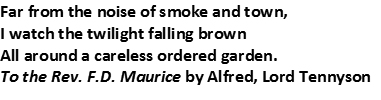
Five years after going down from college in 1632, Milton was contemplating the premature demise of Edward King in a shipwreck. He composed an elegy for his college chum, which ascends from pastoral life to a resurrected plain that an immortal mulberry tree has no need of.Lycidas

Next Post: Virginia Nature Journal for June

Posted in Academia, nature | Tagged , , , , | Comments Off on Milton’s Mulberry Tree

Fertility owes Preservation to a Sheep

The journal Human Reproduction reported a 27-year old woman in Belgium has delivered a healthy baby boy. That would not be newsworthy if she had not been rendered sterile at 13 years old by a life-saving bone marrow transplant for sickle cell anemia.

This was neither conception with a donor egg, nor from a mature egg retrieved and frozen from her ovaries before chemotherapy. But it did involve one of her eggs, so she could become the birth mother and genetic mother. So how did it happen?

Shortly before curative treatment for sickle cell, her gynecologist harvested strips of tissue from her right ovary for frozen storage. In excellent health a decade later, her tissue was thawed and transplanted to the now sterile left ovary, as well as elsewhere. After 5 months, she had her first period, which confirmed that eggs had survived inside their follicles, and she continued having regular periods until conceiving naturally within two years. Yes, it gave her periods and fertility without any further medical help—naturally!

It’s a newsworthy case because she is first to deliver after transplanting an ovary stored from childhood. Girls undergoing sterilizing treatment are rarely offered fertility preservation, and this can be their only option. The first case of its kind was 20 years ago for a two-year-old Yorkshire infant called Harriet. We would never have suggested it except she had to undergo an operation to remove a kidney tumor, which gave us the chance to safeguard some of her ovaries “just in case.” I don’t know if she has requested the hospital to have her tissue back, but it is wise to wait until ready to start a family because we can’t predict how long a transplant will function before it fails and then plunges her back to a menopausal condition.

There have been about 40 births to women worldwide after a frozen ovary transplant, all of them healthy to my knowledge. And there is a further series of 11 women who received a fresh transplant donated by a sister at the Infertility Center of St. Louis led by my colleague, Sherman Silber, M.D. He recently reported in Reproductive BioMedicine Online that menstrual cycles have returned in every case. Two women are still cycling after 8 years, with 11 births in all. It has turned into a rather robust procedure.

While ovary transplants have been in the news for over a decade, there is no full account in public space of how they originated. The story depended on a sheep, but the idea was really a brainstorm in a blind alley. Science doesn’t always proceed linearly, and sometimes backs out of a cul-de-sac to find the main highway.

Around 25 years ago at Edinburgh University, I naively mentioned on a BBC TV science documentary that I was testing if fetal ovarian tissue can restore fertility in adult animals. This was before the era of egg donation and at a time when egg freezing was considered unsafe. Since there are more eggs in fetal ovaries than after birth, the prospects of a long functioning graft seemed high—provided the eggs were healthy for making babies. When the experiments were successful, women with premature menopause or Turner’s syndrome urged me forward, but it was an idea stillborn.

I was the target of huge opposition and not a little opprobrium from bioethicists, churches, politicians, and just about everyone else. A senior American scientist even warned me not to travel to the USA because people were saying the procedure would encourage abortion for donating tissue. Nothing was further from my mind than that horrific idea, because my research agenda was entirely pro-fertility! I had simply believed it is better to do some good with discarded tissue than no good at all, although I acknowledged there were issues about safety and consent.

The bumpy ride did, however, take me back to a new and much less controversial agenda. It was a time when cancer survival rates were starting to climb, especially for children, but sooner or later the highly toxic and aggressive treatment could make them sterile. Men had the option of semen freezing, but there was no equivalent chance of preserving fertility for children. I started to wonder if ovary banking for girls and testis banking for boys was the answer.

Roslin Institute

Frosty conceived after ovary freezing and transplantation in Scotland

We had modest hopes because freezing whole tissue is harder than single cells, but if it worked with sheep ovaries we were hopeful of the same for patients. I remember working with my colleague David Baird in a cold operating room at the experimental farm outside Edinburgh where Dolly the cloned sheep was born a few years later. We returned frozen ovarian tissue to the same ewes a month after a harvesting operation. Four to five months later the animals showed signs of graft activity, the same delay we have observed in patients. Not long afterwards, there was a pregnancy, and a little “Frosty” was born.

The Daily Telegraph September 23, 1999

The Daily Telegraph September 23, 1999

A research fellow who returned to the USA from my lab was first to transplant frozen tissue to a patient. It happened to be on my birthday in 1999 and the eve of emigration to a job at McGill University that the patient came to the UK and visited my lab. There was a huge splash in the media, perhaps because there was no other news that day!

Unfortunately for her, the graft was not successful. It had been frozen as minute fragments at an unknown center, but the attention she received encouraged others, and there was happier news for them. By 2004, the first birth was reported, and this too in Belgium.

Next Post: Naturalists, Snap that App


Posted in Biomedical, Fertility | Tagged , , , , | Comments Off on Fertility owes Preservation to a Sheep

Explore your Longevity with UbbLE

Two Swedish biostatisticians drawing data from the UK Biobank have created a test accessible online for estimating your “age” and chances of surviving the next five years. It’s published in The Lancet medical journal. I couldn’t wait to try it!

The test has an odd name, “UbbLE,” for UK Biobank Longevity Explorer, yet easy to remember because it rhymes with “Hubble” the telescope. The Biobank is a database of half a million British volunteers who answered a detailed questionnaire about their health history and habits and underwent a physical exam and a battery of tests. Their health is being monitored for the rest of their lives.

The UbbLE test requires answers to 13 or 11 questions for men or women, respectively. They have been condensed from a grand total of 655 variables in the database to a bunch that is most predictive of five-year mortality and “UbbLE age.”

To qualify for the test you must be 40 to 70 years old and have lived permanently in the British Isles. Having lived there for almost five decades and continuing a similar (or better) lifestyle in the USA I think I qualify. So what did I find?

My UbbLE age is a full 12 years lower than my chronological age. That implies I have the mortality risk of a 54-year-old. Secondly, I have a 3% risk of dying in the next five years. There will be cynics who doubt this post and would love to burst my UbbLE: “It must be a lousy test”/ “He lied about the answers”/ “He screwed up”/  “He’d never say if results went the other way” (TRUE).

It takes luck to have a greater life expectancy, and it’s helpful to be young! But, more seriously, it helps to have a low BMI (weight for height) and a brisk walking pace, to be a non-smoker and free of any history of cancer, diabetes and mental illness, and better not to be poor.

UbbLE doesn’t predict longevity more than five years ahead. So it is no substitute for the MetLife longevity predictor used by insurers and investors, but it’s the best test of its kind to date.

Rembrandt

Says more about longevity than a thousand words or statistics

I was curious how my UbbLE age and mortality risk would change if I played with the answers. The second most predictive factor (after walking pace) is smoking, so I re-ran the test by pretending to be a current smoker. It lifted my UbbLE age from 54 to 62, and my five-year mortality climbed from 3 to 6%. The estimated loss of eight years of my life is enormous, and there are smoking-related disabilities that the test ignores. Everyone knows that smoking is bad for us, but we can kid ourselves that we are in the short and lucky percentile at the healthy end of the spectrum of probability. Since the risk of a fatal smoking-related disease is statistical there is enough wiggle room in the spectrum for smokers to believe “it won’t happen to me,“ as a friend once told me after smoking two packs a day for 72 years. Perhaps the test will help a few more people give up the habit.

I don’t take much comfort in my own results because of a superstitious fear of being hit by a bolt of lightning. You can never be really sure in the longevity stakes. But they have nudged me to consider if my investments for retirement are too conservative for my UbbLE age. Will they provide enough income through equity growth to cover me if I survive deep into my nineties before I am struck down?

People in possession of a few facts about others can play the UbbLE game to satisfy their curiosity. They might put the geezer next-door secretly to the test after he threatens their dog for running in his yard, hoping he will drop dead before Max. And someone grumbling about alimony might want to know the chances of natural causes ending payments to an EX in the next five years. UbbLE can make statistics fun!

One of the main attractions of the test is its simplicity, and another is the authority of a huge database behind it. In future, it will be refined for testing people younger than 40 and older than 70. But we should be glad that the science of predicting when we will die is never going to be highly precise, otherwise we would have some hard choices and feelings. For healthy people of any age predictions will always be blurred, and even those in failing health often fool a doctor who offers a precise forecast. It’s much better that way.

Next Post: Nature versus Nurture


Posted in Biomedical, Other | Tagged , , | Comments Off on Explore your Longevity with UbbLE

Last Flight of the Dough Bird (Eskimo curlew)

Everyone knows the most abundant bird in North America was driven to extinction a century ago by market hunting and habitat destruction. The very last passenger pigeon, called Martha, died in Cincinnati Zoo in 1914. But few people know the story of the Eskimo curlew that suffered the same fate.

This was a shore and wetland species that bred in the Canadian tundra but wintered in South America. Vast flocks headed south to escape the Arctic chill, but stopped to refuel on crowberries in the peat bogs of the Maritime Provinces, and stop again in the southern U.S. before the final wing home.

They were easy targets for hunters, and very profitable. A reporter noted 2,000 birds hanging at the Hudson’s Bay Company in Labrador that had been shot the same day in the late 19th Century. They were so plump from overfeeding for the journey that when a victim fell from the air it sometimes split open showing the white fat that gave their name, “dough bird.” Their meat was a delicacy served in eastern cities and even as far away as London after shipment in barrels and cans. But they had become rare by the end of the century, and the last one was sighted in 1963.

Dough bird

Eskimo curlew by John James Audubon

Over-hunting before the Migratory Bird Treaty Act of 1918 put the species into an irreversible tail-spin towards extinction, and ruined hunting income. Local people missed the wheeling and calling of flocks that visited them seasonally. And Robert Morris, a surgeon-naturalist from New York, celebrated a memory of them in prose and poetry from his exploring days in the wilds of eastern Canada.

“One day in August when standing on a bold crag in the mountains of Labrador, I listened to the lilt of marlins (Eskimo curlews) almost out of sight in the clear blue sky and leaving that day for Argentina on a non-stop flight. A whale was playing in the distant sunlit heaving sea that sent but a passing puff of its thunder up to the heights where I stood. The heavy rumble of a sundering iceberg moving in colorful majesty and flashing dignity down its lane of deep ocean current could not drown out the exultant note in voices of carefree birds that were bound for somewhere of joyful memory for them. The thought was so overwhelming that I sat down on the soft white caribou moss and began to pencil in my notebook some lines that were later published in Surgeon’s Philosophy. I had to stand up to finish the note feeling reverence for a scene that made sitting down in its presence a profanation. In an atmosphere so clear that one could look straight up to infinity the birds rose high before heading south. They became mere specks in the sky and were then lost to view while their voices still came faintly back. The measure of the lines corresponds to that of the wing-beat of the birds otherwise I could not have remained in tune with nature.

RTM poem

When men’s hands point toward him, they’re lifted up toward Heaven. On the homeward bound steamer from the North that year a group of travelers in the cabin asked me to read extracts from my notebook, but these lines to the marlin seemed to have been “written for myself only.” No one referred to them in the subsequent conversation that evening, but there were plenty of questions about wolves and bears. In the audience there had been a rough old seasoned captain who sailed the seven seas on roving commission. He had recently lost his ship in the ice and was getting himself and survivors of his crew back to a port. Next morning he stopped me as we were passing on the deck, and said, “Them words that you read about the dough-birds (marlins) last night was about right. I wish you would let me see that log of yours again if you don’t mind.” He had doubtless put many a cask of stewed dough-birds in his larder aboard ship, and I was astonished at any sentimental interest in the big gentle birds as it came from that old salt.

Perhaps I was one of the last men to witness a flight of the marlins that were so delicious for the table. Subjected to murderous massacre at both ends of their flight and on the spring return journey by way of the Mississippi Valley they melted away like the passenger pigeon, and only a little later on.” (Extracted from A Surgeon’s Story by Roger Gosden and Pam Walker).

Bryan Watts, an ornithologist at the College of William and Mary, has recently written a beautiful and impassioned vignette about the dough birds. It illustrates how quickly we can shrink biodiversity and rob ourselves of natural wonder.

“The extinction of the dough birds was driven by the tragedy of the commons, a force that stretches back before human civilization itself and that is still alive and well today. The market hunters that encountered the birds in different places throughout their annual cycle were more concerned about their own profits and enjoyment than they were about the future of the birds or about the other hunters along the Great Circle.  We may legislate hunting regulations, but what about the destruction of critical habitat, the consumption of coastal resource or human-caused climate change?  Until we are all able to rise above our own self-centered concerns to see a future beyond our own and recognize that cooperation is not merely a kind gesture but an imperative for the future, no species is secure, not even our own.”

Next Post: Science fraud

Posted in Animalia, Environment | Tagged , , , | 1 Comment

Virginia Nature Journal for May

The virtual extinction of the American chestnut across its range is like the story of the sack and burning of Troy. A few old timers can still remember when it was the dominant canopy tree both sides of the Appalachian mountain chain, although even then it was in retreat. In a few decades from 1904, entire regiments of trees were killed by a blight, and just a few old soldiers survived underground to sprout like ghosts in spring. There is an example in a friend’s yard.

Long before we were born, it was probably a giant over one hundred feet tall with broad spreading limbs providing shade over his family home. But when it cankered after being attacked by blight its ring of cambium died and the old fellow rotted. Only its roots survived, and they are wearing out.

American chestnut tree

An old chestnut tree regenerates in my friend’s yard

For years it has struggled to grow shoots and branches, and last year managed to reach 20 feet and produce flowers for green burrs in fall, but it cankered again and was cut down to knee height. The cycle is repeated over and over, but each time the root system is less able to regenerate because there is insufficient nourishment from leaves. A Virginia forester who loves chestnuts told me that cankers can be stopped by rubbing them with dirt, because it contains antibiotics. But a remedy that depends on our helping hands will never work across a forest, and is impractical when a tree grows up.

There were still three or four billion American chestnuts in Longfellow’s time. A specimen he depicted in a poem grew in Cambridge MA until 1876 when it was cut down and some of the timber rescued to make a chair for his 72nd birthday.

Longfellow

The chestnut has been called “the perfect tree” because it can produce a huge harvest of nutritious nuts and wonderful timber that won’t rot, and it is ornamental. The strong arms of the hard-working blacksmith are like the bows of the productive tree, and his virtuous life like the generosity of the forest giant. The loss was said to bring tears to the eyes of old-timers who treasured and depended on chestnuts, but have they gone forever?

My wee Restoration Chestnut

My wee Restoration Chestnut

As an iconic tree, they still have friends and admirers today. Researchers have been laboring to create a transgenic chestnut and hybrids that are blight resistant from backcrossing and intercrossing to incorporate genes that were evolved by the Chinese chestnut over eons for protection where the blight was endemic. The latest generation of Restoration Chestnut from the American Chestnut Foundation is nearly 95% American and groves of them are being planted in Virginia and other eastern states. I care for one I planted in my yard last year from seed. Will it survive? Only time will tell. But blight is not the only threat—a marauding deer munched its crown last week.

Next Post: Dough birds


Posted in Environment, Memoir | Tagged , , , | Comments Off on Virginia Nature Journal for May