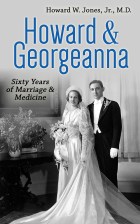
Howard W. Jones Jr., M.D. (1910-2015)

Our dear friend and mentor died today in Norfolk after a short illness. Lucinda and I were able to exchange a few words and smiles with him in the hospital yesterday. He asked how our children are doing—so typical of him.

Howard Jones will be remembered as one of the “Greats” of American medicine because of his pioneering work in reproductive surgery and in vitro fertilization (IVF). He was an inspirational figure for his students and fellows and beloved by everyone who knew him. He had a wonderful blend of humanity, dignity and generosity of heart. Modest and conservative in his own habits, he was indefatigable at work, progressive in outlook and a charismatic speaker. His laugh was infectious.

Some of this character and strength came from his matrimonial and professional partnership with Georgeanna Seegar Jones, a brilliant reproductive endocrinologist. They were a perfect team, sharing an office for most of their careers, co-editing books and journals, and co-supervising junior medical staff and research projects. He said they never had angry words.

Jones Institute

Howard W. Jones Jr., M.D.

Howard was born in Baltimore, Maryland, and graduated cum laude from Amherst College in 1931 and M.D. from Johns Hopkins University in 1935. After military service as a surgeon in France during World War II, he returned to Hopkins where he switched to gynecological surgery and was involved in developing cervical screening services (Pap test) and immortal cancer cells (HeLa cells) from Henrietta Lacks, who was his patient. He remained a surgeon and member of staff at Johns Hopkins until retirement age when they moved to Norfolk and created America’s first successful in vitro program.

When I asked him recently which breakthrough was most important in his career, he replied without hesitation: it was IVF because infertility had been a “great unsolved problem” and the technology has had “a big impact on society.” He became deeply engaged in the ethics of reproductive medicine as an author and committee chairman. Howard and Georgeanna were the sole American doctors invited to Rome in 1984 to advise the Holy See about the new reproductive technologies. I guess that IVF in America was lucky because a controversial technology would surely have drawn greater resistance if it had not been launched by a doctor duo looking like wise and kindly grandparents. Unfortunately, their powers of persuasion did not sway the Vatican, although Howard still hoped for change.

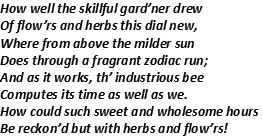
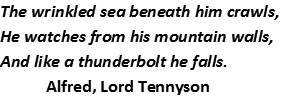
We expected he would lose heart after the death of his beloved Georgeanna in 2005, but he was soon back in his office and flourishing again. New books were published, lecture invitations were accepted when mobility allowed, and young researchers and visitors were welcomed. Work gave meaning and continuity to life, and resonated with memories of his English teacher at Amherst, who wrote:

Robert Frost

The last time I heard him recite the poem was at a conference here in Williamsburg. He was then only 93 years old. We were blessed to have him for more than another decade until he fell ill last week shortly after finishing another book, titled Howard and Georgeanna.

Next Post: Virginia Nature Journal for July

Posted in Biomedical | Tagged , , , | 4 Comments

Trust me, I’m a Scientist!

According to a MORI poll, nine out of ten people in England trust scientists. That’s a higher confidence level than for most professions. Apart from a few bad guys in history and fiction, the public often caricatures scientists as benign boffins with wild hair and white coats who diligently study nature’s most vexing mysteries. Sorry to quash this rosy view.

A Dr. Han of Iowa State University was recently sentenced to nearly five years in prison and a $7 million fine for scientific misconduct. He admitted spiking blood samples with antibodies to make an HIV vaccine look effective. In Japan, a researcher was so ashamed that he hanged himself after a junior researcher was accused of falsified data. The study had claimed to find a short-cut for making pluripotent stem cells in regenerative medicine and was published in a highly reputable journal.

These cases came to light because they were making large and surprising claims. Falsification of esoteric research is more likely to go unnoticed, and years of effort and funding can be wasted when researchers follow a false lead.

A century ago in Britain, the Piltdown Man was alleged to be the “missing link” in human evolution, but it was forty years before the hoax was uncovered and paleontology could reset its course. At the same time in Vienna, Paul Kammerer claimed to support the discredited Lamarckian theory of evolution based on forged evidence from mid-wife toads. He committed suicide. Years later, Arthur Koestler wrote a spirited defense suggesting that a Nazi competitor may have fiddled with the evidence to discredit Kammerer as a Marxist sympathizer.

Most researchers accused of wrongdoing nowadays are young, highly talented and ambitious people striving for recognition. Their watchwords are “publish or perish.” They often work in competitive fields funded by an insecure succession of grants; they yearn for a tenured job with the other rewards that a big breakthrough could give them. Cheating sometimes starts when an unintentional slip-up is followed by a cover-up; sometimes the researchers think they know the answers before the data are in and succumb to a temptation to short-cut by fabricating results. Being first is everything in science, and there are no prizes for being runner-up.

Perhaps there are more cases of fraud in biology and biomedical science than in physics because the research teams are smaller, have less oversight and more liberty for individual endeavor. Besides, modern biology depends heavily on image data which can easily be altered with Photoshop. And lastly there are pressures and temptations when research offers commercial applications and industrial sponsorships.

Once trust is lost, it is very hard to regain; the scientific community treats offenders like lepers, at arm’s length.  No matter how talented the guilty party, no one wants to hire a scientist barred from research grants, which are life-blood for scientists. Unfortunately for those connected in any way with the guilty there is collateral harm even if they are completely innocent.

Trust a scientist!

Trust a scientist!

Sensational cases are much rarer than the tip of an iceberg. Most doubtful science goes unreported, hardly crimes at all but flaws of execution and fallacies of interpretation. Yet, the scale is humungous. A US study in PLoS Biology estimated that $28 billion is wasted annually on biomedical research that cannot be replicated. In an influential paper from Stanford University, John Ioannidis (2005) concluded that “in modern research, false findings may be the majority or even the vast majority of published research claims.” Financial interests, prejudices and fields that are “hot” and “competitive” are common factors in the stock of bad science.

The US Office of Research integrity, the NIH, journal editors and universities have all started to wonder what it means and what should be done. Only the most important findings attract the funding needed for confirmatory studies. Notable papers that can’t be replicated for any reason are retracted, meaning that the journals in which they were originally published disown them and purge them from the electronic record.

To bring these cases quickly to the notice of researchers, a journal editor and a medical journalist have created a blog called Retraction Watch. It is shocking to see 50-60 retractions recorded every month, including some from prestigious journals like Nature, Science, Cell, The Lancet and The New England Journal of Medicine. Neither does research originating in an ivy-clad laboratory guarantee authenticity. Editors who contemplate lowering the critical bar for flashy papers and famous names beware!

I dare say that most retracted papers and others that deserve to be printed with disappearing ink were authored by people who never intended ay deception. Their fault was in the design and execution of the experiment or field trial. The underlying reasons are legion: sloppy methods, data massage, flawed design, small numbers of observations, weak statistics, poor controls, unconscious bias, and attention is now being given to poor quality research materials.

Sometimes a study is hard to replicate because it requires a rare skill, but the excuse is getting weaker by the year as biology depends more on technology to eliminate the human factor. Koestler wondered if this explained why the toad experiments could not be repeated in other laboratories. Or perhaps Kammerer was ahead of his time with inklings of the yet unnamed field of epigenetics, but his story is usually given as a warning against forfeiting scientific trust.

Before admission to most professions, novices are required to swear adherence to an ethical code. Doctors swear “first do no harm;” lawyers recite a long oath upholding the laws of the state; and Roman Catholic bishops vow to be faithful to “the Church and Our Lord.” Unlike those ancient professions, scientists are not required to make any oath, and few attend classes in ethics or the philosophy of science (except perhaps in France). Perhaps they should.  Swearing to uphold an ideal does not guarantee integrity, and there are plenty of malpractice doctors, crooked lawyers and agnostic priests, but it might focus young minds on what science stands for and the trust that the public expects. Surely it is truth in endeavor.

Next Post: Virginia Nature Journal for July

Posted in Biomedical | Tagged , , , , , | Comments Off on Trust me, I’m a Scientist!

Bee-line from Virginia

Question: When is a beehive hairy? Answer: When it grows a beard.

A poor joke but it helps to kick-start a post about heating and air-conditioning.

For most of the year, worker bees struggle to maintain the brood chamber in the 90 degree Fahrenheit range (32-35°C) needed for larvae and pupae to thrive in the comb. “Heater bees” keep the hive warm by vibrating their body and wings, which needs energy from honey delivered by other workers. In cold winters, the queen bee stops laying eggs and the hive switches to survival mode by clustering around her in a tight ball to avoid freezing to death. If a tele-thermometer is inserted deep inside the brood chamber you can monitor bee hive breeding activity because the temperature rises to a stable level when she starts laying again in milder weather.

Recent hot weather in the Virginia Peninsular posed the opposite challenge – heat stress. Daytime temperatures peak around 100° (38°C) and the nights stay warm. At such times the brood can perish and their wax cells soften and start to melt. Beekeepers help their colonies to get through the ordeal in July and August by painting their hives white and propping open the top outer cover to encourage a flow of air, but the workers carry a larger share of the effort to keep cool.

If you see lots of bees collecting water from puddles or swimming pools you know they are hot. So intent are they that it’s hard to discourage the industry, but human swimmers have little to fear because they are rarely aggressive except when defending their hive (who can blame them?). They regurgitate water brought home, which evaporates more quickly in the draft created by “cooler bees” lining up to beat their wings near the entrance. Yet another amazing fact about bees.

bee hive

Bearded hives at 10 PM

And bearding? I haven’t seen it in daytime, but when foragers come home after a hot day many of them stay at the hive entrance instead of going inside. It reduces the heat load on the brood. This behavior startled me the first time I shone a flashlight on a hive after dark. The crush of bees climbing over each other in slow motion had avoided taking their heat

Smuttynose brewery

Two old geezers enjoy beer

inside. They looked like a goatee, and the fuzz of brown hair on thousands of heads and thoraxes can fairly be called a beard. Docile and hard to provoke, they ignore nosy neighbors like me who wonder what is going on in their collective brain. I think they are like old geezers I know who love sitting on their porch with a cold beer on a sultry night.

Next Post: Science Flaw and Fraud


Posted in Bee-line | Tagged , , | Comments Off on Bee-line from Virginia

Honey Health

A neighbor asked for local honey to treat her allergy so I gave her some from our hives. She wanted a natural alternative to anti-histamines.

South-east Virginia has a miserable reputation for hay fever sufferers, and pollen is suspect as soon as our cars are dusted apple-green from pine trees in early spring. Pollen levels remain high and in the 8 to 9 range throughout the summer because of a succession of grasses flowering after the pine. But some people are symptomatic the year round or mainly in the fall. Pollen sometimes gets the blame for culprits like dust mites, molds and animal scurf. Maybe our neighbor is wasting her time by self-medicating on honey.

But at least the theory of educating her immune system with antigens is sound, and obviously analogous to vaccination. Someone in our family has an allergy to birch pollen and is getting relief from graded doses of the same pollen by subcutaneous shots. Would it work if he took it orally, like her trial with honey? Perhaps!

Honey

Time for Medicine

The oral mucosa has a sophisticated immune system with Langerhans cells and patrolling dendritic cells involved in tolerance. A defense system is needed in the mouth because food and drink are not necessarily sterile until they are mixed with stomach acid. If honey lingers under the tongue before it is swallowed there may be time for its cargo of antigens to be presented to these cells. Whether pollen creates an immune response during passage through the gut is more dubious, because it encounters there a fury of enzymes, although pollen grains have been found in the evacuated products at the rear end. Ahem.

Since I was both ill-equipped and disinclined to test that theory, I decided to ask a more practicable question. Is there any pollen in our honey? I dusted off a microscope to focus on a glass slide where I smeared a sample.

Aha! I saw several types of grain. They were clear or dark spheres ranging in size from about 0.01 to 0.1 mm, but I had no idea what trees or herbs they came from. And I wondered if they were sufficiently abundant to alert the immune system, but that wasn’t the most serious doubt.

When a hay fever sufferer is tested for hypersensitivity, trees and grasses are top of the pollen list. Note: they are wind-pollinated species. I can’t discount them in our honey, but if any of their pollen is present it is an “accidental” minority because bees don’t visit those species. Insect-pollinated flowers rarely cause hay fever, but it is their pollen grains that rub off bees when depositing nectar in the comb to make honey. I haven’t expressed these doubts to my neighbor since there’s a chance that she will feel better from the placebo effect!

Honey has an ancient and honorable history in medicine: it was used to dress wounds and made foul tonics and potions palatable. Moreover, it doesn’t need refrigeration because it has natural antiseptic properties. The concentration of sugars is so high that bugs are dehydrated by osmosis, and without water there can be no life.  Archaeologists have even found edible honey in Egyptian tombs thousands of years old. One of the oldest elixirs, it is still useful.

I tested honey as an antiseptic barrier on a skin wound. Easy to apply and always in the pantry, I was excited when it seemed to be working – until my dog licked it off. She knows its other virtues.

Next Post: Notes from the hive

Posted in Bee-line | Tagged , , , , | 1 Comment

Virginia Nature Journal for June

“Hey, look!” I exclaimed as a man rolled down a window of the truck he drove into our yard this morning. I think my hand was shaking as I pointed at a flower bed. “Over there! It’s our first monarch butterfly of the year. They’re rare now.”

A large butterfly fluttered around for a food plant. Its wings looked like a hinged pair of stained glass windows made of amber inside cames of black lead.  They dazzled me. And then I pondered the mystery of generations that make the long migration possible and the thousands of miles for the return journey in September. They astounded me.

“Where’s your broken pane?” the man asked. “You still want it fixed?” I guess he thought I was wasting time on a stupid butterfly. It’s harder to convert someone to care for nature when there’s business to be done.

Monarch butterfly

Making new monarchs

Neighbors told us that monarchs were common twenty years ago, but now we only catch sight of them a dozen times in a whole summer. The numbers are down by 90% in Virginia as well as elsewhere. Perhaps you have to live long enough to notice a difference, and that’s why it’s important to help children to care.

The fading of monarchs from the landscape has prompted lots of speculation. Is it climate change, or logging in their mountain fastness where they overwinter in Mexico, or pesticide exposure during their peregrinations, or food shortages as they traverse swathes of monoculture crops? Perhaps a little of all of them, but entomologists think the disappearance of the food plant for their caterpillars is the main reason. They only eat certain types of milkweed.

Milkweed species used to be ubiquitous, but intensive farming and mowing of fields and highway verges is stripping them across their range. Part of the problem is that we are less tolerant of “wastelands” and “weeds.” A little more “untidiness” might help them and the critters depending on them. Any creature like a monarch that depends on a single food source is more vulnerable than a less fussy eater.

It made evolutionary sense when the first monarchs laid eggs on milkweed. The plant is named for its milky sap which contains alkaloids that Native Americans used as folk remedies, and the scientific name for the genus is taken from the Greek god of healing (Asclepias). Since the alkaloids are distasteful to most birds, the caterpillars and the adult butterflies had an advantage, and prospered as long as milkweed was abundant.

There is a silver lining to this gloomy story. While agriculture and urban development are squeezing out milkweed, countless people across the country are running to save it.

The Internet is full of appeals by milkweed activists and ads from seed merchants. Some vendors even offer free milkweed seeds, bless their hearts. The US Fish and Wildlife Service are sufficiently concerned that grants are offered to help save the butterfly. And in our own county master naturalists are planting it in school gardens or rearing butterflies indoors or tagging them so researchers tracing their migration can discover the most vulnerable stages of their migration.

Milkweed

Swamp milkweed seedlings

Even tiny efforts can feel worthwhile when they are part of a larger endeavor. I bought swamp milkweed seeds in March. After germinating in trays of potting soil I planted them out, and they are now over a foot tall in damp corners around the yard. Perhaps the colorful visitor I had today has already found them and laid its eggs under the leaves. And maybe in a couple of weeks they will grow into a bunch of fat caterpillars with black, yellow and white stripes like pajamas. Of all the critters that feast on our vegetation, they are most welcome.

Red admiral butterfly

My red admiral friend. Photo: Judy Jones

Butterflies are wonderful ambassadors for nature, and monarchs are as fine symbols for conservation as giant pandas. I never heard anyone say they disliked them, except perhaps a gardener moaning about cabbage white butterflies on his brassicas. Butterflies are almost entirely harmless, and exquisitely beautiful. You can even make a friend of one if you hold out a finger very gently to offer salt in your pores.

Next Post: Honey for Health?


Posted in nature | Tagged , , | Comments Off on Virginia Nature Journal for June