Cold Finger

The last time we had a really cold snap like last week I dug up something unexpected in my backyard. It was not as exciting as a human skeleton, but nonetheless interesting. 

I was digging frozen turf with a sharp spade to prepare a flower bed. It was like cutting ice cream cake into slices. My hands blanched without gloves, but was better working in the cold than waiting for the thaw to turn the ground to mud.

I noticed a strange object after turning over a slice of turf.  It was the size of a hen’s egg, but as hard as a stone. Brushing off ice, it looked buffish with a yellowish stripe, and a long “process” extended from the “body.” When more ice and caked clay were removed I found another long process and two short ones attached to the corners of the body.  A French scientist would have guessed sooner they were frog’s legs.

It was a frozen wood frog, which is well-named Lithobates sylvaticus (meaning a stone that walks in the woods). Tidewater Virginia is as far south as you are likely to encounter this species, whose range extends above the frigid Arctic Circle. How this cold-blooded creature survives freezing is still an enigma, and most animals can’t.

My students in Edinburgh learned about the effects of freezing by some simple experiments with red blood cells. They diluted blood in a test-tube of isotonic salt solution, which turned pink and turbid. After freezing and thawing, the solution became so transparent that print could be read through the tube.  Before freezing, blood cells are still packed with hemoglobin which scatters light and makes the tubes look cloudy. After freezing their membranes have been perforated, which allows hemoglobin to escape and leaves the cells like transparent bags.  To confirm the theory, the tubes were spun in a centrifuge. The unfrozen cells formed a red pellet at the bottom overlaid with colorless liquid showing the cells were still intact, whereas the frozen tube was uniformly pink from dissolved hemoglobin.

Lastly, the students added glycerol at the start of the experiment, which completely prevented freezing damage.

The protective effects of glycerol were discovered by accident in Audrey Smith’s lab over

Audrey Smith (1915-1981)

Audrey Smith (1915-1981)

sixty years ago. It was one of those beautiful errors to warm a scientist’s heart.  Colleagues who remembered working with her told me that Audrey was a delightfully dotty Englishwoman who took her beloved Labradors everywhere, even opening her lab doors so they could join her at work.

Glycerol was the first of a bunch of substances that now preserve a long list of cells and tissues—blood, semen, eggs, embryos, stem cells, heart valves, skin, et cetera. They work in several ways—not simply by lowering the freezing point like car radiator fluid. When they bind water molecules or substitute for water the number and size of ice crystals that do harm inside cells are reduced. Audrey’s research team also showed they reduce the risks of cells pickling in their own brine, because salt reaches harmful concentrations when water starts to freeze.

Unlike amphibians, mammals and birds tightly regulate their body temperature, and those adapted to cold climates are protected with extra insulation and a counter-current blood supply reduces heat loss through cold feet, like penguins. Some species can turn down their internal thermostat—squirrels hibernate and bears become torpid—but none can survive whole body freezing. Hibernators wake up when temperatures fall dangerously low and start to shiver and stoke their metabolic fires.

Nakedness is a great adaptation for hot climates but no good in the Arctic. Humans generate heat by shivering and conserve it by reducing blood circulation in the skin, but for migration to the Far North more clothing and changes in behavior were needed. People with Raynaud’s phenomenon have an exaggerated vasoconstriction to chilling of their fingers and toes (penguin feet).  I do. Their digits blanch and become painful at temperatures that don’t affect others, and turning blue is a frostbite warning.

Raynaud’s can be ameliorated by drugs that reduce vasoconstriction, but in one of my more eccentric projects I tested if a herbal remedy could keep my digits warm. It was a fire water of concentrated ginger and peppers, and barely drinkable. But somehow I managed to gulp it down every day for six weeks followed by six weeks off before repeating the cycles throughout the Scottish winter. I weighed my fingernail clippings at the end of each week to the nearest milligram. If the herbal was improving my cold sensitivity I theorized that my nails would grow faster on treatment from a better blood supply to the nail bed.  There was absolutely no difference, but warming pads for hands and feet worked!

Frozen storage brings to mind episodes of Doctor Who traveling through time and space and coming back from the Planet of the Dead. And that reminds me about Cryonics in which whole bodies of legally-dead people (sometimes just their heads) are frozen in the hope that in the distant future biomedical science will restore them to consciousness. It’s a good business while customers are stiff in liquid nitrogen containers and cannot complain about the service, but I think it’s better to invest in the living.

Frozen frogs are not dead, but almost. In fact they are not completely frozen, even if three-quarters of their body water is iced-up. There is glycerol in the body, but it is not responsible for cold survival. Before hibernating, stores of liver glycogen are converted into glucose, which is another molecule that helps in cryopreservation. More importantly, ice forms in their body cavities rather than inside organs and cells, both of which shrink from partial dehydration and become supercooled. Their hearts slow and finally stop without fibrillating as ours do by only a few degrees of hypothermia.

I can’t be sure if the frog in our backyard really was alive or had frozen to death. Warming it would have given me an answer, but it might not have survived the rest of the winter without a food supply or possibly had insufficient energy reserves for  successful hibernation.  Besides, there is a You Tube video of frogs waking up to satisfy my curiosity. So I quickly returned the stone to frozen ground.

Next Post: Scavengers

Posted in Animalia | Tagged , , , , | 1 Comment

Shifting Baselines

Captain John Smith

Monument to Captain John Smith, Jamestown, Virginia

In 1608 Captain John Smith led a crew of fourteen to explore the Chesapeake Bay in a shallop brought over from England in the hold of the Susan Constant.  Leaning over the side of the small craft they could see nearly four fathoms down through clear water. The bed of the estuary was encrusted with oyster reefs, enough to completely filter the bay every week, and some of the shells were large enough to serve a hearty meal. In his journal, Smith recorded, “the oysters lay as thick as stones … (there are) more sturgeon than could be devoured by dog or man … (and plenty of) grampus, porpoise, seals, stingrays, brits (?), mullets, white salmon (striped bass/ rockfish), trouts, soles, and three sorts of perch.”

The sailors must have been in awe of the bald cypress trees lining the shore like a curtain behind which a mysterious forest stretched to the horizon. The canopy was taller than any cathedral they knew in Europe, and was home to unfamiliar birds and game animals. Native people never went hungry where there was so much good fishing and hunting, and they grew corn, beans, and squash in the clearings. Smith noted the country was “very goodly.”

He never found the gold he came for, nor did he realize that the real wealth lay under his boat. It wouldn’t be harvested until the Oyster Rush in the 19th Century, which made shellfish a rarity. When they were still plentiful, their shells accumulated in the sediments leaving a record of when the Bay still teemed with life.

Fishermen and commercial watermen plowing the bay today are content with their normal catch of seafood because its original abundance stretches our imagination, if we think of it at all. We define what is normal not from the deep past, which is barely-known, but from our own experience and stories passed down by elders—“You should have seen the catches in my day, boy!” The pristine state of the Chesapeake Bay and its watershed predate human memory, and explorers like Captain Smith have left scanty records, if any. But does it really matter what the Bay looked like, because in a fast-moving world our attention is fastened on managing a man-made present and future? History is bunk, isn’t it?

Daniel Pauly disagrees. He has a theory that each generation makes its own mental map of what is normal, and consequently it can have lower expectations of richness and diversity in the environment than the previous generation if that has already deteriorated. Progressive generational myopia is called “shifting baselines,” and as a marine biologist Pauly had ocean fisheries in mind, although the concept applies generally in conservation biology and social science. To remind me of the concept I have a list of favorite shifting baselines, starting with shifting waistlines:

  • A Gallup Survey showed that Americans weigh 20 lb more than they did two decades ago, which many people thought was “just right” or normal.
  • House finches can be seen most days in Eastern Virginia, but that would not be normal for previous generations of birders.
  • Thin topsoil in my yard is normal, although I now know that a farm exhausted the land years ago when it was much richer.
  • Since average Americans watch live TV for 34 hours a week I presume they are satisfied with normal programs, though old curmudgeons who remember the hey-days of TV excoriate them.
  • Slow journeys to work in congested cities are not frustrating to everyone as we might expect because new residents accept lengthy commutes as normal.

You will have many more examples of your own, but I must get back to my theme.

There is no doubt that we have been poor stewards by polluting and overfishing the oceans. As consumers we feel the scarcity in our pockets from spiraling prices of tuna, cod, and anchovy, etc. That such a wonderful food is becoming only affordable in the rich world is a tragedy, and governments have been slow to protect collapsing fisheries, perhaps because conservation science has been blinded by the wrong baselines. Maybe a better knowledge of the original state of the environment can help to protect oceanic health and stabilize harvests because everything in a living ecosystem is linked with something else, like a spider’s web which is sensitive to changes in tension anywhere in its orb.

All things are connected.

Whatever befalls the earth

Befalls the sons of earth.

Man did not weave the web of life,

He is merely a strand in it.

Chief Seattle (1780-1866)

Chief Seattle

Chief Seattle

The wisdom of an old Native American chief who lived close to nature chimes with modern ecology. But how can we discover what stable and healthy environments looked like before they were exploited—from poring over the logs of old explorers, fishermen and whalers, or dredging up sub-fossil remains like oyster shells? The baselines that Captain Smith knew have been lost and there are precious few pristine places anymore to serve as models.

It was not however the sea but the land that alerted me to one of my own shifting baselines. I knew that most of our eastern forests are secondary or tertiary growths that have been rapidly regenerating since farming and logging started to decline here. But my error was to assume they were in the process of becoming facsimiles of the virgin forest and would again harbor the same native species with huge tree boles and towering canopies, as if we had never trammeled the land. And I thought the few remaining stands of uncut forest and reforested land protected by the Wilderness Act were pristine.

When President Lyndon Johnson signed the Act into law in 1964 he said something that used to strike a chord in me: “If future generations are to remember us with gratitude rather than contempt, we must leave them a glimpse of the world as it was in the beginning…” (emphasis added). I wish it could true, but regret I have been naïve.

I see many native trees and shrubs on my hikes that have seeded naturally—oaks, maples, hemlocks, et cetera. I fooled myself that the mixture is normal. I thought that wildness guaranteed the forest is the same as it was in the beginning, but in fact it is coming back differently. Some species that used to be dominant are now absent and replaced by foreign species. Suppression of natural wildfires (a well-meaning forestry policy) encourages the succession of fire-resistant species by others, and firebreaks create more edges where different species thrive. A history of logging and poor farming practices has often exhausted or eroded the soil, and dams and mills have altered floodplains and sediments which, in turn, alter the vegetation that grows there.

The American chestnut tree was my biggest blind spot. The tree used to inspire country folk to dub it “king of the forest,” but it is completely eliminated by blight (American Chestnut: the Life, Death, and Rebirth of a Perfect Tree by Susan Freinkel). There is now a host of introduced diseases and insect borers working their way through our pines, oak, hemlock, ash, and dogwood, and they are very hard to control. Sometimes alien species out-compete the native flora because grazing beasts and insects in their new country find them unappetizing.

George Washington

George Washington by Gilbert Stuart

If we could resurrect Captain Smith from his London grave he would tell us tales of a primeval forest he knew that is very different today. We have inklings of it from archives of the colonial era when land surveyors like a young man called George Washington were drawing plats in Virginia’s western frontier for farmers, lumbermen, and land speculators. “Witness” trees that were used as boundary markers on plats give a rare glimpse of species that grew there over two centuries ago.

land plat

A land survey plat by George Washington

And in the North-East and Appalachia sub-fossil records show that giant beech, hemlock, and spruce of the old-growth forests are now substantially replaced by maples in regenerating forests. This difference may not seem unwelcome because maples are ornamental natives, but they are less productive for supporting animal communities and the farm animals that used to run in the forest. The most productive species of all, the oak family, has declined across the range.

Gaudineer

Gaudineer Scenic Area in West Virginia. A tiny fragment of uncut, old-growth Appalachian forest

I know that it is no good fawning over the old forests, whatever they were actually like, because they will never come back. Looking back at their green light is unlikely to make a difference, and it is futile to “beat on, boats against the current, borne back ceaselessly into the past (The Great Gatsby). The land passed a tipping point of no return a long time ago when drivers of change were first released into the environment, and they continue to mold it. These changes may even accelerate with global warming.

But if the land is slipping further away from its original state, we can be more optimistic about oceans according to marine biologists. Some of them say the tide of ocean poverty can still be turned by careful management, and the Chesapeake Bay is improving, if agonizingly slowly. For eons, the Bay danced only to nature’s tune, rolling with the seasons, and generations of Native Americans who had little impact on it therefore shared a mental baseline for what they thought was normal for its waters and in the surrounding forest. Only when European colonists arrived with technologies for rapidly extracting resources was there much change, and after four centuries of exploitation Captain Smith would find the Bay strange and much diminished.

I was musing that we condemn people responsible for war, prejudice, and human bondage but rarely blame those who have spoiled the environment by industrialization, mining, overfishing, clear-cutting, and draining, eroding and poisoning land. I wondered if we excuse the pioneers because they struggled to survive in hostile territory and perhaps felt a God-given right to subdue it? Or was it because as their power of exploitation grew they didn’t realize the sea and land have limited abilities to recover? Or do we forgive them because we have benefited from their excesses. Perhaps it is a bit of all of them, but those who don’t know better can’t be held responsible for error.

I then wondered if the excuse is wearing thin on current generations and if we will be judged more harshly than we judged the past. We are no longer ignorant of our impact and are leaving plenty of evidence of our own stewardship. If future generations live in a more impoverished world than ours they will not be so blinded by shifting baselines and would justly hold us in contempt, just as President Johnson warned.

Next Post: Scavengers and Decomposers

Posted in Environment | Tagged , , , , , , , , , , , , | Comments Off on Shifting Baselines

Christmas Birds

cardinal

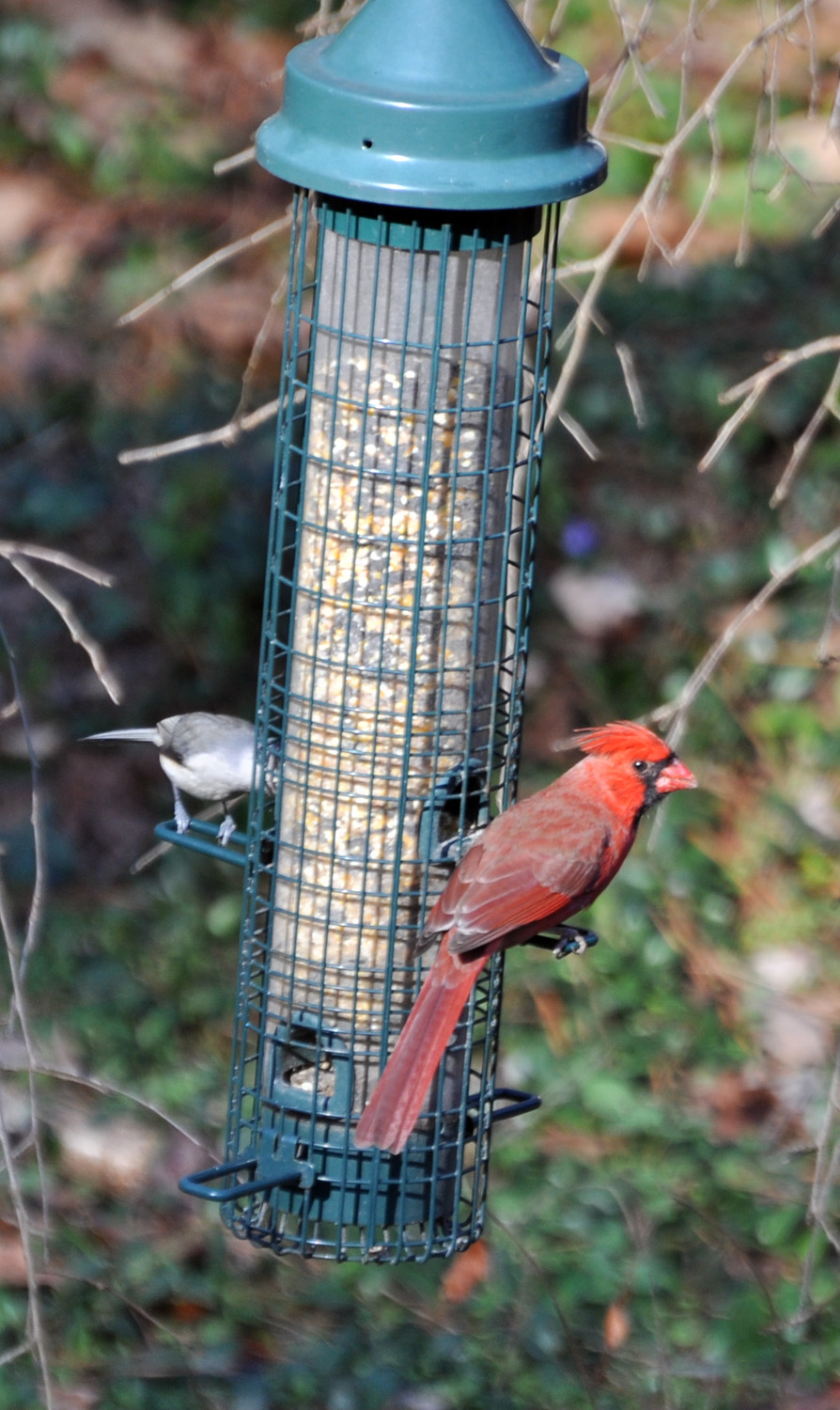
Northern cardinal at our feeder Christmas Eve

Our friends and neighbors turned up early for a hand-out on Christmas Eve in Williamsburg. They looked snug in their colored winter jackets and were eager for suet, seed, and nuts. I recorded them in my FeederWatch tally sheet—northern cardinals, Carolina chickadees and wrens, tufted titmice, white-breasted nuthatches, red-bellied and downy woodpeckers—adding notes about the weather (sunny and cold) and how long I had watched the feeder (time for two cups of coffee).

Project FeederWatch is a citizen scientist program of the Cornell Lab for Ornithology in Ithaca, NY. It recruits amateur birders from across and up and down the North American continent who record winter bird populations in their backyards.  Over time the data show which species have stable numbers or are increasing (most of those above) or becoming uncommon (too many). The five species recorded most in our area were: Carolina chickadee (98% of sites), dark-eyed junco (93), downy woodpecker (92), mourning dove (92), and northern cardinal (90). Sometimes we have an exciting “irruption.” Last year red-breasted nuthatches moved into our area ahead of cold fronts, and hungry snowy owls migrated to Virginia to avoid a scarcity of Arctic lemmings.

Last Sunday local birders were out in force braving the weather for the 114th Christmas Bird Count of the Audubon Society, which provides a snapshot of North American bird populations. The Williamsburg crowd fielded over a hundred volunteers and identified more than a hundred species that day, including some rarities for this time of year—western tanager, Baltimore oriole, and three humming birds (at heated bird feeders!). In that other bird-loving nation, the British Trust for Ornithology sponsors a survey of breeding birds for the same reason, and wisely in a warmer season of the year.

robin and letter box

Happy Christmas!

No British bird is more beloved or more closely linked with Christmas than the robin (not a close relative of the bigger American robin). Intolerant of its own kind, a robin will often strike up a friendly relationship with a gardener while waiting

for worms when a fork turns over a sod. For centuries they were known as redbreasts until 1855 when the British Postal Service introduced a skirted scarlet frock coat and black felt top hat for postmen. When the staff were nicknamed Robins, the same name stuck on redbreasts. If you ever wondered why so many British Christmas cards depict the robin with a red postbox now you know!

According to British folklore the robin got its redbreast from blood on the cross. But no birds feature in the Nativity story even though doves are common in Bethlehem and are biblical symbols of peace and love.

Turtle dove

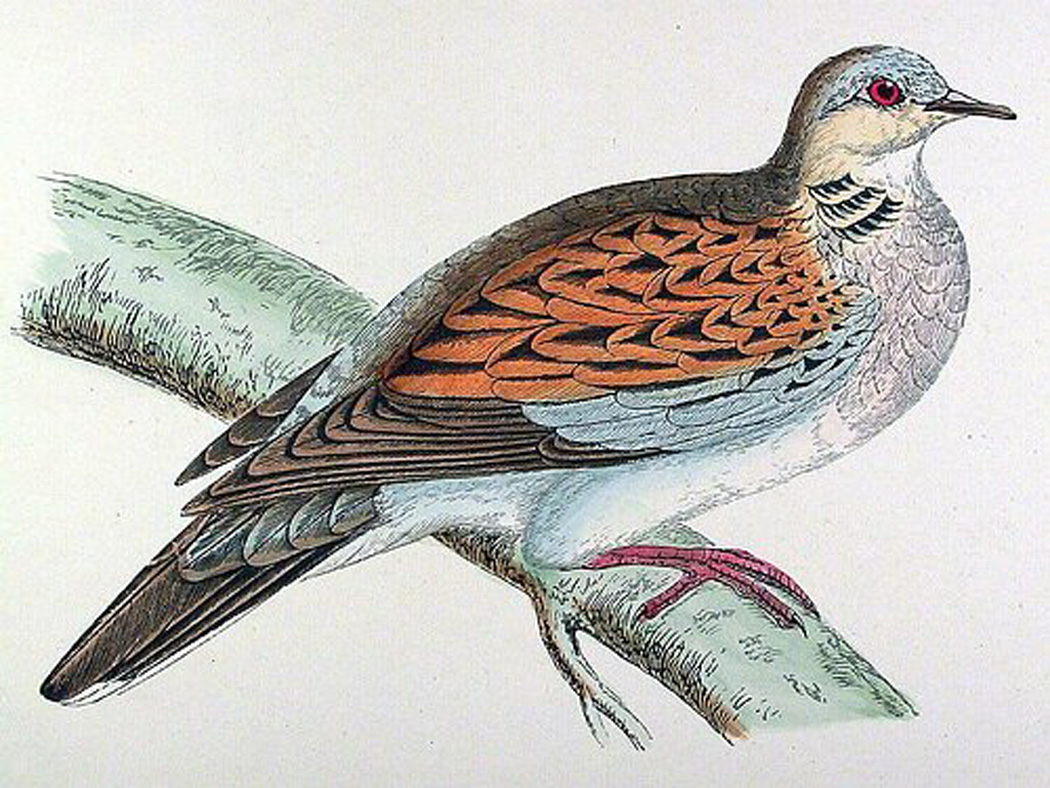
Turtle dove. Morris’s British Birds 1891

Noah released a dove to test if the flood waters had receded. On its second flight it returned to the Ark carrying an olive branch, which signified the end of God’s wrath with mankind. Later, Levirate Law prescribed that people who were too poor to afford a lamb or kid could offer instead two turtle doves for the annual sacrifice at the Temple.

Mourning doves are common in Virginia gardens, where their forlorn cooing draws attention. But living in the Bible Belt affords them no special protection because these messengers of peace are game birds that will be blasted out of the sky after the hunting season reopens on December 31, up to a legal bag limit of fifteen a day.

Peace to all our gentle doves and to my readers at this Season.

And in the New Year may there be greater Peace between Men and with Nature.

Next Post: Shifting Baselines

Posted in Animalia | Tagged , , , | 2 Comments

In a Nutshell

chestnuts

Chestnuts from Italy

“This chestnut orchard (or forest as one may call it) spread along the mountainside as far as the eye could see. The expanse of broad-topped, fruitful trees was interspersed with a string of villages of stone houses. The villages were connected by a good road that wound horizontally in and out along the projections and coves of the mountainside. These grafted chestnut orchards produced an annual crop of food for men, horses, cows, pigs, sheep, and goats, and a by-crop of wood. Thus for centuries trees had supported the families that lived in the Corsican villages. The mountainside was uneroded, intact, and capable of continuing indefinitely its support for the generations of men.” J. Russell Smith. Tree Crops: A Permanent Agriculture, 1929

When Russell Smith rode through Corsica in the 1920s he saw chestnut trees growing on stony mountain slopes where most other crops could never grow. The land didn’t need irrigating or fertilizing or plowing, and hardly required attention from the villagers before harvesting the tasty, nutritious nuts in September. Chestnuts were called “the food of laziness.” They were a staple in the local diet, versatile ingredients of many recipes, and could be milled to make flour, although chestnut bread cannot rise without gluten. The trees provided a surplus for hogs to eat, imparting a delicious “woody” flavor to the meat, and the logs made sturdy furniture and house sidings and fence posts that wouldn’t rot.

His visit nearly a century ago left a deep impression on him. A single species of nut tree had helped to sustain the Corsicans in their mountain fastness since the Roman Empire, whereas in another rugged terrain in Appalachia he knew farmers struggling on land that soon became impoverished. They had cleared the old forest to grow corn and other annual crops, but after the harvest there was little ground cover for holding back the topsoil from washing downhill into the creeks towards the ocean. Russell Smith thought they were bound to fail because “farming should fit the land”.

Dustbowl

Farmhouse north of Dalhart, TX 1938. Dorothea Lange. Library of Congress.

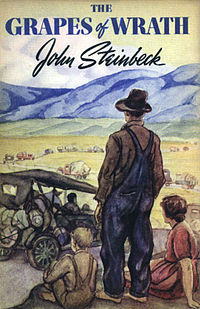
He published Tree Crops the year of the Wall Street crash. It was the last of a series of wet years in the Midwest before a drought visited the Great Plains of America for years, and the Great Depression spread across the country. The prairies had been a stable biome for eons because the topsoil was anchored by prairie grasses and fertilized by bison and other grazers. But like the mountain men, prairie farmers were cultivating land as their ancestors had in Europe where agricultural practices had evolved over centuries in a gentler climate. After plowing deeply for planting and leaving the ground bare in winter after gathering the cereal and cotton crops the dry topsoil blew away in great swirling clouds, some of the dust settling as far away as New York. The Dustbowl gave new meaning to a pejorative label, “dirt poor farmers,” and the calamity forced Oakies like the Joads and many others in neighboring states to abandon Grapes of Wrath country. After departing west along Route 66 with all their possessions and hopes loaded in a caravan of old trucks, the farm gates were still swinging in the wind when modern agribusiness took over.

Grapes_of_Wrath

1939 edition

Perhaps erosion of rich soil and the accompanying human suffering were avoidable. Russell Smith believed it was folly to grow annual crops incessantly on land that was exposed to the elements.  The Corsicans had hit on an answer that he called “permanent agriculture” (or “permaculture”). It was unrealistic and unnecessary to abandon annual crops, but there was an enormous unrealized potential for expanding productive orchards and planting rows of trees to protect fields; besides, some nut trees thrive on ground that is too rocky or steep or prone to flooding for cultivating annuals. Nut trees can be harvested every year without replanting, and don’t need concentrated fertilizers or soil tilling or watering from aquifers. Trees can stabilize soil structure and improve its nitrogen content, as well as provide perennial wildlife shelters and absorb huge volumes of carbon dioxide. Admittedly, some trees produce a superabundant harvest in mast years followed by a series of lean years, which is commercially undesirable. But this problem was not insuperable, and two of his friends at the forefront of horticulture technology, Robert Morris and William Deming, were already creating cultivars for cropping more consistently.

Today there is a large range of cultivars of nut and fruit trees—almonds, walnuts, pecans, pistachios, apples, pears, cherries, nectarines, etc., but if Russell Smith came back he would be sad to see we are even more dependent now on annual crops—mainly corn, wheat and soybeans—and only a few high-yielding varieties of each. He would fear that a small number of annual crops is a precarious food supply. Many agronomists in his day thought that food production would not keep up with the world’s population, which the English actuary Thomas Robert Malthus (1766-1834) predicted would lead to catastrophe. They did not live to see the Green Revolution led by Norman Borlaug in the 1960s which, through efficient irrigation and application of pesticides and fertilizers, as well as new varieties of cereal and other crops, could keep the world fed ahead of its numbers.

Cereals are now a smaller fraction of the American household budget than at any time in  history, and form a larger portion of the diet. According to the World Food Programme, hunger kills more people in the world than the three major infectious diseases combined, but the statistics are improving. And although US farmers always have worries, government subsidies have supported their commodity prices and crop insurance to the tune of nearly $300 bn from 1995-2010 (family farms receive little benefit). Our society seems to have little reason to consider large-scale changes to agronomy while people are well-fed and we are sheltered from the draught of the real price of growing food and the environmental costs of modern agriculture, which will be paid by future generations. Tree crops have little of the economic or political gravitas of cereals, and advocates can be regarded as nuts, except in the state that has them in order—California.

Seen from the air, almond orchards in the Central Valley stretch from horizon to horizon in rows of trees so straight they look like lines of longitude. California produces 80% of the world’s crop of shelled almonds, amounting to 2 billion pounds this year with a gross value of $2.8 bn. As the state’s top agricultural export, almonds are a huge success story, but the industry follows the same philosophy that created great oceans of cereals in the Midwest—monocultures on land purged of other life forms. This is not how permanent agriculture was envisioned by pioneer thinkers, nor its modern advocates like Philip Rutter in Minnesota and Peter Kahn at Rutgers University. Besides, the industry is facing challenges.

Unlike wind-pollinated grain crops, almond trees need insects for their flowers to set seed. Early in the year commercial beekeepers from all over the country transport a million beehives to the Valley for the largest controlled pollination program in the world. But their services have been seriously undermined by colony collapse disorder. Plant scientists have responded by making hybrid almond trees that are self-pollinating, hoping to maintain the size and quality of the harvest. In parts of China where bees are in even shorter supply, orchard workers pollinate trees by hand using brushes and swabs, which would be uneconomic here. Maybe drones will be recruited in future. I don’t mean the lazy male bees whose raison d’être is sex with the queen, but something like the hummingbird drones said to be in production for the Pentagon! Much as I admire feats of engineering, I wonder if ascent up a technological spiral in which fixes are regularly needed to repair fixes below is the only answer. Some farmers have always set aside portions of land to grow perennials to protect ground crops, which provides food for bees the year round so they don’t have to be moved after a single flowering crop, and are less likely to be exposed to diseases, parasites, and pesticides from traveling around the country.

There were still plenty of honey bees when Russell Smith and his friends proposed permanent agriculture, but they were not blind to problems that tree crops face. Four billion wonderfully productive American chestnut trees died off in the early decades of the century from an Asian blight and ink disease was felling chestnuts across Europe, and eventually Corsica. Since then, so many other trees have succumbed to disease. The trio were not dreamers and their scientific outlook turned their heads to plant breeding technology for creating resistant varieties, which was in its infancy then. The technology progresses slowly because hybrid trees cannot be tested for resistance to a disease for several years, which transgenic technology promises to accelerate.

Not all nuts are nuts in a strict botanical sense. Almonds are drupes and peanuts are legumes, but they have honorary nut status here as edible seeds. As reproductive parts of plants, they are uncommonly nutritious, and somewhat equivalent in food value to eggs in animals.

One day chestnuts will be abundant again, though not in my lifetime. At this time of year we used to buy expensive bags of chestnuts from street vendors who you can still see inthe streets of London and New York. Sometimes we took them home to cook on our own coals, like the Nat King Cole song. But they were only for the festive season, and when we ate them we never enjoyed a warm thought of being nourished. Nowadays, however, nuts are regarded as an almost perfect food and are key ingredients in the renowned Mediterranean diet.

Nuts are rich in proteins containing essential amino acids, and good sources of antioxidants, fiber, and micronutrients. They contain beneficial minerals (iron, magnesium, zinc, etc.) and vitamins: vitamin A (butternuts, chestnuts, pistachios, hickory nuts), vitamin C (chestnuts), vitamin E (almonds), vitamin K (cashew nuts, pine nuts) and folate (ginkgo nuts, peanuts).  None of them contain gluten, which is welcome news for people with celiac disease and the much larger number whose sensitivity  causes a broad spectrum of symptoms. Chestnuts contain the most carbohydrates, but have a low glycemic index. Acorns are rich in carbohydrates too, and if the bitter tannins are first extracted from acorns of some species of oak trees they are edible (I’m told).Not all nuts are nuts in a strict botanical sense. Almonds are drupes and peanuts are legumes, but they have honorary status here as edible seeds. As reproductive parts of plants, they are uncommonly nutritious, and somewhat equivalent in food value to eggs in animals.

Nut nutrition

Nuts & Nutrition

Most nuts have a lot of fats, which used to sound bad but now chimes with a vogue for low-carb diets. Consequently, they have more energy for the same weight than grain cereals, and are a more sustaining. Nuts don’t contain cholesterol (nor trans fats, of course), but being loaded with mono- and polyunsaturated fatty acids (MUFAs,PUFAs) they are healthy for the heart and circulation, and beneficial for the brain (a very fatty organ). Large scale studies in America and Britain have shown that people who eat nuts regularly live longer and healthier lives. That doesn’t necessarily mean they were directly responsible for better health because dietary studies rarely have the scientific rigor of drug trials, though plausibly a food that has probably been consumed almost forever is more beneficial than grains that we have only eaten in quantity for a few thousand years. There is always a caveat in biology. Nut allergies affect 1% of us, but, generally speaking, there are so many good reasons for going against the grain and nibbling more nuts. They are so much more tasty than Wonder Bread, but unfortunately more expensive.

When Russell Smith visited Corsica chestnuts were cheap, and chestnut flour was regarded as poor man’s food. Finding wheat flour in a kitchen was then a sign of prosperity.  Likewise, before the blight, American chestnut trees littered the autumnal forest floor with a green carpet of pregnant burrs. You could gather for free as many nuts as you could carry, but most were left to rot. Today at a well-known online retailer, chestnuts, almonds, and walnuts are being sold at around $10 a pound. Hazelnuts and macadamia nuts cost more, and only peanuts are relatively cheap at a third of true nuts. But the equivalent weight of wheat flour or corn meal is barely $1.00. We rarely value things while they are common, and commodities that were cheap can become luxuries when they become rare. Perhaps now that we realize nuts are valuable in so many ways we will take a closer look at permanent agriculture.

Next Post: Pine Barrens

Posted in Biomedical, Other | Tagged , , , , , , , , , , , , , | 6 Comments

Another Remembrance Day

Boy-scoutVeterans Day came round again last week. It brought to mind a boy standing in the drizzle beside a war memorial near London on what is called Remembrance Day over there. I have a black and white picture in my head of the 1st Farnborough boy scout troop on parade.

We marched on November 11 (or the closest Sunday) from the George & Dragon pub car park to the cemetery at Saint Giles Church where we assembled in serried ranks beside girl scouts and opposite rows of veterans from two World Wars. The men stood stiffly to attention, some needing help with a cane. Almost all wore a dark gabardine mackintosh with a poppy in their buttonhole and bright medals dangling from ribbons. We were in scout uniform, which in those days meant short pants and a green beret pulled over an ear so the rain drained on our shoulder.  Cold, wet, and unnaturally subdued for boys, we had to show a stiff upper lip because our fathers were there.

St. Giles' Church

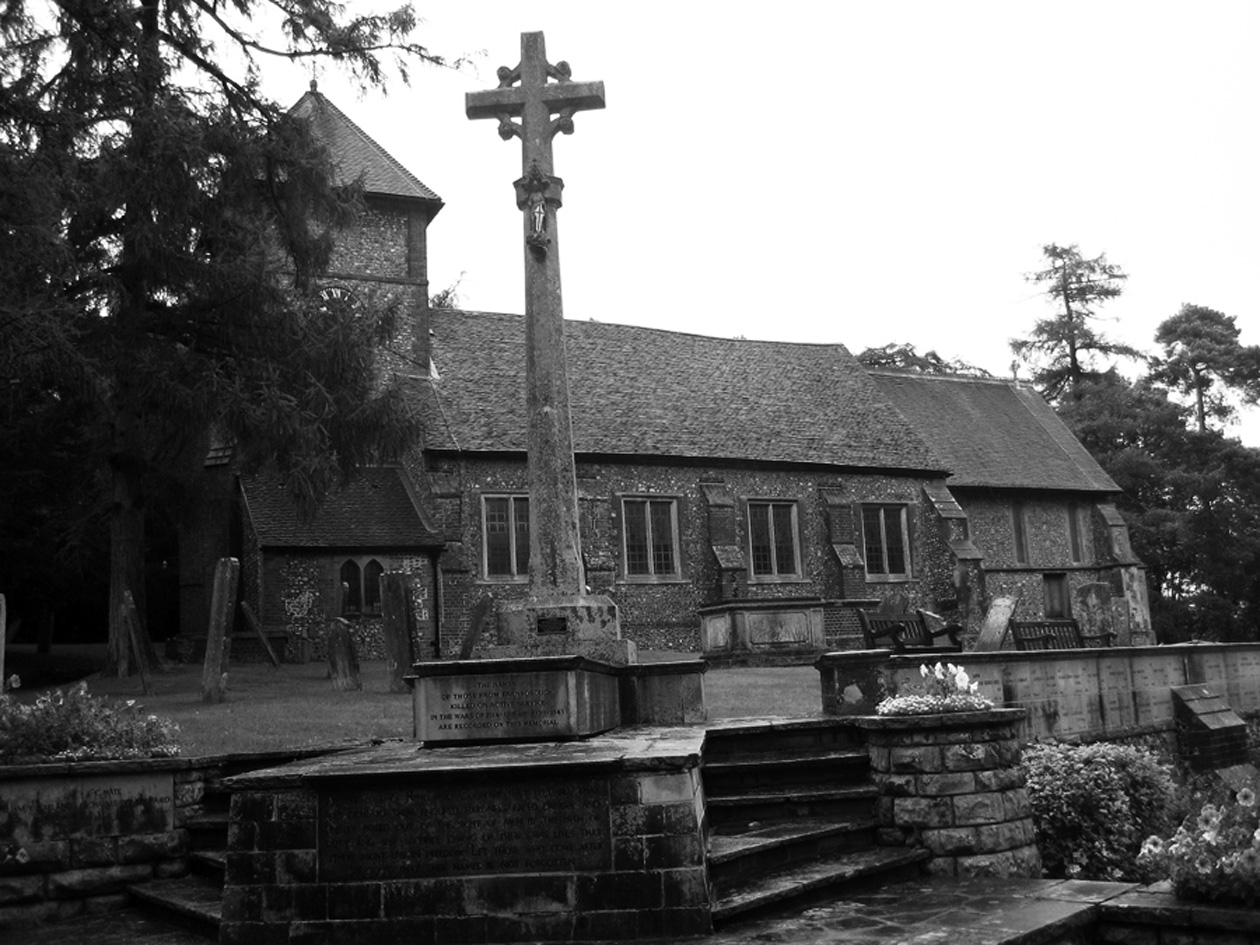
St. Giles’ Church and war memorial, Farnborough

We waited for a roll call of the fifty names engraved in the granite memorial, followed by the Ode to Remembrance.

They shall grow not old, as we that are left grow old:

Age shall not weary them, nor the years condemn.

At the going down of the sun and in the morning,

We will remember them.

The assembly repeated the last line before a two-minute silence. Then a bugler on the memorial steps called the Last Post (Taps in America).  We then filed into the church through the narthex to the back pews where we fidgeted on the hard wooden boards for the next hour. The rector stepped up to the pulpit in a black cassock and white surplice, probably still wondering in his bowed head how to preach about the unspeakable.

Our parents and grandparents in front of us were remembering comrades, friends, and neighbors whose faces and voices still rang in the halls of their memory. Our family had lost some members, but that was long ago. How could a boy share the same emotions as his elders? How could he remember someone he had never known? The best he could do was to stay awake during the sermon, try to imagine the horrors of war, and resist his attention from drifting to the girl scouts nearby.

I guess it is easier today for American youngsters to have a fuller heart than we had for our veterans of the World Wars because they are likely to know someone who has served in war zones. A personal connection puts flesh on the statistics of conflict, as I appreciated when I saw a brawny young man in a wheelchair with his legs sawn off above the knee. I was tempted to ask, “Was it an I.E.D.?” I should have simply said, “Thank you,” but for me he put a human face on the sacrifice of war which helps me remember when stars and stripes are fluttering again in churchyards and beside mailboxes at this time of year.

While I was musing that personal connections help to make remembrance more heart-felt I wondered about all the other people I have never even paused to think about and all the things that I take for granted in daily life. It doesn’t seem such a big sacrifice to unclutter the mind for just two minutes of meditation once a year for them, although there is the excuse of an endless thank you list that would tax the brain. But I am getting started, and although my choice seems odd I hope the reasons are clear by the end of this post. I am thinking of TREES!

Loblollies

Loblolly pines

No memorial day is set aside for them, although there is a National Arbor Day when planting and caring for trees is encouraged. If there is ever a day for remembering the bountiful forests and our continuing dependence on them Joyce Kilmer’s Trees will probably be its anthem:

I think that I shall never see

A poem lovely as a tree…

Some trees are so magnificent that they can even stir the heart of a lumberjack who makes his living by clear-cutting forests to the horizontal, like machine-gunners who admired the enemy’s courage even as they slaughtered at the Somme, Passchendaele, and Marne. We say we love trees, yet our actions speak otherwise. A storm of yellow and red leaves out of a maple tree in the fall is mesmerizing, but then we complain about clearing them from our yard. Trees do not just embellish the landscape but are emblematic of all that is grand and worth preserving in nature.

Forests were where most people lived before they were cleared for lumber and to make way for farms, concrete and asphalt. Saint Giles himself was a 7th Century forest-dweller. For untold centuries they provided nutritious food and wood for heating, cooking, tool-making, and furniture, and they harbored an astonishing biodiversity. They still do. Our ancestors felt much more connected with trees than modern man as they dreamt of (and sometimes worshipped) tree spirits—dryads in Greece, kodema in Japan, Ah’ret in Cambodia, and green men in England. The spirits were defenders of the forests and could sway human destiny. It was vital to preserve the sylvan environment for posterity. But when people moved to towns and cities the caretaking spirit was forgotten and timber just a way of making a living and another table.

“The wrongs done to trees, wrongs of every sort, are done in the darkness of ignorance and unbelief…” (John Muir).

Perhaps we are coming round at last to thinking about the great forests in a fresh way, if only because we are alarmed at the prospect of a world without them. We know that they are the lungs of the atmosphere and buffer the rising levels of carbon dioxide, but this realization came late and action to care for forests around the world, and particularly in the tropics, is still ponderous, patchy and often short-sighted. Like the parable of the blind man in Bethsaida who only saw people “looking like trees walking” until he was fully healed, when we look at trees we only see dollar bills and people with wants and needs.

Giant_sequoia

Sequoia grove in California
“Any fool can destroy trees…” John Muir

To meditate on trees it helps to take a trip to see the giants. It is as impossible to avoid looking up in awe at a grove of sequoia in California as to turn aside from looking down in amazement from the rim of the Grand Canyon in Arizona. You never forget. On the other side of the country children have fun holding hands in a ring to measure the circumference of the biggest yellow poplar. The stories they take home are lasting.

yellow poplar

Measuring a giant yellow poplar.
Courtesy of Special Collections Research Center, NC State Universities Libraries

This last tract of virgin hardwoods containing giant poplar trees in the mountains of North Carolina has been protected by the US Department of Forestry since 1936 when it was named after the poet, the Joyce Kilmer Memorial Forest.  Outside the preserve every large tree was taken down because they all had a price on their boles. The titanic American chestnut trees that once dominated the forest canopy even over the poplars had a different fate since they fell everywhere to a malignant blight, and few people are alive today who can remember them. But to stand among the surviving giants can feel like being among veterans sharing a solemn remembrance of the fallen, including Joyce Kilmer himself who lay down among the trees that died the same day on the Marne battlefield not long after writing his poem.

Paul Nash

We are Making a New World. Paul Nash 1918.

Next post: In a nutshell

Posted in Memoir, Other | Tagged , , , , | 1 Comment