Maungatautari

There’s an Isle, a green Isle, set in the sea…

If you guessed Jean Blewett wrote this poem for Ireland on St. Patrick’s Day you are right. But the first line is also a good fit to New Zealand’s green islands.

Before Maoris and Europeans arrived in the past thousand years, the two islands were covered with lush vegetation up to the tree line on the highest mountains.  Like the deep, fertile soils of the American Mid-West, New Zealand was too valuable to be left to nature. After the trees were felled, the rich volcanic sod created prime grazing land, and I have never seen a higher density of contented cattle and sheep. Virgin forest survives in the north only in tiny patches and on mountainous outcrops that discouraged farming and logging.  But one of those gems remains 30 minutes from Hamilton.

Called Maungatautari, it was owned by a Maori Queen whose opposition to land sale was respected after her death in 1927. But by then the patch was no longer primeval forest land; it had become invaded through stealth or deliberate introduction by non-native plants and varmints—goats, deer, possums, stoats, rats, mice, feral cats and dogs. New Zealand never had a native mammal because it separated from the southern supercontinent (Gondwana) 85 million years ago, before they evolved. With few predators, the country was a haven for birds, and many of them lost the power of flight. The giant moas disappeared rapidly into Maori cooking pots, and four-footed beasts hunted down the rest or robbed their nests. A few refugees hung on in remote offshore islands.

Maungatautara forest sanctuary

Maungatautara pest-proof fence

Then some unsung hero of conservation had the bold idea of creating an ‘island’ sanctuary for native species on the mainland. It inspired a community-driven project to encircle Maungatautari with a fence deep enough to discourage burrowers, strong enough to keep out marauders, and tall enough to deter climbers, including possums reaching a ‘live’ wire at the top. The fence encloses 3,400 hectares (over 8,000 acres) and stretches for 47 km (30 miles). Completed in 2004, it was paid for by public subscription and grants and is maintained by a bevy of volunteers working the equivalent of 37 full-time staff.

Maungatautari

Maungatautari foundation plaque

They probably had many discouraging moments and encountered plenty of doubters, as there always will be with pioneering endeavors, but their efforts are already paying off. Foreign predators and pests have been completely eliminated from within the enclosure, except for mice. The numbers of native vertebrate species have increased four-fold through a reintroduction program. There are kokopu (native fish), kaka (parrot), takahe (endangered species of rail), hihi (stichbird), karariki (parakeet), tieke (saddleback).  The tuatara (the world’s oldest lizard) and the weta (the largest insect) are there. The Maungatautari forest sanctuary is an experiment in recreating a natural forest, a laboratory for education, and an inspiring example of a community achievement.

kaka

Pippa’s introduction to kaka parrots

mamaku

mamaku tree fern

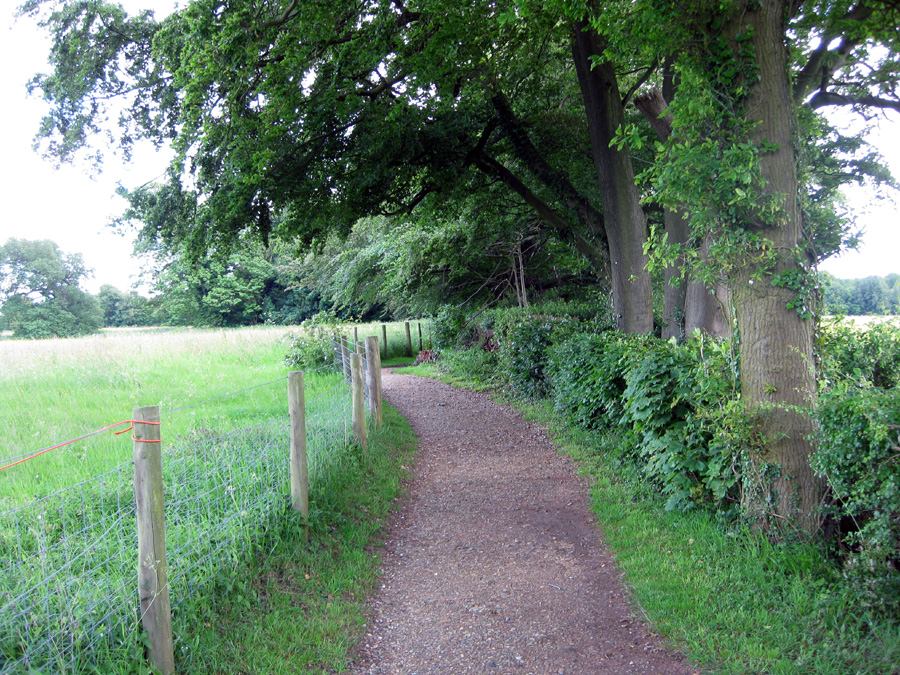
When you leave farmland behind to enter the sanctuary through double gates the forest gathers around you. The vegetation is luxuriant and the high canopy shields your skin from damaging ultra-violet rays pouring down through the ozone hole at that latitude. Boles of giant rimu trees are crowded with lianas ascending to the crown as thick as a man’s arm. Giant tree ferns look like relics from the Carboniferous Period (they are), creating spectacular patterns against the blueness at breaks in the canopy. Only the sound of trickling streams or the raucous call of a parrot breaks the silence of this natural cathedral.

brown kiwi

brown kiwi

But come at night and you will hear more—shy creatures going about their business. The brown kiwis are whistling a happy tune again after a century of absence. A warden who trained his dog to find nests discovered they had already started breeding again in 2007. The first chick was named Huatahi, meaning ‘first of the new fruits.’

The next time I visit the sanctuary I hope to hear the flightless kakapo which has been on the verge of extinction. I am told its nocturnal call will make my hair stand on end as I wait for the iconic bird in the darkness of that amazing forest. How appropriate that the kakapo is a symbol for conservation in New Zealand and Sirocco, an abandoned chick raised by hand, has over 30,000 likes on his Facebook page. He is a green parrot for a green movement on a green isle.

Next Post: Warmingsburg

Posted in Animalia | Tagged , , , , , | Comments Off on Maungatautari

Wings

NZAirThis post is scheduled to go online while I am flying over the Pacific Ocean from New Zealand to Los Angeles.  It is a journey of 10,500 kilometers (6,500 miles) and about 12 hours. That’s a long flight, although short of the record held by Qantas for the route from Sydney to Dallas, a distance of 13,880 km (8,500 miles) which takes 15 h 25 min by a Boeing 747-400.

Until fairly recently it was hard to imagine an airplane conveying more than 500 people so far in a single hop. Although marvels of engineering, modern aircraft are still nothing like as breathtaking as the tiny fliers created by nature.

A few weeks after I leave Auckland, thousands of bar-tailed godwits will be taking off from New Zealand for their breeding grounds near the Arctic Circle. They will stop once around the Yellow Sea to refuel on seafood for putting on fat for the second leg of the journey. Soon after their family duties in Alaska are over they will complete the circle by returning to New Zealand. No other creature migrates as far or faster or without stopping than godwits on their flight south.

These are wading birds weighing a little over 500 g (1 lb). You may see them probing mudflats on stilt-like legs with long bills that look as if they were dipped in black ink. Like long distance aircraft, including 747’s, godwits have large wings for their bulk.

During a long flight their brain shuts down one side at a time to ‘sleep,’ rather like a co-pilot taking turns at the controls of a jet to give the captain a break. And like a long-haul jet they pile fuel onboard with voracious appetites before setting off. Half their body weight is burned off on the trans-Pacific route, so they arrive at their destination with ‘tanks’ almost empty. Flying economy is critical for a bird that can’t stop to feed while crossing the Pacific, but at altitudes of 3-4 km they find favorable winds to save energy.

It is just as important for birds to avoid getting lost as for aircraft. Godwits fix their course from the sun, analyzing polarized light on cloudy days, and navigating by the stars at night. Crossing from northern to southern skies doesn’t confuse them. We might fly round in circles without our instruments.

whimbrel migration

The whimbrel Hope fitted with a telemeter by Virginia ornthologists. Courtesy Fletcher Smith.

The migration routes and stopping places of godwits have been mapped by fitting them with feather-weight satellite telemeters on their backs. One of them, a female code-named E7, was tracked for nearly 30,000 km over six months. After waiting for a tailwind E7 departed Alaska on August 30 and arrived in New Zealand only 8 days later having traveled 11,700 km (7,270 miles) at average speeds of 50-60 km/ hour. She stayed there with 100,000 others throughout the warm southern spring and summer.

The same bird began her return journey to Alaska on March 17 of the following year. She arrived in China 7 days later after flying 10,300 km (6,400 miles). Six weeks later she was on her way again and arrived in Alaska on May 8 after a 6 day flight of 6,500 km (4,040 miles). Instead of collapsing with exhaustion and jet-lag as we might after a long journey, godwits are soon busy dating because raising a family in the short breeding season mustn’t be delayed.

While I waited in Auckland for my flight I was musing which of us was the more economical traveler, energy-wise.  Would it be the small bundle of fat and feathers or a passenger squeezed between others in a fuselage? I made some rough calculations on the back of an envelope (quite literally), to confirm my suspicions.

Birds and airplanes burn different types of fuel but their calorific values can be compared. Assuming the same as human adipose tissue, godwit fat has an energy value of 30 MJ/ kg. This is not so very different to jet fuel at 46 MJ/ kg.

If E7 lost half her weight on her longest journey by burning most of her fat, say 300 g, she would have consumed 9,000 KJ.

A Boeing 747 burning 70,000 kg of jet fuel on my route to L.A. consumes 3,220,000,000 KJ.  This is a rate of 20 liters or 5 gallons per mile, but much more at take-off.

This titanic energy looks more moderate when you divide it by the number of passengers onboard which is, conservatively, 500. Then it drops to 6,440,000 KJ per person. Although this still seems enormous, jets are in fact more economical with fuel for transporting a passenger than an automobile over the same distance (unless the car is fully-occupied when they are about the same).

But it still isn’t a fair comparison because an average passenger like myself weighs 70 kg (~160 lb), equivalent to about 150 birds. So, last of all, I divided energy by body weight to find—

godwits consume 460 J (1,900 cal) per kilogram per kilometer traveled,

whereas I burn 9,000 J (157,000 cal) for the same weight and distance.

We travel by airplane only 5% as efficiently as godwits. I never expected to outdo a bird that has perfected its flying machine over eons of natural selection. Feathers motored by muscles will always beat alloy propelled by aviation fuel, but what we lose in economy we gain in speed. Icarus take note.

Next Post: Warmingsburg

Posted in Animalia | Tagged , , , , | Comments Off on Wings

Dog Smart

Lilah_face

“I used to think my human was smart, but I now realize he only looks that way.

I know I shouldn’t be anthropomorphic about one I’m particularly fond of.”

 ****************************

Did you ever suspect that dogs often turn out looking like their owners—or the other way round?

…the portly owner of a British bulldog…the old lady with a blue rinse and a coiffed poodle in her arms…the greasy-haired young man in a leather jacket leading a pair of snarling pitbull terriers… Yes they are caricatures, but we have all seen them. And now there’s research to prove an association.

Lance Workman has been collaborating with the British Kennel Club to find out if there is any correlation between dogs and their owners for what psychologists call the “big five” personality traits—openness, conscientiousness, extroversion, agreeableness, and anxiety. After analyzing questionnaires returned by 1,000 pedigree dog owners Workman concluded, “We go for dogs that are a bit like us, just as we go for a romantic partner like us.” The breed predicted its owner’s personality: owners of working dogs were more extroverted, hound owners more emotionally stable, gun dog owners more affable, and toy dog owners were “an open and imaginative bunch.”

It makes sense if our dogs resemble us in some ways because either we chose the dog or it chose us. People domesticated them thousands of years ago because they are smart animals that can share a slice of our emotional lives. We sometimes overestimate them, treating our pets like cute little hairy people. I don’t think it’s wrong to hold that attitude because they are more likely to be the lucky ones showered with love and care from their owners. It is when we underestimate their intelligence and emotions that they are more likely to be treated shabbily. I used to visit an old farmer from New York who contradicted me when I explained the rich emotional life I have with our golden retriever. “It’s only a dog,” he’d say. But I still believe I am nearer the truth because I live closer to the animal.

Of course they have a wide range of abilities and personalities: smart ↔ dumb, placid↔aggressive, et cetera.  Dogs bred for working or hunting are generally at or near the top of the scale, except for poodles (no airheads). We like to be praised for owning a smart dog, as if it reflects on our own brains. It’s safer not to mix compliments like, “For a dumb breed he’s a magnificent specimen,” to a chow chow owner.

Some animal behaviorists used to deny that dogs have much emotional life. That seems ludicrously false to dog owners and is now contradicted by modern research (Ádám Miklósi, Dog Behaviour, Evolution, and Cognition). The controversy now centers on what emotions they can express. Love of their owner, joy at greeting a friendly face, and fear of punishment are all transparent emotions which they never conceal as we sometimes do. Expressions of love almost overwhelm some dogs, like the black lab greeting the soldier returning after six months deployment. If we say that a dog only loves when it is rewarded, is that so very different to the bonding of human hearts by more subtle rewards?

Perhaps the fame of Pavlov’s experiments gave some people the impression that dogs are little more than furry automatons. But we too learn automatic responses to coupled stimuli, including salivation to the sound of a dinner gong like the conditioned reflex in his dogs. Dog training and learning, and a good deal of human education, is owing to associations made between a voluntary behavior and a reward or punishment. The stock example is giving your pet a treat for returning a ball, which psychologists call ‘operant conditioning’.  That’s how working dogs, Grace and other smart dogs are trained to look so brilliant.

A really big brain isn’t needed to express the basic emotions like love, joy, and fear, but it helps build a larger repertoire. I carried out a simple experiment on my three-year-old golden retriever to test her learning ability, but she educated me.

dog intelligence

“Be patient, I’ll figure it out”

Taking advantage of her high motivation for food, I prepared three empty crème brûlée dishes. I wiped the insides with her favorite treat, peanut butter, so she couldn’t tell which concealed the reward. I turned each dish upside down, and stuck a US postage stamp on the one containing the blob of peanut butter. Then I lifted each in turn to show her where it was, and finally switched their positions in her plain sight. The experiment was repeated over and over ending up with different positions.

When I gave the release command she knew there was a reward at stake. We would have gone immediately to the dish labeled with the stamp, but she nosed each dish in turn again and again. Finally she came to the right answer. It is possible that despite my efforts the dish hiding the treat had a stronger odor than controls, but I think her strategy was to check her olfactory bulb first and hippocampus second.

Dogs trust their noses and ears more than their short-term memories which are not as sharp as ours. This is certainly a carry-over over from wolf ancestors, but dogs have a unique stock of behavior and an emotional intelligence that has been molded by domestication. Over the generations the two have been apart, gene expression in the hypothalamus has diverged which might explain differences in emotions and hormonal and autonomic responses.

Of the more complex emotions I’m sure dogs can express jealousy because ours proves it every time we walk together. She protests by jumping and barking when a neighbor’s dog pays me too much attention. Charles Darwin, a dog-lover, had no doubt “that a dog feels shame” (The Descent of Man, 1871). And when dog owners were polled recently, half of them believed their dogs can express grief and guilt. Judging by the viral video of Denver the dog who stole kitty cat treats guilt is written all over his expressive face video. But animal behaviorists look for other explanations, although none are as entertaining as guilt.

There is no doubt that dogs really care what we think of them, and they are amazingly sensitive to our body language. John Bradshaw, who studies dog behavior in Bristol, England, says that “at present, then, there has to be considerable doubt about whether dogs can actually experience an emotion similar to our guilt”. Perhaps we do misinterpret a low wagging tail and avoidance of eye contact, which may be conditioned by their anxiety to please us.

So they may be reacting to our behavior instead of an internal feeling. It is imponderable how much self-awareness a dog has, but perhaps not a great deal. They live very much in the present and we can confuse them by punishment after the fact.

If dogs have weak powers of reasoning and learn mainly by trial and error that doesn’t make them stupid. They have impressive powers of recall and skill retention. Theirs is a different kind of intelligence, and if we make much of the confusion we cause each other by sending misleading signals between the sexes we ought to admit greater misunderstanding of our pets.

Our golden was right. Her expectations of me were too high, because her owner is both smart and stupid. But he is trying to do better.

Next Post: Wings

Posted in Animalia | Tagged , , , | Comments Off on Dog Smart

Our Mutual Friend

What species has been domesticated for thousands of years, lives in our homes, helps to feed us, comes in different strains (‘pedigrees’), was one of the first to have its genome sequenced, and has limited alcohol tolerance—like us? I’m not thinking about one of our furry friends, but we would soon miss it.

I was musing about yeast while the breadmaker pounded dough to a low drumbeat in the kitchen. We don’t normally regard yeast as a companion species, but it has been with us longer than dogs or cats. It has had a much greater impact on human culture than either of them, and all because of the peculiar way it generates energy for life—by fermentation.

This is one of the first processes we learnt about in biochemistry class, and one of the simplest. Yeast cells possess an enzyme (zymase) that converts 1 molecule of glucose into 2 molecules of ethyl alcohol and 2 of carbon dioxide. Alcohol and gas are just waste products to these cells, but gifts of the gods to us. We have been harnessing fermentation to make bread and drinks for thousands of years before we figured out how it worked. The transformation of a heavy lump of dough into a light loaf of bread or a cloudy ‘must’ of grape juice into wine seemed miraculous to our ancestors.

And wine that makes glad the heart of man…and bread that strengthens man’s heart (Psalm 104)

The man or woman who first discovered fermentation has gone unrecorded, although archeological relics suggest it was in Egypt and the Middle East thousands of years ago, perhaps in Neolithic times. Like a number of great discoveries, the breakthrough probably came not to someone searching for a better bread or drink, but to a quick-witted person whose curiosity was aroused by changes in a lump of uncooked dough and a jug of fruit juice left out in the warm. Instead of discarding them, as most of would, he or she watched the natural experiment develop and tested the product. It was good. They had no notion about the underlying biochemistry, and it took a long time to realize that the process that raised dough and fermented juice were the same.

France’s greatest 19th Century scientists were engrossed with the process because the wine industry struggled for vintages of consistent quality and that didn’t spoil. Their names come straight out of textbooks—Lavoisier, Gay-Lussac, Cagniard de la Tour, and above all Louis Pasteur.

It is hard to put ourselves in the mind of people who until fairly recent had no clue that fevers, ‘fluxes,’ and biological decay are caused by microscopic organisms. Yeast, bacteria, and sperm (‘animalcules’) first came into view under the simple microscopes invented by the draper of Delft, Antoni van Leeuwenhoek. That was two centuries before Louis, the genius who unveiled the world of tiny things and announced a ground-breaking germ theory of disease.

He had an uphill struggle. Many fellow scientists were unconvinced that fermentation is caused by living cells, and they don’t need oxygen to ‘breathe.’ It was thought to be a purely chemical process, and the debate grew bitter with Justus von Liebig, a German chemist who can be claimed to be the Father of Marmite (concentrated yeast, see Post March 23, 2013). When knowledge is familiar and deeply-rooted it’s hard to understand there was ever a contrary view. It seems obvious that yeast is a living thing. Poured into a lukewarm sugar solution you can see them generating gas bubbles from ‘breathing.” Bake them in bread and they die. Transfer a few into a vat of nutritious fruit juice and the broth soon ‘boils’ (Latin fervere, hence fermentation).

The domestic and industrial applications of these energetic little friends are endless. As a dietary supplement yeast is unrivaled as a source of B complex vitamins. Yeast fermentation is used to make other liquors: kumis from milk/ kombucha from tea/ kvass from rye/ soy sauce, tauco and doenjang from soybeans/ root beer from sassafras (until it was declared carcinogenic and replaced). It didn’t matter if the alcohol content was low so long as there were bubbles. Fermentation of cereals looms large for manufacturing biofuel so our automobiles can run on 10% alcohol. Yeasts are used as low cost bioremediators to mop up pollutants like, including copper, zinc, nickel, and arsenic in groundwater and ponds. They even render safe the explosive TNT!

But our friends, domesticated baker’s and brewer’s yeast, have shadier relatives that also like to find a sweet place to call home. Yeasts spread by air or contact can spoil foods and on our bodies they have a particular fondness for orifices. If our immune systems did not protect us from pathogenic species we would soon succumb to them, and patients with weakened immunity need treatment with fungicides to protect them.

But when home bread makers get together the talk is positive, and only about the staff of

Home made bread

Half eaten, and it’s still warm!

life, exchanging formulas, and recommended suppliers of flour and yeast. Not all are loafers like me, happy to let a bread making machine do the hard work. Some of them love the exercise of beating dough, and a few use such violence that I wonder what is in their minds.

When two cycles of kneading and resting in the machine are complete I haul the dough out. I love how a sloppy mess of ingredients changes into an elastic, living ‘organism’ at blood temperature. I punch it down for a final rise (‘proofing’) in a baking tin before sliding it in a hot oven.

Bread making brings out the experimenter. My current favorite recipe for making a 2 pound loaf is:Bread recipe

It takes barely 15 minutes hands-on to make a loaf, but an eternity to cool enough for cutting the first slice.

Home made wine

Vintage label from our wine cellar

Alas, home wine making from berries (even grapes!) takes so much longer. I don’t have the patience. It was disheartening to open a vintage that was tenderly stored for a couple of years only to find it was contaminated with something that made it sour. Louis might have chuckled that I should have washed my feet before trampling fruit.

But if a recipe goes wrong I blame myself, not the yeast. Humans have shared life with yeast cells for thousands of years in a cooperative relationship that ecologists might call mutualism. We give them sugars to grow and they give us alcohol and bubbles in return. We are mutual friends.

Next Post: Dog Smart

Posted in Animalia | Tagged , , | 2 Comments

The Wolf Sharing my Fire

Lilah by firesideThere is something incongruous about the notion that the golden warming herself by our fire is still mostly wolf. It doesn’t fit her doggy nature. But how much shaggy wolf is still inside her remains a moot point.

They are members of the same species, share a common ancestor and have nearly identical DNA. However there have been ~20,000 years of domestication in the making of modern Max and Molly, which offered plenty of generations for molding their behavior and appearance. It really does matter how much wolf still hangs on in dogs because it affects attitudes and how we train them.

We all know what wolves are like, or thought we did, and will never forget the Grimm story of Little Red Riding Hood.

Little Red Riding Hood by Grimm

It is paradoxical that the closest relative of our best friend is one of the most reviled

Little Red Riding Hood

“All the better to see you with” Walter Crane (1845-1915)

creatures, an arch-enemy of farmers and shepherds, and the fount of so many myths and scary stories about blood-thirsty wolves and chimeric werewolves.

Even biologists held hard views about wolf society until recently. The pack was regarded as a hierarchy topped by an alpha male and an alpha female which claimed first rights to a carcass and kept discipline in the lower ranks. Peace was preserved by a mien expressing threats of aggression towards subordinates who responded with submissive gestures. This fierce portrait reminds me of feudal societies in which royals and nobles used to rule vassals by accepting homage in exchange for privilege. So inured are we to old assumptions about these animals that attitudes can resist the challenge of research throwing fresh light on their behavior.

The TV celebrity Cesar Millan evidently bases his dog training program on an outdated picture of wolves (The Dog Whisperer/ Leader of the Pack). If it seems unfair to use him as an example I’m sure he knows that being picked on is the price of winning public attention. He certainly deserves admiration for a talent in handling difficult animals and his endeavors to save and rehabilitate abandoned dogs. But he makes no apology for the conflict between his philosophy and science: “Once your dogs see you as their pack leader, the dog on dog aggression will stop as they stop fighting for dominance because you will be their calm-assertive pack leader.” He believes we must become accepted as leaders of our pets’ “pack.” Since dogs strive for dominance, we must firmly lay down rules and boundaries for them, otherwise we lose control. This disciplinary style has sometimes gotten him into hot water with humane societies, despite so obviously being an animal lover. Nevertheless there is surely a risk that this thinking can be used to justify the harsh and cruel treatment that dogs have suffered down the ages. The victims may not even understand why they are being punished.

Another TV presenter Victoria Stillwell (It’s Me or the Dog) trains dogs in almost the opposite way, as her website name implies, Positively. Her policy is to shower them with love and treats to reward good behavior, which we might call positive reinforcement. According to Victoria most trouble with dogs is their owners’ (our) fault, so we need at least as much education as they do. Sometimes a cameraman on her show catches the expression of a dog looking on “sympathetically” at its owner being grilled by the bossy Englishwoman.

Of the two views, Millan’s is harder to reconcile with the new understanding of wolf society. Extrapolation wolf→dog is becoming blurry.

Gray wolf

Gray wolf. Courtesy US Fish & Wildlife Service

Until recently wildlife researchers had to fall back on zoos for studying these animals. But in captivity packs are loose associations of individuals that seldom share a family history and live in confined spaces. It is not surprising in an artificial environment that animals are anxious and find ways to adapt behavior to avoid injury from those famous fangs. But we have probably misread some of their gestures, like the lowered head which was interpreted as submission to a supposedly superior wolf. This posture is actually an excellent position for grabbing the “boss” by its throat, but perhaps it had a friendly meaning and was cementing a social bond. We can’t be sure.

The new picture of wolf society has emerged from studies under natural conditions by tracking wolves wearing radio-collars and with GPS technology. Blood samples revealed genetic relationships within packs (L. David Mech & Luigi Boitani, Wolves: Behavior, Ecology and Conservation, Univ. Chicago Press). Contrary to impressions of a band of bushwhackers banded together under feudal leaders, a pack turns out to be just a family party. Its members are usually close relatives, and often former cubs that never split away from their parents. Sometimes an animal adopts the solo life, but they benefit from sticking together when there is big game to be had, like moose and bison.

We expect more cooperation than competition within families. Members are more loyal and less aggressive to each other, and the greater harmony boosts success in hunting and breeding and avoids danger and injury. Consequently more genes are contributed to the next generation to shape evolution of the species, as predicted by kin selection theory. Besides, no dominance hierarchies have been found in wolf packs apart from the relationship between Dad, Mom, and their offspring. Nor should we expect to find them in dogs. When they go wild, they never become wolf-like in behavior or jostle to create a hierarchy, although they can form a fractious group. There appears therefore to be no teeth to Cesar Millan’s belief that successful dog training requires us to fill in for the tough alpha wolf depicted in old stories.

If we think we know dogs I suspect that familiarity often blinds us to the marvel and mystery of our furry companions. While their wolf cousins are afraid of us and terrified of fire, dogs are comfortable with both. Sociobiology theory rules out altruism in animals and caring for the welfare of others unless they are genetically related, but there are remarkable examples of untrained dogs that have saved lives at their own risk (see Hero dog drags another dog to safety).

John Bradshaw, a British biologist, explains Dog World by taking us back to the origin of the canine family about five million years ago (Dog Sense, Basic Books). The Swiss Army knife is his metaphor for the genome of “proto-dogs.” Flexibility enabled their descendants to spread across six continents and evolve into many species of jackals, foxes, coyotes, and wolves. Perhaps it was this adaptability, he argues, that made domestication from wolves possible, and the emergence of an animal with greater loyalty and willingness to please us than any other.

I was musing about dogs while Lilah was dozing at my feet and sharing heat from logs on the fire. She opened an eye to check I was still there. It wasn’t an anxious look waiting for instructions from her alpha male: she was only looking at her “dad.”

Next Post: Our Mutual Friend

Posted in Animalia | Tagged , , , , , , , | Comments Off on The Wolf Sharing my Fire