Green Fire

“We reached the old wolf in time to watch a fierce green fire dying in her eyes. I realized then, and have known ever since, that there was something new to me in those eyes—something known only to her and to the mountain. I was young then, and full of trigger-itch; I thought that because fewer wolves meant more deer, that no wolves would mean hunters’ paradise. But after seeing the green fire die, I sensed that neither the wolf nor the mountain agreed with such a view” (Aldo Leopold, A Sand County Almanac, 1949).gray wolf

As a forester in the South-West, Leopold’s job was to control predators for protecting game species.  But one day after shooting a wolf he had something like a religious conversion experience: an ineffable change of heart. He started questioning policies and cherished beliefs about managing wildlife populations. He guessed that when wolves and cougars were extirpated the deer and elk populations would boom, the genetic stock would deteriorate as less fit animals were no longer weeded out, and overgrazing herds could eat out their food supply and starve. He had realized that when a keystone species is eliminated the ecosystem gets out of whack, although he didn’t live to see proof of his theory when gray wolves were reintroduced to the Yellowstone National Park.

Leopold, exchanging his rifle for a pen, drafted a Land Ethic from his Wisconsin farm at the end of life. When I read the passage that, “conservation is a state of harmony between men and land,” I wondered about my own backyard.  Is it as harmonious as I assumed, or had I been hardening an ecologically dissonant landscape?

After a hurricane ravaged our acreage we brought in topsoil, planted trees, seeded lawns, and laid out flowerbeds. It was patient work and now, nearly a decade later, the yard looks mature and the new growth provides welcome shade from Virginia’s summer sun. A landscape designer planned the attractive setting for our home, something that neighbors and visitors could admire and I could imagine featuring in a glossy garden magazine. But in making landscape appeal the goal we paid no heed to the interests of critters who shared the land with us. Perhaps I was delusional in thinking I was acting as nature’s physician, healing the wounded land by turning it into a garden of neat lawns and cheerful flowers. I know how appearances can be deceptive, like assuming that a ruddy human face always means a healthy body.

Energy pyramid

Energy pyramid

Healthy bodies don’t need a physician because they can fight off some threats and repair wounds.  We have allostatic mechanisms that return stressed bodies to a stable state. Likewise in the oak-hickory forests that existed here before European colonization, there was a self-regulating biome in which the bottom of an energy pyramid fed by products of decomposition and photosynthesis provided nourishment for a rich variety of herbivorous animals which, in turn, fed carnivores and top predators. After a wildfire or storm the landscape was gradually restored by a succession of larger plants and trees, like scabs healing over a skin wound until the canopy closed over again. When Teddy Roosevelt wrote about the Grand Canyon, “You cannot improve on it. The ages have been at work on it, and man can only mar it,” he might have been thinking about the great eastern forest of America, but it was already fragmented. It had taken only a few generations to undo what eons of evolution had created.

A land as bountiful as Virginia’s was never going to be left to nature. The Peninsula is now a mosaic of farms, gardens, and woodlots. It is picturesque, even romantic (Virginia is for Lovers), but no longer in harmony with nature. Even nature preserves that look “natural” to our eyes need help in their struggle against invasive animals, plants, and diseases introduced from Asia and Europe: bamboo marches, kudzu smothers, cankers kill, and Japanese stiltgrass blankets the forest floor. Gardeners and farmers wage incessant war on alien plants and epidemics of tent caterpillars, Japanese beetles, ticks, and cloven-hooved locusts (deer).
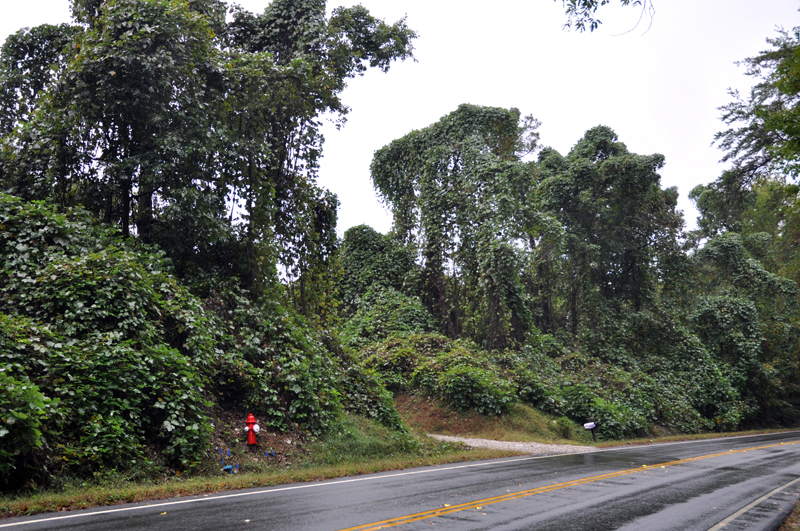
kudzu

kudzu vines

Despite spraying lakes of herbicides and pesticides, the insurgents keep coming back. In trying to dominate nature and grow for our own needs and pleasure we are eliminating, often unintentionally, some critters at the top of the pyramid that are most beneficial as pest consumers (birds, bats, amphibians, and reptiles) or control deer herds (wolves). At the bottom of the pyramid our impact is mostly feeble or temporary (invasive and disease-bearing plants, fungi, and microbes). We would like to turn the pyramid on its head, but that is biologically impossible. Being mainly an urban species now, most of us are unaware of how much havoc human ecology has created and our continuing dependence on nature.  Some species of formerly common birds have declined by over two-thirds since the 1960s; many butterflies and bumble bees that do magisterial pollination services are vanishing; forty years ago you had to raise your voice to be heard here above the din of crooning frogs, but no longer. Poisons and starvation are depleting the landscape of wonderful creatures and some of our best friends.
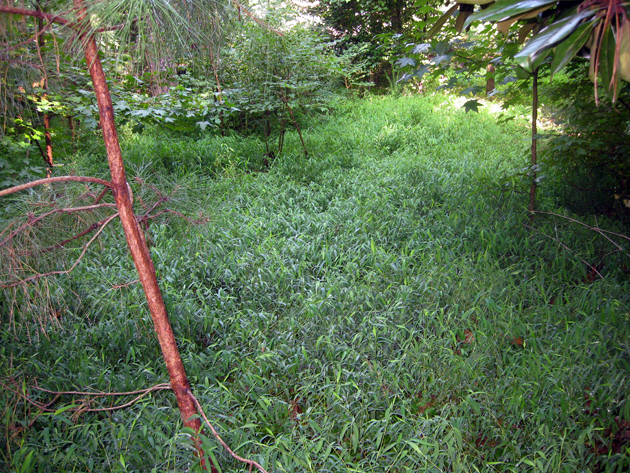
Japanese stiltgrass

Japanese stiltgrass is even eschewed by deer

Before I read Leopold’s book I was already tapering off my use of chemicals in the yard, applying Roundup only for spot treatment of weeds. But now I realize that my change of heart was far too tepid, and that pretty flower borders and lawns look like sterile deserts to the critters who used to live here. Most of the plants we buy are aliens that evolved in quite different environments, and without their natural herbivores they grow profusely, sometimes out-competing the natives.

If these foreigners are unpalatable to caterpillars and grubs it would explain why butterflies, bugs, and creepy-crawlies are so much diminished, except for the hardiest ones which can boom when they have fewer competitors and predators. To test this hunch I checked if insects prefer our native plants.

I collected bundles of leaves from many different species in our yard to count the percentage that had been nibbled. This wasn’t a perfect study, but I didn’t need more data to convince me that natives (green color) were the preferred food plants by a huge margin. Most aliens (red) were ignored by the diners.

leaf survey

Leaves nibbled by insects

I shouldn’t have been surprised. Apart from a few insects that are not fussy about their veggies, most are particular about their food plant which they are adapted to chew and digest because they evolved in the same habitat. We have provided an inedible landscape.
phragmites

phragmites

Animals can adapt to graze a species that is new to them, but require thousands of generations. Take for instance phragmites (“phrag”), an aggressive reed that is overrunning wetlands and shorelines up and down the East Coast. In its homeland on the other side of the globe it is a food plant for 170 species of herbivores of all kinds, but since it was introduced to North America three centuries ago there are still only five species that will eat it. The mill of evolution grinds slowly.

Doug Tallamy’s book helped to bring home these thoughts (Bringing Nature Home). He is an ecologist at the University of Delaware whose vision is a garden revolution for a more sustainable relationship with nature. It is too late to preserve more wilderness areas here, but there are lots of “spare” land in backyards, and 40 million acres of lawn in the US. He urges us to cast aside esthetic preferences to cultivate more native plants.

This doesn’t mean turning back the clock to the original forest—which has gone forever. But we can have a healthier land, and need it as desperately as a patient fed by tubes, wires, and drips in the ICU needs organ and stem cell transplants to recover.

But when Tallamy explained that native plants help to restore the numbers of insects I paused.

Yikes! Is he crazy? What will my family and neighbors say?

“Don’t we have enough bugs already, Roger?” I hear someone say. “Remember the yellow jackets that chased me inside? And didn’t you complain about horseflies?”

“Yes, dear.”

It’s hard to defend bugs and creepy-crawlies, apart from butterflies and bees. It’s easy to point fingers at industries that pollute waterways and developers that scorch the ground for new shopping malls. But responsibility also rests on our shoulders, and especially gardeners and farmers as land stewards.

With a pricked conscience I raised my lawnmower blades to their maximum height so that white clover flowers beloved by pollinators are not decapitated. I’m now convinced that clover is more attractive than fescue, staying green all winter, and more beneficial, providing soil nourishment by nitrogen-fixation in the roots. Clover is not a native here, but I’ve found commercial growers that supply native plants for a butterfly garden: milkweed for monarchs, spicebush for swallowtails, and violets for fritillaries. I also have a new “immigration control” policy for alien plants, and am growing native redbud, dogwood, crab apple, Rudbeckia, sneezeweed, joe pye weed, wild asters, and possumhaw. They are no less beautiful, and if their leaves are grazed more by insects I feel a green fire of satisfaction that critters will feast on them.

Next Post: Re-baselining

Posted in Animalia | Tagged , , , , , , , , | 2 Comments

The Return of the Native

Blogger_at-workApologies to anyone who recently visited my blogs posted between January and March 2013 and found the pictures were missing. This was a widespread problem affecting WordPress bloggers, but the images have now been reloaded.

***********************************

A large black-and-white bird flying above our yard towards the James River caught my eye last week. It was no “buzzard.” A bald eagle is still uncommon enough to be arresting, and perhaps there is even a patriotic American somewhere who stands to attention when he sees his national emblem soaring past, like Air Force One. But there is a grander reason for saluting the bird—it is a native that has returned home.

Eagles were a common sight in the Chesapeake Bay watershed until catastrophes in the 1950s and ‘60s. In those decades, an industrial plant was disgorging poisons into the James River. The chemical waste was Kepone, an insecticide related to DDT, which so polluted the river that a Virginia Governor prohibited consumption of fish for a 100 mile stretch. But no respecters of law, eagles kept fishing. Not only did they accumulate poison from eating fish but also lead from the scattered gunshot of duck hunters. Hardly a single chick could be brooded in those days. Those woes were aggravated by the loss of nest sites to waterfront developments, and the failure of naïve birds to navigate around traffic and power lines. It seemed as if the 1940 Act of Congress intended to protect the species had been written on disappearing ink.

bald-eagle

Photo: Don Snyder

Forty years ago you would have been lucky to have seen a single eagle along the James; fewer than thirty pairs nested across the entire state. But after the poisons were banned by the EPA in 1972 river health slowly improved, which encouraged the US Fish and Wildlife Service to launch a program for reintroducing eagles. It is perhaps the greatest American conservation story for a single species. Nest sites are monitored annually by fly-overs in light aircraft, and at the last count there were over 700 breeding pairs in the state, allowing the species to be delisted from the Endangered Species Act. So the bird depicted on the escutcheon of the Great Seal of the United States can now be seen even within Washington DC itself, and that is something that even congressmen who put business before conservation should be proud of! 

On that eagle day, my mind was pulled away from its absorbing interest to thoughts that had no obvious connection.  I found myself thinking about Clym Yeobright in Thomas Hardy’s The Return of the Native. When an image comes out of the blue like that I often strain to find a meaning for the unexpected distraction. I suppose there was something inside me trying to fathom a metaphor for what I had just seen.

Thomas_Hardy_novel

Clym Yeobright and his wife Eustacia in The Return of the Native

In the novel, Clym returned to his birthplace on Egdon Heath after making his fortune in Paris. It had been hard growing up on the Heath, but he believed it would be easier now to flourish in the bosom of land that had nurtured his ancestors, where old neighbors would celebrate his return and he could settle down to productive work with a wife and family.

Perhaps the novel came to mind because I was uneasy remembering how things turned out for the returning native and deep down was wondering about the fortunes of eagles back in their homeland. But unlike Clym, who needed no help moving to the Heath, bringing species back often needs our helping hands, the very hands that originally extirpated them. The job of preserving species seems unfathomably difficult to me, and is yet so immensely important for preserving the web of life and a healthy planet, which some call Gaia. But since human populations are continuing to migrate from rural origins to urban communities it is easy to forget our dependence on biodiversity. Connections between sources of our food, clothing, medicines, and raw materials for manufacturing and building on the one hand and living things “out there” on the other are under-rated or taken for granted. Without beloved companion animals inner city dwellers might even forget that we share the planet with other creatures. And when we do think of human ecology we find it overwhelming and hope that someone else is working on it.

The United Nations has designated our times as a Decade of Biodiversity. It is an admirable attempt to draw global attention to environmental sickness, even if the politicians themselves are soon distracted by the latest humanitarian disaster (caring for the one species instead of for all). Unfortunately, no one I asked had ever heard about this splendid declaration—nor had I before preparing this post—but the responsibility for preserving biodiversity really should fall on our shoulders, and the efforts of government, NGOs, researchers, and citizen scientists need our support.

Since zoos, wildlife parks, and technology can only go so far towards preserving species, rare animals and plants must eventually be reintroduced to their old habitats. The international organization that reports population status and coordinates reintroduction programs is the IUCN. It publishes the famous Red List of species that are threatened or endangered, including those that are extinct. A Threatened species is one that is vulnerable to stepping down the list to Endangered, the dire category which used to include bald eagles. Searching the List for threatened species is quite sobering because it includes 41% of all amphibians, 34% of conifers, 33% of corals, 31% of sharks and rays, 25% of mammals, and 13% of birds around the world. Diners are relieved that most types of lobster are safe, at least for now (1%).

When humans become urbanized the disconnection with nature makes it harder to notice or even care about year-on-year changes in the natural environment or that a formerly abundant species has now grown scarce. Like the drip-drip of a retreating glacier, it is only by observing over a period of time that you notice how far it has retreated up the mountain. At least that is how I rationalize the gap between my impression that songbirds are as common as ever in my backyard and the fact that national bird counts reveal alarming trends over my lifetime.

It is a sad reflection on the character of Homo economus that both the UN and conservationists feel it is necessary to appeal to our self-interest to encourage conservation-mindedness. One of their favorite examples is the Amazon jungle, for which preservation is sought for the cornucopia of potentially valuable products and medical remedies for ourselves. Perhaps we would feel more concerned if we lived five times longer than our four score years, since we would then have to face a more impoverished landscape in our own lifetime. But for me the moral argument is so much more powerful: that if we live more gently with nature we can avoid the curse of posterity for grandstanding and being grand executioners during the sixth great extinction on earth. This is the only extinction we cannot blame on geology or asteroids.

If the resources available for research and conservation were stretched thinly enough to cover most threatened species nothing could be achieved, so hard choices have been made. Those getting most attention are well-loved or iconic species, and many of them sit at the top of the food chain, like eagles. Golden lion tamarins (Brazil), Siberian tigers (Asia), black-footed ferrets (Great Plains), and gray wolves (Yellowstone National Park) have been successfully reintroduced, and the publicity helps to prime the pump for funding other projects. But what about more lowly species that are nevertheless important for supporting those above them in the chain? Who is going to help half-a-million species of beetles?  The physiologist J.B.S. Haldane pointed out that God must have had “an inordinate fondness” for them, so surely they deserve some attention?

I have a particular fondness for the red kite story because forty years ago I drove with student friends to Tregaron Bog in mid-Wales to see the last survivors in Britain. Before persecution they thrived throughout the country where they provided equivalent services to vultures in other countries. We only had a fleeting glimpse of two rusty-colored raptors with forked tails as they flew over the wetland, but this was enough to tick them on our checklists, as crazy birders do, before turning for the long journey home. We anticipated their imminent extinction, but some years later healthy birds were brought over from Europe to found a thriving population now numbering about 2,000 pairs. The bird has been seen again in London and hunts the countryside of Hardy’s Wessex novels.

Yet behind these sweet stories eternal vigilance is needed as the price of biodiversity, to twist an expression often attributed to Thomas Jefferson. Habitats are not static, human pressures come and go and come again, and the globe continues to warm, encouraging competitive alien species, melting ice shelves under polar bears, et cetera. Besides, not everyone welcomes the natives home. Developers grumble that people should have a greater call on waterfront properties than eagles, ranchers in Wyoming and Idaho keep their guns handy watching for wolves, and an English student even complained that a red kite had swooped down for his sandwich! Restoring species to their habitats is patient work, and never ending.

That brings me back to Thomas Hardy who, as a Victorian, was lucky not to live in such anxious times. Life didn’t turn out well for Clym, the returning native. He never settled down happily and found himself at odds with residents and married a belle who became dissatisfied after he fell into poverty, working as a laborer cutting furze on the cruel Heath.

I always hope that after suffering trials sympathetic characters in the novels I read will be rewarded with a contented and harmonious life, but that never happens in the Hardy world where fate trumps hope. The author may have called himself a realist, but pessimism is an unattractive demeanor that curbs endeavor and can be a self-fulfilling prophecy. I wish it had been Jane Austen who had come to mind on my eagle day because Jane-AustenDarcy returned to Longbourne to marry Elizabeth Bennet and they lived happily ever after, and that is the metaphor I wish for all returning natives.

New Post: Bugs need not Apologize

Posted in Animalia | Tagged , , , , , , , , , | Comments Off on The Return of the Native

A Tree for Hugging

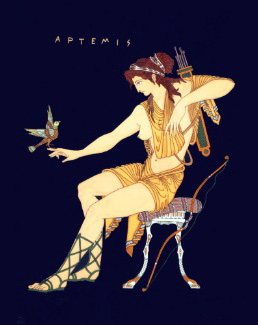
If the Ancient Greeks ever had a deity for protecting the environment it was Artemis. She was a goddess of the forests and wilderness, a defender of the vulnerable who once hid in a chestnut tree from Zeus when he was in one of his violent fits of temper.Artemis

Divine knowledge did not save the iconic American chestnut tree, which provided a glorious quarter of the eastern forest canopy. A blight carried by timber imported from Asia was first noticed on trees at the Bronx Zoo in 1904, and quickly spread across their entire range from Maine to Georgia along and on both sides of the Appalachian chain. Within a few decades they were extinct except for sprouts from old stumps and roots, which became infected long before they became trees. The chestnut provided some of the most beautiful and useful wood in the country, as well as heavy annual harvests of delicious nuts.  I never knew this history, and none of the older people I met after arriving in the USA in the 1970s ever told me what I had missed. How quickly memories of the lately-departed can fade.

But I knew plenty about chestnuts in Britain, which are schoolboy favorites. On chilly winter evenings we warmed ourselves beside glowing braziers in London streets where we bought bags of roasted sweet chestnuts. Earlier in the fall, our school yards were battlegrounds for playing with chestnuts of another kind, the horse chestnut or conker tree. This tree sheds large numbers of nuts inside spiny burrs, burnished like the top of a prized wooden dresser with a round, pasty-white patch of skin, looking like a larger version of its American cousin. Too bitter to eat, conkers served us well in schoolboy wars. We could hardly wait for them to fall, and would throw sticks into trees to bring on the harvest.

In those days, wearing short pants and with pockets bulging with booty we trekked home to plan a campaign. We spread the nuts across a table to select the best for battle and reserve one for our pockets because grandma told us it was a sure cure for piles. The largest nuts were not the best for fighting, and we remembered that Goliath had cracked under David’s little “conker.” I preferred my chestnuts to be “cheesers”, whose flat sides could break my opponent’s nut after arcing through the air like a mortar bomb. We used a kitchen skewer to bore a hole through our conkers before threading a string or bootlace which was tied at one end with a knot. Then we were ready.

Conkers was first played on the Isle of Wight in early Victorian times, and because that is my birth-place and my cousin John McConkey is from there I feel I am a special authority on the subject! The game is played in pairs starting with the winner of a coin toss. With the string wound tightly around his forefinger and the other holding the conker he tries to strike the other nut which is held limply by his opponent. He aims to break it, preferably with a single beautiful, explosive “Crack.”

Smash the conker!

Smash the conker!

Starting as a none-er, the winning conker is promoted to a one-er, and the victorious boy looks around the yard for the next contestant. According to some rules, the score can be additive, so if he defeats a six-er his conker becomes a seven-er, whereas his opponent’s would be an eight-er if he wins a round with a one-er. Some pretty high scores can be run up, and a lot of shells and kernels cast across the yard. If he missed in a tangle of strings, the contestants call, “Strings!” and the first boy to shriek is rewarded with another shot. If a conker is dropped, it is fair game to crush it underfoot with a triumphant whoop, “Stamps!” After releasing so much youthful aggression, the boys troop back to their classroom where stories about the Trojan Wars seem placid compared with what happened outside.

Even schoolboys have codes of decency, if not many, and none when it comes to conkers. In the good old days, we had secret formulas for hardening our nuts. Mine was to bake them in vinegar when Mum wasn’t looking. Opponents always sniffed conkers before the game started to check for cheating, but the smell of vinegar was dissipated if they were aired for a while. I heard that the hardest nuts have been passed undigested through a pig for collecting at the other end, and I suppose the conker owner hopes the other boy has a really stuffy head cold. I swear the story is not a “porker” (slang for a big fib).

There is a part of boyhood that never grows up, and the chestnut is one of its totems. The great ornamental tree evokes memories of gazing into the fall canopy feeling the anticipation with hands deep in empty pockets. But the joy of conkering doesn’t have to stop after graduating to long pants; it continues in some shires and counties into manhood, where grown men stand in opposing pairs, often outside pubs and well-fortified. These are sturdy individuals who are fortunate to live in a country that tolerates (nay, celebrates) eccentricity, and doubly lucky if they don’t have to creep out the backdoor while their wives aren’t looking. It is no wonder that Britain and Ireland have produced far more champions than any other country—if only in this sport. Good luck to them in the next World Conker Championship, which will be held in the English Midlands next weekend (October 13) (I kid you not).

The game is hardly known in North America, except perhaps in New York where a winning conker is naturally called a “Killer.” It is mild compared to the national sport of head-bashing in football, which could have originated with conker players frustrated in a country where horse chestnut trees are rare (Ahem). The native American buckeye, sometimes called a horse chestnut here, is no more than a close relative, but its nuts are too small for respectable play, as are those of American chestnuts if you can find any.

The story of the native American chestnut is like a tragedy that preceded it by only a few decades—the annihilation of the native American Indian culture. These ghosts of the forests were formerly vibrant here in Virginia, but while one was felled by axes and fungal blight, the other disappeared in a hail of bullets and foreign viruses.

American chestnuts were not on my mind until recently when I was shown a typescript browning with age, titled Chestnut Notes. Pam Walker, granddaughter of the renowned New York surgeon Robert Morris (1857-1945), had found it in a bundle of papers from the time when he was preparing a book that become a standard work in arboriculture and horticulture (Nut Growing, Macmillan & Co., 1931). The script, dated October 1929, begins, “Something over twenty years ago when the chestnut blight became a serious matter in Connecticut I looked for resistant species and varieties for the purpose of making hybrids.”

Chestnut hybrid on former Morris estate

Chestnut hybrid on former Morris estate

I was curious whether this great amateur and forgotten pioneer was first to tackle the disastrous die-off of chestnut trees. He began experimenting very soon after the fungal epidemic was recognized, and could not have known in 1909 that it would spread across the nation. Accompanied by Pam last weekend, I visited the Morris estate in Connecticut which, before it passed through other owners to become a public park today, was 440 acres of forest between Stamford and Greenwich where he conserved trees and wildlife. I knew he had used American chestnut pollen to create hybrids with blight-resistant species of chestnut (Chinese chestnut and chinkapin or chinquapin) followed by backcrossing and testing every few years with the aim of producing almost pure American varieties that had inherited genes for resistance. It was a goal that could never be achieved in his lifetime. We found only a few specimen trees that may be derived from his work. Today, research continues under state management in Connecticut and Virginia where enormous progress has been made, giving prospects for people who are alive today to see American chestnuts flourish again.

Before all leaves have fallen, I will travel half-way across the state with a Virginia forester to see how far this work has progressed. And perhaps I will see a rare original specimen, not just a hybrid, that I am told stands a record 20 feet tall without blight. I will then feel well-prepared for an article I have been invited to write for a journal. To some this sudden absorption will probably sound nuts, but people who love our native trees will understand this beautiful obsession. As John Muir said, “Going to the woods is going home.”

These thoughts were running through my head one bright morning last month while I was walking in our yard. We have two or three acres of woodland, mainly loblolly pines, tulip poplars, hickories, and various oak species. They are old friends that stand like guardians around the home, and I pay them particular attention during the hurricane season. I know them all, or I thought I did.

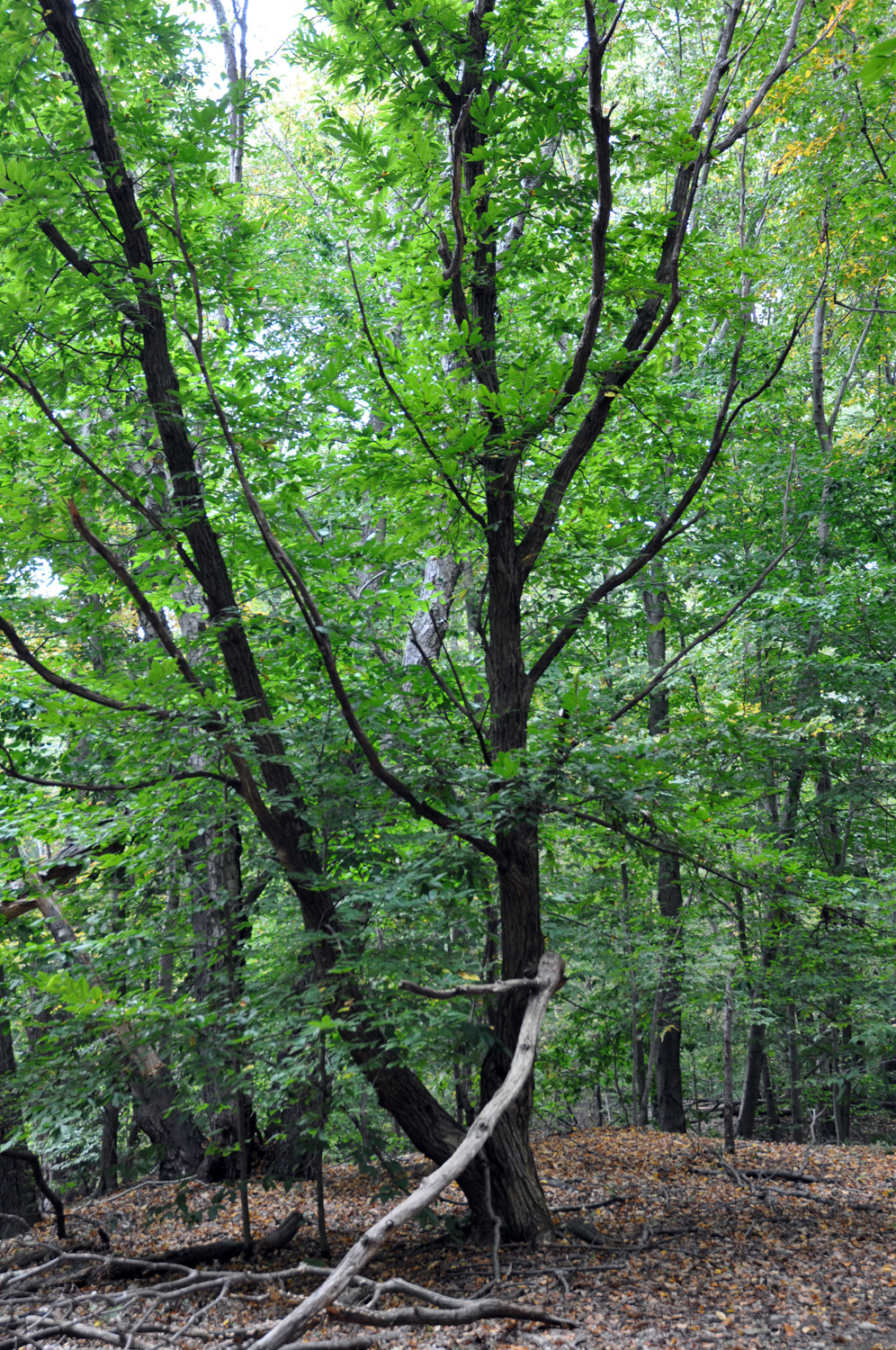
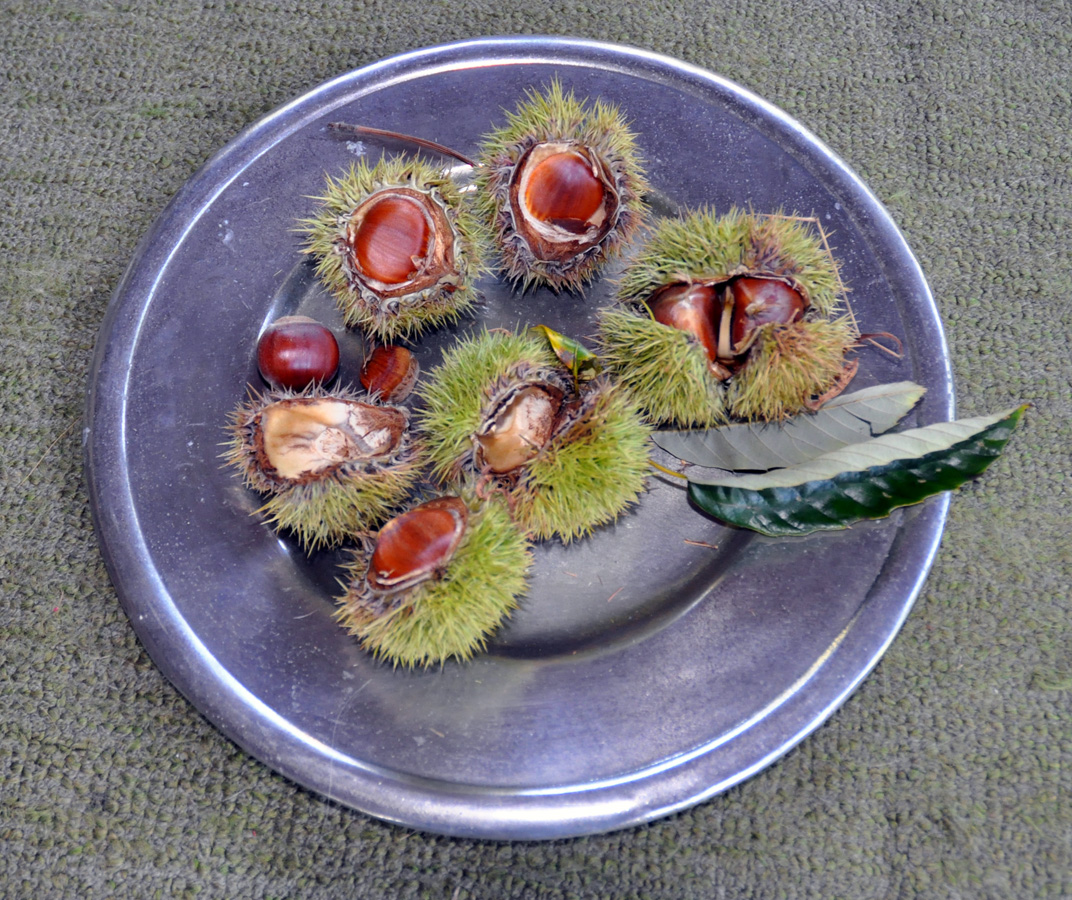
No more than thirty paces from our house my attention was drawn to something I had never noticed before in the ten years we have lived here. Scattered on the ground there were 50 to 100 apple-green burrs. I stooped to pick one, but dropped it immediately because it felt as sharp as a sea-urchin and more spiny than any burr I had ever held. Chestnut plate#2Some had been split by squirrels to remove their fruit. When I prized others open with a pocket knife I found three beautiful nuts inside that looked as bright as if they had been French-polished. There is only one tree that could have produced them in the small grove of pines: it has a bole a foot wide and reaches seventy feet to catch sunlight, where there were more prickly fruit among the long leaves waiting to fall.

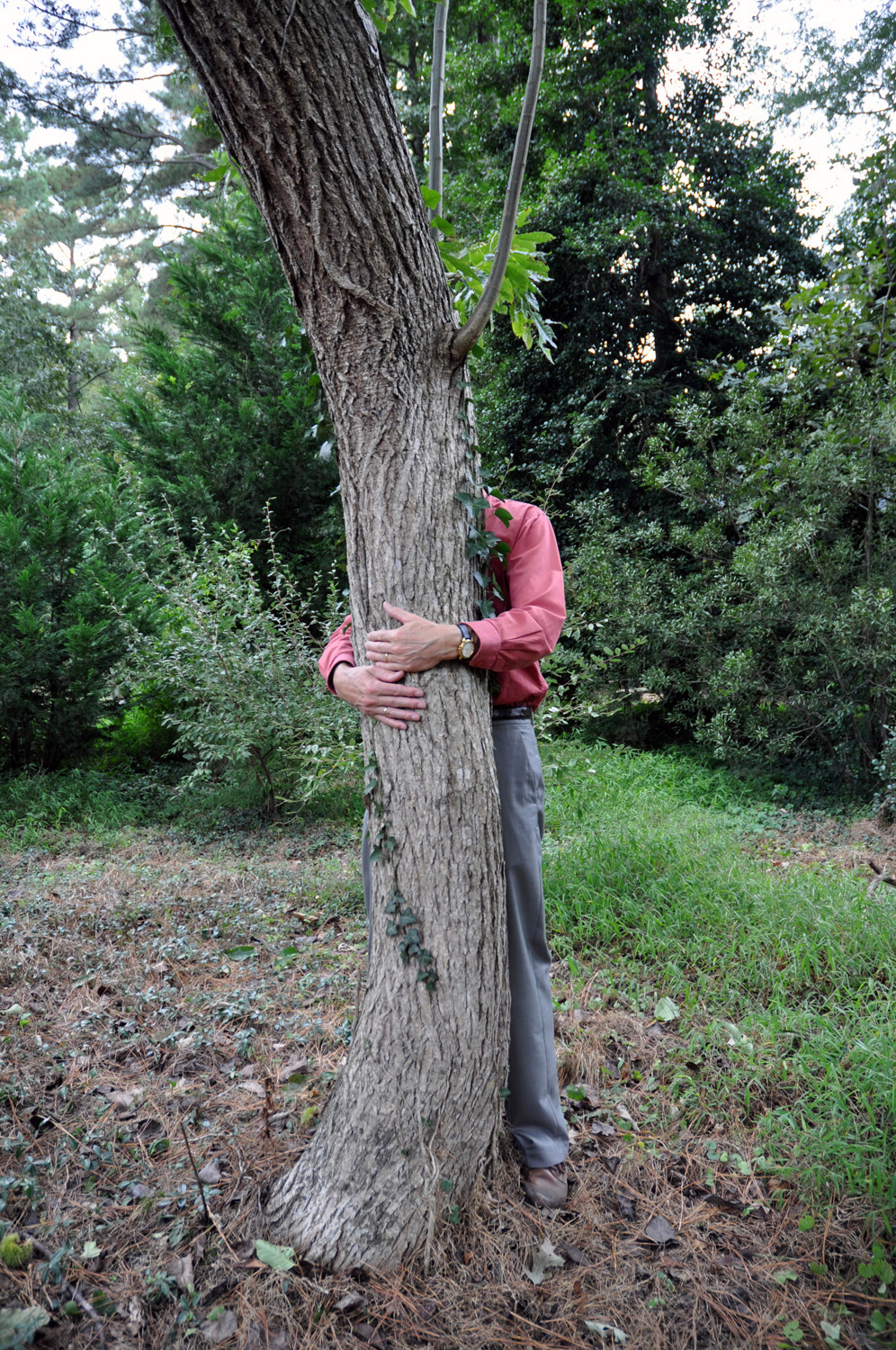
I couldn’t tell if it was American or Chinese, nor did it matter. It was like a gift, and I ran inside shouting, “Come look! You’ll never believe it!” Afterwards I searched the neighborhood and even further afield for others, but this is the only chestnut tree.  Thank you, Artemis.Chestnut treehugger#2

Next Post: Return of the Native

Posted in Other | Tagged , , , , , , | 1 Comment

A Hunter’s Heart

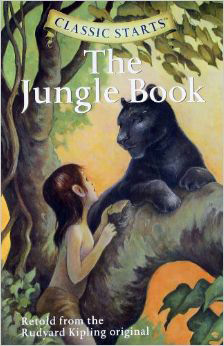
Of all the things I remember about being in Boy Scouts, the stories told by Akela, our scout leader, about how to survive in the wilderness have stayed with me over the years. Suburban London children didn’t need to know which wildflowers are good to eat, or how to hunt and dress a deer, or escape from a prowling tiger, but the lessons were no less fascinating for being irrelevant. And on nights when foul weather kept us inside the troop hut, he stirred our imagination by reading extracts from The Jungle Book, which we then play-acted. But those stories are only shadows compared to memories of real outdoor activities.

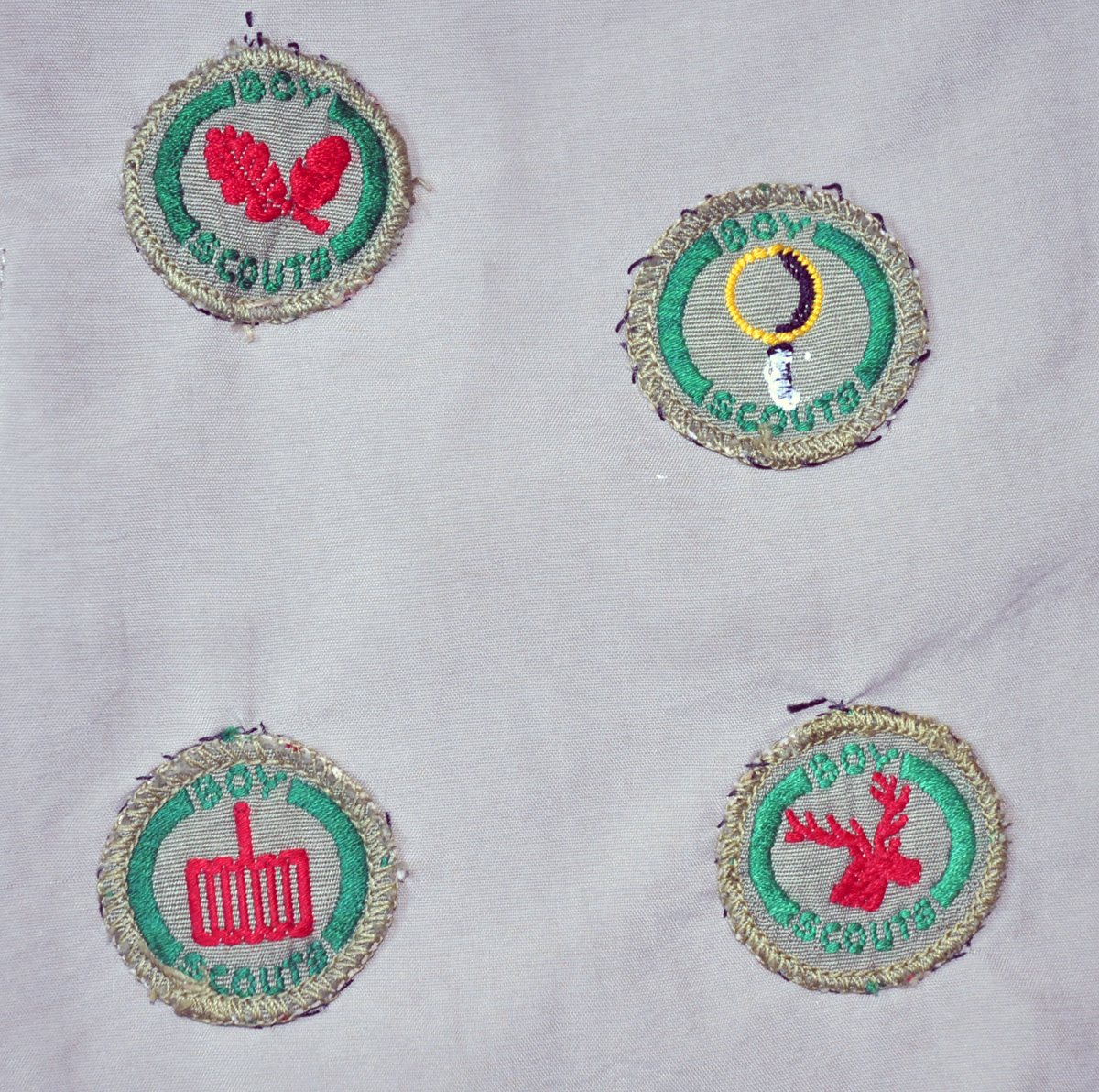
We made shelters from tree branches overlaid with ferns in which we sometimes camped overnight, usually sleepless and scratching at itches.  We cooked “twists” of flour dough on green twigs over open fires. We learned how to track “dangerous” animals by following pugmarks left by the rector’s corgi after its morning walk along muddy paths. And we had “wide games” in which a team of boys was sent into the woods to hide after leaving trails for others to track them down. That was an activity I excelled in. I often succeeded in jumping on an unsuspecting boy crouched under a bush after stealthily approaching him. I won my Stalkers badge before my teen years, though it’s not something I can proudly wear on my sleeve nowadays!

Boy Scout Stalker badge (bottom right)

Boy Scout Stalker badge (bottom right)

There was (and still is) a Green Belt of countryside around London. The boundary was a mere twenty minute walk from home, so I had plenty of opportunities to practice stalking in the “wilds” of Kent. I wandered around woods and fields in a khaki shirt and short pants with binoculars dangling around my neck. I hoped for a close-up view of some unsuspecting target—perhaps a bird on its nest or a badger blinking at the setting sun after emerging from underground .

One afternoon in late summer I was wading through a grassy field up to my waist, the plumes of seed-heads gently rocking in the breeze around me. It seemed impossible that anything could disturb the peace of that moment. But then I heard a low moaning noise that made me pause to listen intently.  When I lifted my binoculars I was none the wiser, although a patch of grass had been beaten down some twenty yards ahead.

I guessed it was a deer fawn hiding in the grass calling for its mother. Not wishing to disturb it, I got down on my belly to crawl forward, my arms parting grass stalks to make a path. After creeping for several minutes, I was close to my target and could even hear dry stems crackling, but I still couldn’t see the striped coat of a fawn.

Suddenly, a man’s head and shoulders exploded above the grass and he gazed in my direction. I jumped to my feet immediately because it was no good pretending that I hadn’t been spotted. I was waiting to hear him roar something like—“What the hell are you doing, boy?”—or riper language, but he ducked down, mumbling, “I saw you.”

Taking a couple of steps forward, I saw him sprawled on the ground, his shirt askew, and with four arms, not two. A woman’s face briefly appeared from under his chest, then she quickly hid again.

I jabbered, “Got the time, sir?” It wasn’t such an odd request in different circumstances. I often stopped grown-ups before my thirteenth birthday when I was given my first wrist watch.  By the time the man had crooked his arm to tell the time I was already turning to scarper back home over the flattened grass. I didn’t understand then why I felt embarrassed intruding on them, nor did I know until much later the expression, in flagrante delicto.

That is the land of lost content,   I see it shining plain, The happy highways where I went  And cannot come again. A.E. Housman

That is the land of lost content,
I see it shining plain,
The happy highways where I went
And cannot come again. A.E. Housman

I already knew it was much harder to stalk wildlife than humans.  The challenge became acute when I bought a camera for nature photography. I could only afford one with a fixed focal length of 50 mm, and didn’t graduate to a SLR and telephoto lens until I became a working adult. Consequently, my early attempts to capture animals or birds on camera were mere landscape compositions, and a magnifying glass was needed to spot the intended subject which was supposed to grace a prizewinning picture. But my frustration with the camera led to discovering how to get closer to my targets. Instead of stalking wildlife, I sauntered forth in their general direction pretending to be oblivious of them and, most importantly, avoiding gazing in their direction.

If I wandered past a squirrel or an owl sitting on a branch they often ignored me, giving me a chance to discreetly squint from the side of my near eye to get a closer view. They then seemed convinced that I was not a hunter—or at worst a dimwitted one.  Alas, if I turned to raise my camera for a snap they were off immediately, and all I captured on film was a disappearing blur of fur or feathers.

Eighty years ago, the New York surgeon-naturalist, Robert Morris, observed in his autobiography how animals can sense our intentions: “… wild animals in the woods instinctively know whether one who goes among them is carrying a gun heart or a camera heart. In the days when I eagerly hunted for bear, moose, caribou, or deer they were seldom found within easy rifle range. They often seemed to have just departed from a locality after leaving abundant signs for my aggravation. Now with a camera instead of a rifle I can get right among these animals at short range. It seems almost uncanny at times.

“When a hunter goes through woods or fields hundreds of eyes are turned on him without his knowledge. Birds, mice, and squirrels, to say nothing of larger animals, are looking right at him all day long from their points of safe vantage, but he does not know it. Something of his hunting attitude is doubtless passed along the line, a sort of woods’ telegraph, ‘Look out for a killer coming!’ A kind of thought-transference appears to go along the line in exactly the same way when one carries into the woods a sympathetic and kindly interest in all wildlife.”

It is my hunch that animals read intentions in our eyes. A head rotating or eyes roving in their direction are alarm signals. I wonder if dark glasses could fool them, and will try the experiment one day.

Besides hunters and animal predators, subordinates and potential prey must avoid eye contact sometimes, like young wolves who avoid the gaze of an alpha male or female in their pack. I remember a path through the grounds of another school in my district through which my friend and I liked to take a short-cut to home. Few dared because boys at that school had a reputation for persecuting those who trespassed on their territory. Once when we marched boldly through the premises we were taken hostage and tied up for several hours, but after learning our lesson we were allowed to pass unhindered provided we walked submissively with our heads bowed.  I had tried valor and found humiliation was smarter.

The Jungle Book#2There are many old stories about the power of staring. In The Jungle Book, Mowgli found that if he looked hard at any wolf, it could not meet his eyes and looked away. He thought this was funny and did not understand that he was different from the wolves.

“The wolves are my brothers,” he said. “Why will they want to send me away?”

“Look at me,” said Bagheera, and Mowgli looked at him hard between the eyes. The big black cat turned his head away quickly. “Not even I can look in your eyes. That is why they want to kill you. You are clever. You are a man.”

Rudyard Kipling probably took the story from a Victorian poem in which nine white wolves coming ‘over the wold’ were defeated by a wandering man who turned to stare them in the eye. Mowgli hoped to subjugate dangerous animals, including the tiger Shere Khan, by simply glaring at them. But if you try this on a tiger or a grey wolf next time you visit the zoo, I guarantee they won’t avert your gaze, except in boredom. And next time you encounter a Rottweiler or German shepherd while walking through an unfamiliar neighborhood don’t try it!

Next Post:  A Tree for Hugging

Posted in Animalia | Tagged , , , , , | Comments Off on A Hunter’s Heart

Nose to Proboscis

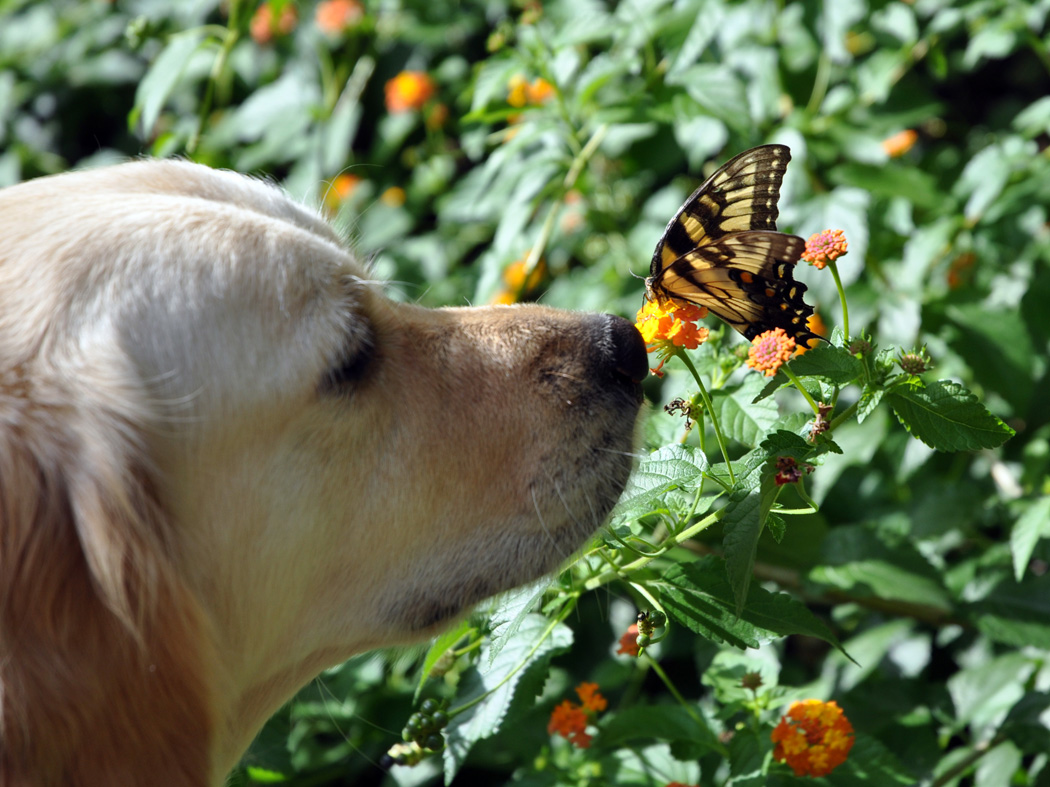
Nose to probscis#1Dogs get really close when they want to check something out. Noses twitch and nares gape when air is being drawn from an object of curiosity across their olfactory epithelium, which can sense far more odors than we can ever imagine. We depend more on eyes than noses to perceive things, and rarely get so close, although a friend who was registered blind held papers so near his face that he could smell the ink.

If our golden retriever could speak she would probably scold me for pretending to know about wildlife from observing it only at a distance. “So you think you are a naturalist now?” she would growl. If she could, Lilah would tell me what butterflies smell like, why they like some flowers instead of others, and what they look like at very close quarters. So the other day I crept up to a flight of butterflies in our garden to see if I was missing something.

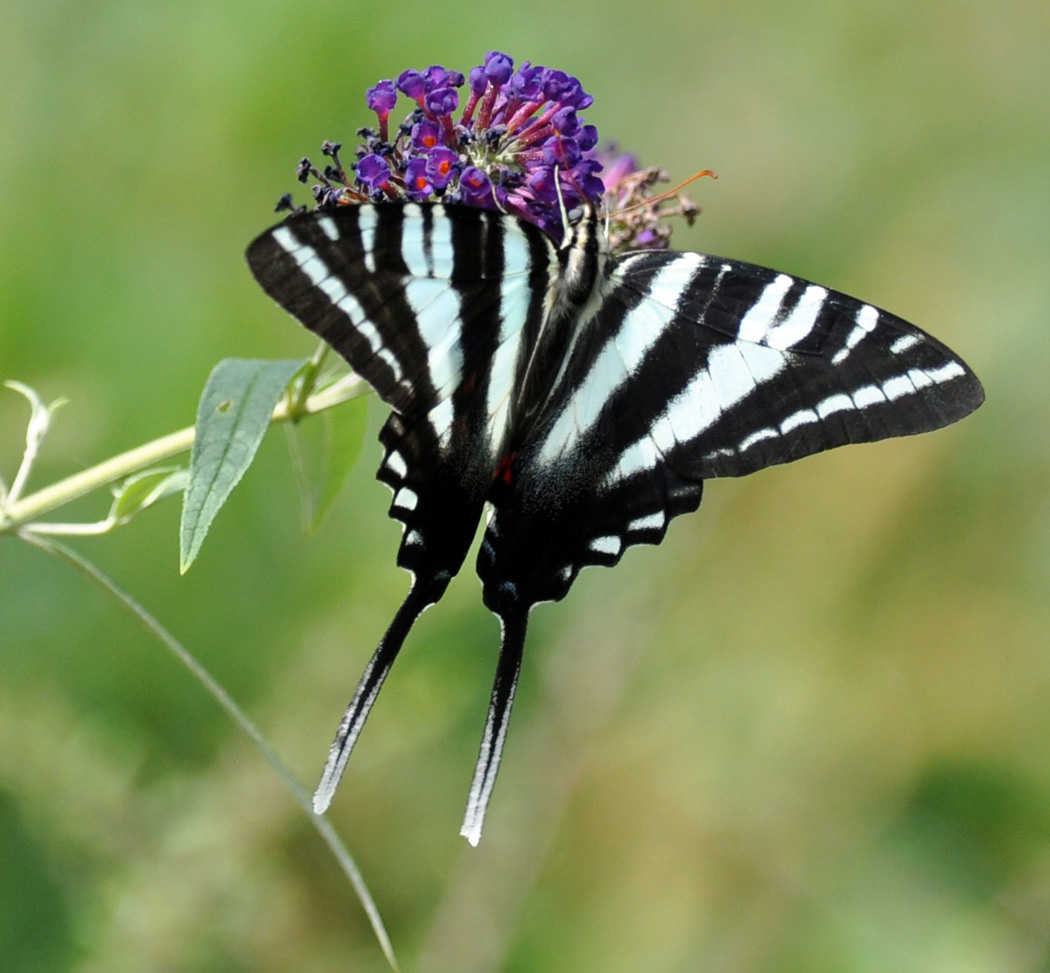
Zebra swallowtail

Zebra swallowtail

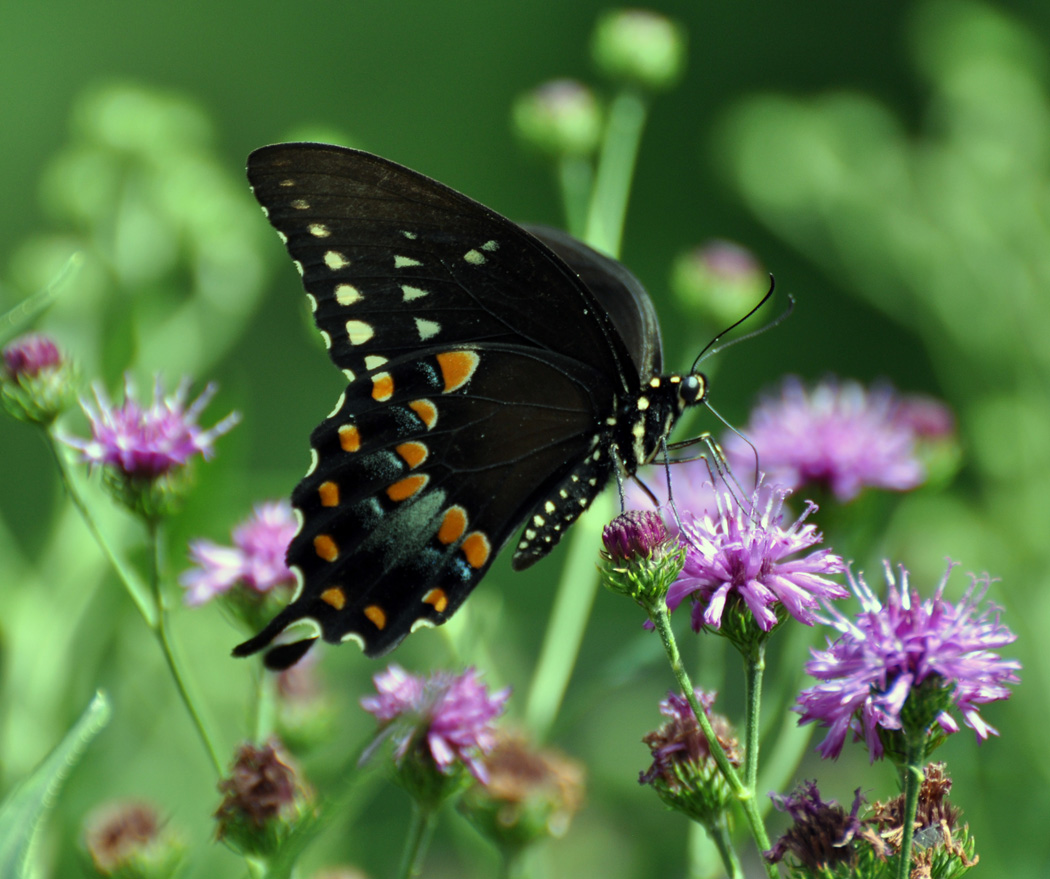
This has been a bumper year for swallowtails in Virginia (monarchs are scarce). Most sunny days, there are more than a dozen from four species hovering over the Lantana and Zinnia before alighting on a flower. Although among the strongest flyers of their family, they allowed me to inch towards them as they rested to feed until I was so close to one of them that my eyes were straining.

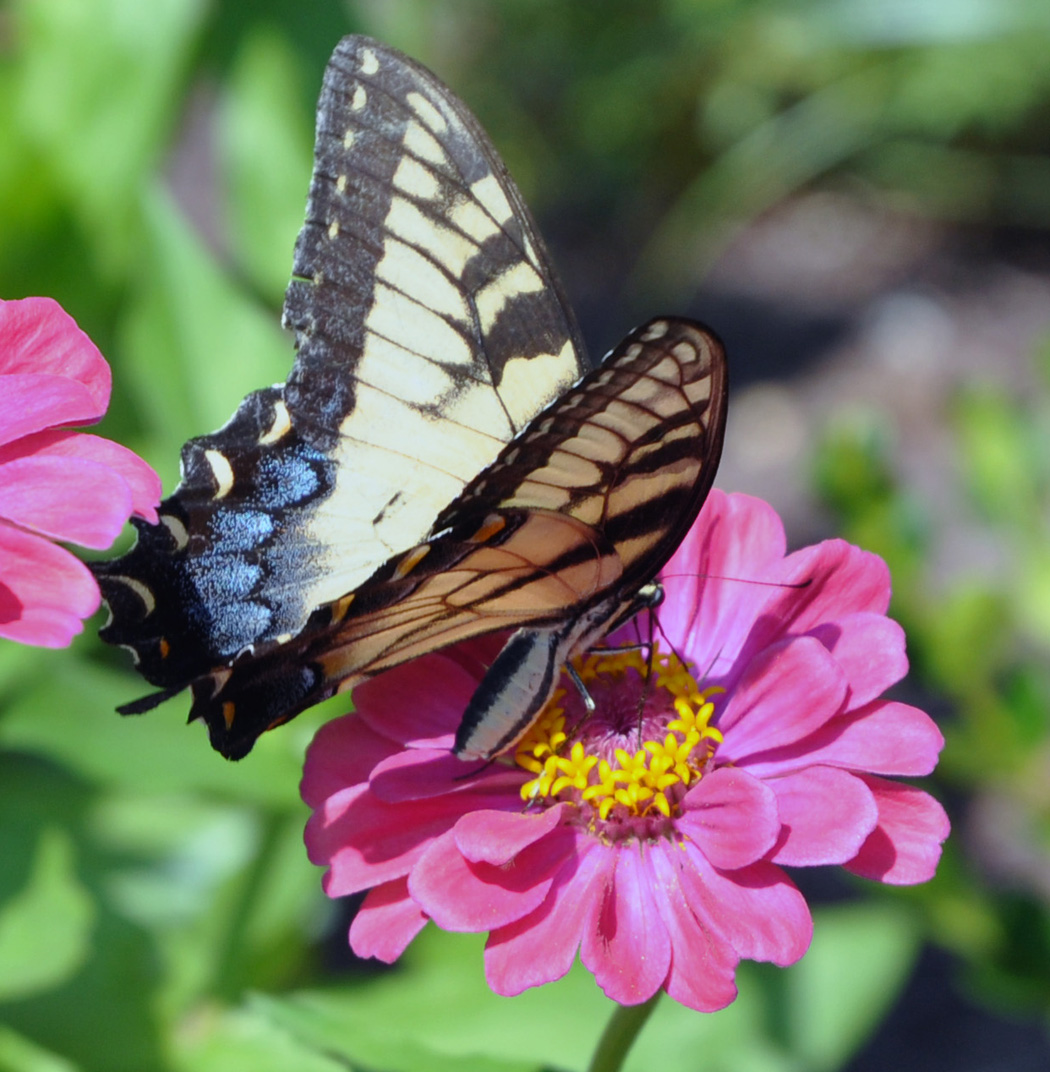
Eastern tiger swallowtail

Eastern tiger swallowtail

It is a long time since I have had that close a communion with an insect; I normally never get nearer than crunching a cockroach underfoot. But the head-to-head encounter with an Eastern tiger swallowtail almost felt personal, although I wonder what it made of me through ommatidial lenses of its compound eyes. The butterfly remained unruffled for several minutes until it had drained the nectaries of a flower and moved to the next; as calm as when I sidle up to the bar beside a taphouse customer who has an absorbing interest in his beer and doesn’t want to be disturbed.

The butterfly’s proboscis lashed back and forth like a whip, reaching its targets deep inside flower bells with amazing precision. Every sweep reached a new floret from which it could drink. Compared to this delicate tool-user, an expert fly-fisherman looks like a clumsy fool casting for trout in a pool.

Spicebush swallowtail

Spicebush swallowtail

Under the microscope, you would see the proboscis is formed from two parts that are zippered together to make a tube. It is an extension of an insect’s mouth, and nothing like the noses of elephants and monkeys that are sometimes called proboscises. Since it looks like a flexible drinking straw, you might think that butterflies suck nectar into their bodies, but the effort of drawing the viscous fluid through a high resistance canal would be futile. New research shows that sucking is secondary: butterflies use capillary action like a paper towel to soak up fluid, which does not require expending any energy. Had I not stooped that day to watch the aerial plumber, I would never have wondered how it manages to feed, never run back to peruse an entomology journal, and never marveled more at the vigor and beauty of a wild creature. Wonder is an unexpected reward when you get close enough to something that spikes your curiosity. Not since I used to sketch and paint have I gazed so intently at any creature. That seems a shameful admission for a biologist, although it is all too common to become careless of things that once inspired us.

Our traveling microscope. R. Wasserlein, Berlin (c. 1880)

Our traveling microscope. R. Wasserlein, Berlin (c. 1880)

In the Nineteenth Century, many gentlemen took up nature study as an absorbing pastime. It was an era of greater leisure and fewer distractions, when explorers were bringing home weird and wonderful specimens from remote lands, and there was feverish excitement about new scientific theories. We have a small collection of scientific artifacts from that period. I imagine a Victorian gentleman packing one of our traveling microscopes in his trunk for a journey by stagecoach or train. He would have taken it to study specimens collected on his trip—parts of a flower head, lichen prized from a rock, scales on a butterfly’s wing, and so on. He wanted a closer encounter with things that nudged his curiosity. Nowadays, we can explore a much wider world through smart phones and tablets that connect us with the WWW, but although I love those gadgets they are no substitute for directly engaging the senses with the real objects of our interest.

Opening your phone in Starbucks to visit a butterfly website is unlikely to attract attention from other customers, but if you pulled out a microscope from your bag to examine a bug floating on your coffee you would turn heads. And if you were seen lying spread-eagled in a meadow watching the microfauna creeping between stalks, like a Gulliver observing Lilliputians, you might be called eccentric. But there should be no embarrassment when curiosity stirs us to draw close for a better view, only pity if we become estranged from the very things that at one time aroused our imagination, and perhaps to such a pitch that it had lifelong impact or led to a career. Like a marriage strained by work, there are many distractions that conspire against the personal engagement we once had.

A medical researcher burdened with grant applications, manuscripts, faculty meetings, and lectures may no longer have time to study under the microscope or to interview patients, but depend on a second-hand connection with his subjects provided by assistants. A landscape artist may lose the inclination to set up an easel en plein air, but paints instead from photographs. A busy surgeon has few opportunities to speak to his patients because he usually encounters them anesthetized. A teacher who is promoted to administration rarely sees kids any more. And a politician who becomes a hot-shot spends less time face-to-face with constituents.

Nose to probscis#2It is hard casting aside distractions, especially when they are so abundant, and so easy to forget the things that once impelled us. For me, it took stepping out of a career and a dog nosing a butterfly to remind me about the wonder of nature.

Next Post: A Hunter’s Heart

Posted in Animalia | Tagged , , | 5 Comments