The Bard of Beckenham

Gordon Burness in his London home in 2014 aged 86

Gordon Burness in his London home in 2014 aged 86

Gordon Burness was born in London on May 7, 1928. When he died in the same city aged 86 he left no large footprint in history, but those close to him knew that a remarkable man had passed. He had none of the career achievements we expect in a notable life, but instead he excelled as one of those “great amateurs” British people are proud of.

In his own words, his school education “was virtually terminated” in 1939 by the outbreak of War. Two years later he was evacuated to the safety of Wales where he often got into trouble and “was punched to the ground by the headmaster for being the worst behaved boy in school.” He was exiled to a remote hill farm from which he rode on horseback to school, and absorbed practical knowledge birthing cows, slaughtering pigs and learning how to fish and shoot. He returned to London in time for the V-2 rocket bombardment in 1944, but the family home was spared.

His first phase of life over, he enrolled as an apprentice toolmaker in a factory until it closed when he received a redundancy payout of ₤200 ($300). He had no other paper qualifications, but eventually found a job as a security officer on a property where he had once hunted illegally: the poacher turned gamekeeper.

In the post-war years of meat rationing, poaching on private land was an irresistible temptation because he could earn a savory supper for his family and sell pheasants and rabbits to buddies at his factory. When the factory and poaching were behind him, his third phase was a deepening interest in wildlife for which he exchanged his shotgun with a camera. He learned how to track animals and became an expert mimic of bird song, but apart from a single trip to Scotland he never traveled far from his home turf. He published beautifully illustrated articles in magazines, and became widely known in naturalist circles after discovering a very rare albino badger in 1962, accompanied by two young brothers, Gary and Phil Cliffe.

Gary with Snowball, the albino badger

Gary with Snowball, the albino badger

That was when I met him for the first time, under rather inauspicious circumstances. I was a young teenager watching the same badger den (“sett”) one night when they surprised me by shining a flashlight up to my perch in a tree. Gordon was unhappy that I had stumbled on his project, but after our next meeting, this time in daylight, we became life-long friends. The first of his two books, The White Badger published in 1970, sold well, and the story was featured nationally on children’s television.

After Constable (unfinished) by Gordon Burness

After Constable (unfinished) by Gordon Burness

His fourth phase began in the early 1970s when he took up oil painting. He completed thirty-two canvases, which hung around his home gradually glazing with nicotine. He painted to a background of classical music, and particularly loved Wagner’s Ring Cycle which he called “a thirteen-hour cerebral orgasm.” His brush technique was excellent, especially considering he was untutored in the art.

When he was no longer inspired to paint he turned to poetry, his fifth phase. Despite little education in English prose and poetry, he was a natural wordsmith and told me his compositions reflected “our personal frailties and his personal views.” This oeuvre is not a large legacy, but as revealing of the man’s character and broad interests as his paintings. He could be very droll, loved concocting jokes and limericks, and was unfailingly cheerful even towards the end when nearly blind and weakened by ill-health. His fun-loving heart could spend weeks poring over a painting or poem created to amuse himself or a rare visitor.

Dreams Afloat by Gordon Burness

Dreams Afloat by Gordon Burness

He loved the ladies and they returned the favor because he was charming and funny. Although several fell in love with him he never married, which was a great kindness because he prized his privacy.

From 1987 he looked after an ailing brother and an elderly mother. For nearly two decades after they died he was virtually a recluse, only leaving home (and most reluctantly) for a medical emergency or a follow-up. His retiring habits were badger-like. Josie, a good-hearted neighbor, mailed his letters and brought home shopping, including the all-important cigarettes.

He smoked heavily from boyhood days in Wales, and over the years I noticed his ceilings and walls yellowing and finally turning orange. “Fags help me think,” he told me.

He had a deep interest in science, sometimes asking searching questions about astronomy and biology. He was ahead of me with news about the Hubble telescope, and invented plausible theories about the clocklike pineal gland and the tapetum in the eyes of nocturnal animals. His ingenious mind led to the manufacture and marketing of a couple of mechanical devices, but he forgot to take out patents.

I wonder what he might have achieved had he started life in better times and with more advantages. But he never complained and had no wants beyond a smoke, the latest test cricket score, and to chin-wag with a friend. He said he felt lucky because he had done everything he wanted. It is a rare privilege to have known a fully satisfied human being.

*****************

Book cover from Gordon's painting titled "Ice Cream" after Edvard Munch's "I Scream"

Book cover from Gordon’s painting titled “Ice Cream” after Edvard Munch’s “I Scream”


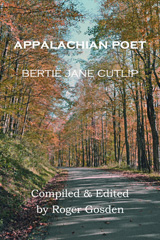
Gordon’s poems and samples of his nature writing have been compiled in an anthology published on the day of his funeral by Jamestowne Bookworks. It is available as a digital book for 99 cents from Amazon.


Gordon was an all-round naturalist, but he had a special fondness for badgers. My favorite poem is Badger Watch.

Badger poem

Next Post: Paleo Pantry

Posted in Memoir | Tagged , | 1 Comment

Virginia Nature Journal for February

William Carlos WilliamsWe had exceptionally chill temperatures and heavy snow throughout February up and down the East Coast this year. Cold air that normally hangs over the north-west was pushed down to the Plains by the jet-stream, leaving Alaska feeling relatively balmy. As if that affront was not enough for one winter, we were also battered by a nor’easter in early February. Virginians with long memories tell us that not since 1980 can they remember a deeper winter in Williamsburg.

Snow disappears first under trees

Snow disappears first under trees

The melt always starts first on roofs and asphalt driveways because the dark colors absorb even the feeblest infra-red rays that penetrate the translucent snow cover. The next place for snow to go is on the compost pile, which shows that our microbial and fungal friends are not  slumbering but can still generate a little heat. Snow starts its ground retreat from under bushes and trees and reaches open ground last, where there is plenty of solar radiation. Perhaps the snow that settles on evergreen foliage and boughs rarely falls to the base of the tree but melts in situ, disappearing more quickly on darker colors.

This is a good time for gazing at the bare skeletons of sleeping trees. The verticality of their trunks is more obvious as they snub gravity; their crowns are so marvelously balanced and finished with a tracery of fuzzy twigs. Any gaps caused by wind damage will be filled in the growing season by disproportionate new growth. Under the boughs, there is a litter of small branches and twigs among the fall remains of acorns, walnuts, and maple wing-nuts. The wood looks wasted like unlucky victims of storm damage, but this kind of pruning is so necessary because branches multiplying each year by compound interest would soon become overloaded. Shedding weaker twigs is a picture of natural selection in motion.

oak tree

Pin oak

When Leonardo da Vinci mused about the shapes and dimensions of trees he recorded a curious fact. Irrespective of height above ground, the cross-sectional area of a branch equals the sum of the same dimensions in the branches it subtends. This rule applies at each transition from trunk to uttermost twig. The standard explanation is plumbing. We might expect to find this correspondence because the living cambium and conducting vessels continue from each branch to its daughters.

According to a recent paper in Physical Review Letters from a UCSD biophysicist there is another explanation. He formulated a mathematical model that closely fits Leonardo’s observations but suggests that this geometry gives the branches the best strain resistance to high winds. Perhaps we don’t have to choose one theory over another but can accept that both may be correct. Biology is neat and good at math.

The clearing patches of snow under trees are good places for wildlife that can’t migrate or hibernate. Small birds and rodents scratch for a living among the brown leaves between the green spears of daffodils while sapsuckers drill neat holes above for licking at the weeping sap. Bird feeders are the avian equivalent of soup kitchens: they can save lives in hard times. But they also offer easy pickings for predators like our pair of red-shouldered hawks unless the prey dashes into cover nearby. Despite the continuing grip of winter, lengthening days make spring brains. As soon as their breakfast is over, cardinals and Carolina wrens burst into song and a crow proudly carries a twig to an untidy matt in an old pine tree.

Next Post: The Bard of Beckenham

Posted in Seasons in Virginia | Tagged , , | Comments Off on Virginia Nature Journal for February

The Soda File

“Which boy can tell me about sodium?”

“Please, sir.” One of the little crawlers in the front row of the class shot his arm up, revealing a neatly-ironed white sleeve. “It’s salt, sir.”

“WRONG!” the teacher roared. He thumped his fist on the desk so hard that a pen jumped. Glaring at stupidity, he told us, “It’s a metal.”

‘Basher’ was the only teacher who terrified us in elementary chemistry classes. The hulk behind the desk was infinitely old with jowls like a Labrador retriever, a few wispy hairs greased back in a pretense of covering his bald pate, and a large fat nose squished like a slug to one side. He only smiled when our public exam results came through, and that gesture betrayed a row of crooked teeth like leaning gravestones.  Less courageous boys who avoided his class wondered how such a teacher could shepherd us to so many top grades. But it was no secret—it was FEAR.

We had nicknames for all our teachers, but ‘Basher’ was the most fitting. He had been a heavyweight boxer whom the headmaster hired out of retirement when there was a shortage of qualified chemistry teachers in our London Borough of Sidcup. Basher was a showman because he learned in ‘the ring.’

That day he used a pair of tongs to lift a silvery metal fragment out of a jar filled with oil. “What’s this Farrington?” The boy looked blank and scared.

“Is it sodium, sir?” That was the class smart alec. In those days, our teachers addressed us by our surnames, and they were always ‘Sir’ to us.

He held it in the flame of a Bunsen where it burned with a bright yellow flame. “That’s Na,” he informed us pointing a stubby finger at the large poster on the wall. Later, we heard it was called the Periodic Table. “Now boys, gather round in a circle.”

We trooped from our desks to watch him drop the flaming metal in a tank of water where it raced and fizzled on the surface until extinguished. Our curiosity grew in leaps and bounds when we learned the bubbles were explosive hydrogen gas.  Basher was playing magician and loved being on stage.

We were not the only schoolboys to enjoy this experiment. A generation earlier, the neurologist and author Oliver Sacks described the same on a London pond in his book, Uncle Tungsten: Memories of a Chemical Boyhood. He wrote: “It took fire instantly and sped around and around on the surface like a demented meteor, with a huge sheet of yellow flame above it.”

Sodium was not the only exciting ‘demonstration’ in chemistry that year. I look back in horror on the day he heated a beaker of benzene on an open bench; I can’t remember its purpose, but loved the sweet odor as it vaporized. Our teacher didn’t tolerate health and safety wimps getting in the way of life experience. The older staff in our boys’ school had grown up facing far greater dangers two decades earlier while serving in the War, and Basher was undoubtedly a commando.

The reason why gratitude to him conquered fear of him was his recipe for making NI3.NH3 from innocent-looking ingredients we could buy in a store. This contact explosive is completely safe while it stays moist, but when dried as a smear it goes off with a loud bang and puff of purple smoke at the slightest touch. It was the perfect revenge for the other class who sneered at us ‘Basherboys.’ Huddling outside all-ears, we waited for class break when they visited the school toilets…

Basher never gave us any practical demonstrations of salt because it was a boring substance. Sodium chloride is an extremely stable union of two highly-reactive ions. It did, however, interest the biology and geography teachers, and no doubt was an ingredient of cookery classes at the girls’ school in those days. Today, there is plenty of talk about common salt, but I hardly ever hear anything about sodium now.

As one of the commonest salts leaching out of the earth’s crust, it is carried down rivers to the oceans where it is concentrated over eons. If life originated in the oceans, seawater bathed the ‘bodies’ of the first creatures before body fluids, and later blood, provided a controlled internal environment. But as oceans became more briny, sea-life had to adapt: bodies become dehydrated when water is withdrawn osmotically from their less concentrated fluids. Our body is only a third as concentrated as seawater. Kidneys and gills in fish or salt glands in seabirds help to expel excess salt from drinking sea water, whereas shellfish and sharks solve the problem differently by conforming to the solute strength around them. Salmon and eels that migrate between the ocean and rivers have extraordinary ways of adapting to salt stress. Even marine fish cannot tolerate much higher concentrations of salt, which is a good preservative for ‘saltfish.’

How did mermaids manage to live in the sea if we can’t? Adrift in a raft, we can only survive for around 10-11 days without fresh water. The temptation for a thirsty survivor to drink seawater is huge, and watching albatrosses sipping it might drive him crazy, but it would hasten delirium and death. Our kidneys can’t produce urine concentrated enough to get rid of excess sodium, so our blood gets more and more briny. In the movie Unbroken, based on a book of the same name by Laura Hillenbrand, “Louie” Zamperini was afloat on a raft for 47 days in the Pacific Ocean. He drank rainwater.

Lot's wife in Book of Genesis

Lot of salt (200g)

A modest amount of sodium chloride in our diet, along with other minerals, is needed to replace natural losses because its ions are essential for cells to function.  We contain about 200g of sodium chloride, not exactly a “pillar of salt” which was what Lot’s wife was reduced to as punishment for turning to look back at Sodom.

Although we need perhaps as little as 0.5g of salt a day, or a quarter teaspoon, we almost always consume much more. The American Heart Association now advises a new lower limit of 2.3g or only 1.5g for people with hypertension, or who by reason of age or genetics are at risk of high blood pressure and stroke.

But how much salt do we eat and how can we control it? We can push the salt cellar away from our plate and buy unsalted peanuts from the grocery store, but how much are we consuming unwittingly in processed foods and restaurant meals? It is a problem like sugar – salt is tasty and hard to avoid. Basher told us that sodium chloride is unreactive, but as a biologist I take that with a grain of salt.

Next Post: Virginia Nature Journal for February

Posted in Biomedical | Tagged , , , , , , | Comments Off on The Soda File

Virginia Nature Journal for January

  • BurnsPoem

     After the merry Christmas holidays and the high spirits of Hogmanay and Ne’er Day in Scotland, January stretches out, dark, drab and driech. February too promises precious few fine days, although the longer daylight hours are cheering.

    It is time for those at work and home to hunker down, and for snowbirds to fly out of blizzard-blasted northern states and Canada, past chilly Virginia to the warm blanket of southern Florida.

    grosbeak

    Young Rose-breasted Grosbeak. Courtesy Geoff Giles

    Birds too are on the move. The neotropicals headed further south several months ago, although a few hardy individuals stayed on in our Williamsburg area through the light snows and recent ice-storm. How would they manage without the hospitality of feeder stations in gardens and yards? Every year, there are reports of a hummingbird and a tanager lingering here in mid-winter, and a Rose-breasted Grosbeak visited a friend’s garden this month. I wonder if these vagrants are seasonally disoriented or knowingly hanging around avian soup kitchens, but they are thrilling sights for being among our most colorful birds.

    A flock descending in the backyard like a sudden squall can lift a brow leaning at the computer for a welcome moment of respite from concentrated work. Mostly American Robins and occasionally Red-winged blackbirds or grackles, they are probably not the residents of other times of year for those birds have temporarily gone to more southerly neighborhoods. The winter relatives have come down from the north to feast on left-over berries of holly, wax myrtle, and red cedar. Why the locals moved away before emptying their larder puzzles me, but the policy helps the migrants who replace them. The wrens, nuthatches and chickadees seen at this time of year may also be newcomers, but I like to think my special friends, the cardinals and bluebirds, stay with us the year round. But how could I know unless I banded them?

    bird feeder

    Small bird feeder – fat, grain and seeds

    We only see White-throated Sparrows and Dark-eyed Juncos in the coastal plain in winter. They skulk around the shrubbery, ignoring the gardener at work nearby, and take turns to peck suet on the feeder. Juncos are nick-named ‘snowbirds’ because they are regarded as harbingers of hard weather. In the mountains above 3,000 feet, they are the only birds you can count on seeing throughout January. The deer have no choice but to stay the year round, and many animals perished of starvation in the very hard winter five years ago. Bears are safe from the elements while torpid in their dens. Most other birds and critters move down the valleys to better pickings around creeks or to even further afield. But you can tempt some of them to stay.

    big feeder

    The Big Feeder

    Last fall, I hauled 200 pounds of whole corn and chicken scratch in a barrel 20 feet up in the low canopy between two trees. The job needed a hand winch and a block and tackle. Under a hole in the base of the barrel, a small propeller spins automatically every 12 hours, scattering grain in a 50 foot radius for six seconds. A gamecam monitors the area and a motion detector rings in the house 100 feet away to tell me when to grab binoculars. But the hefty feeder was not installed for the benefit of viewers; it feeds the hungry while I am away, and only needs replenishing every two months.

    Winter trees are wisely bare and silent, but this helps me to see further into the woods. The season is not dead; wildlife are coming to their Time Square.

    In the past few hours, several deer came to nibble grain. Four ruffed grouse in cuddly feather balls strutted around, and two fox squirrels, so much larger and more handsome than gray relatives, darted back and forth with grain to a hiding place. And there was rarely a moment when small birds were absent. There was no fighting over food and, despite the bitter cold, most visitors were in mated pairs. A pineal gland tells them the time of year. I recorded a mother bear grubbing under the feeder with two adorable cubs, but now she may be dreaming of spring with a tiny newborn pup or two attached to her teats. January is hard, but has its compensations, and is full of distant anticipation.

    Next Post: The Soda File


Posted in Seasons in Virginia | Tagged , , , | 2 Comments

Who knows about Fructose?

Lucas Cranach Adam & Eve

Lucas Cranach (1526). The Courtauld Gallery (extract)

Was it a sweet or sexy temptation?

The apple that Eve pluckedSweeter than honey from the tree was sweeter than honey, or to be perfectly accurate it had relatively more of the sweeter stuff than in honey. Apples contain more fructose than glucose, and fructose is much sweeter than either glucose or sucrose (the sugar in our pantry).

Aside from the creation story, the other theory predicts that some plants acquired an advantage by evolving biochemical pathways that generated more flavorsome sugar, like fructose, in their ripening fruit. Being more attractive to eaters, helped to disperse seeds to places where they could thrive. Eve is in the apple, as fructose.

‘Fructose’ has a healthy ring, from its Latin root for ‘fruit.’ We were advised to eat an apple a day to keep the doctor away, and fructose was recommended for people with diabetes because it has a low glycemic index. But it may not be such a good prescription, and has been losing its salubrious cachet ever since high fructose corn syrup was introduced forty years ago. Glucose still glitters, which is a differentiation that seems odd at first sight because the two molecules have the same number of carbon, hydrogen and oxygen atoms.

sugar

Glucose + Fructose = Sucrose

Having identical chemical formulas does not make them the same. They are no more the same substance than genetically identical twins are the same person. Glucose and fructose are monosaccharide sugars forming in equal amounts when their parent molecule, sucrose, is digested by enzymes breaking its oxygen bridge apart. The two ‘baby’ sugars have different shapes, but when it is their turn to be digested they generate the same number of calories. But not all calories are equal.

Shape matters. Consider another sugar-lover. When yeast cells feed on the sugary mixture in unfermented grape ‘must’ they mostly prefer glucose, and as alcohol increases in the liquor more undigested fructose is left behind. That can make a wine too sweet for taste. Vintners are therefore choosy because some strains of yeast have a greater affinity for fructose which makes a drier product. Not all yeasts are equal.

Of these twins, only glucose is essential for life, although we don’t need to eat it raw because it is created by digestion of more complex carbohydrates and fats. We manage perfectly well without fructose in our diet too. Even sperm, which are nourished in fructose-rich semen, are equally satisfied when provided with only glucose.

More interestingly, our body handles the two sugars very differently. Glucose is rapidly absorbed into the bloodstream from the small intestine via a special transporter (GLUT4). It then races through the liver for delivery to every corner of the body. Under strict control by the hormone, insulin, glucose provides fuel for metabolism and growth in cells, and any surplus is converted to fat and stored in adipose tissue.

On the other hand, fructose is absorbed slowly from the gut and by a different transporter (GLUT5), and even more poorly in infants where it can cause diarrhea. Once it reaches the hepatic portal vein it stops at the liver where it is taken up into cells by a process that doesn’t involve insulin. Once inside, it is handled differently to glucose, forming glycerol as a backbone for making triglycerides.  Several studies have shown that fructose-rich diets raise both triglyceride levels and LDL small particles while lowering HDL-cholesterol, which are thought to be unhealthy signs. Since fructose is lipidinous, it potentially contributes to metabolic syndrome, including diabetes and obesity, and there is additional evidence of a role in fatty liver, gout, and inflammatory conditions. Eve was wise to offer Adam only one apple.

Until a little over a century ago, dietary sugar could only be afforded by the wealthy and powerful. No longer. Growing up with cheap and omnipresent sugar, it is easy to equate abundance with beneficence. The longest aisles in supermarkets are stacked with sodas and sports drinks full of sugars, and rows of ‘healthy’ apple juice contain a whopping 100 grams of fructose per liter. Those are the most visited aisles in stores, and conveniently located near cash registers.

sweet drinks aisle

Longest aisle in the supermarket

At home, grocery products lining pantry and fridge shelves are also saturated with sugars. But it’s hard to know how much sugar we consume by reading labels. How can we accurately compare it in different foods or brands when labels describe amounts as ‘serving sizes’ instead of ounces or grams? How much sugar is added versus natural? How much is glucose versus fructose versus sucrose? As consumers buy more processed foods instead of using raw ingredients for home cooking we are locked into choices made by manufacturers. They spoon in the sugar to increase shelf-life and palatability (Eve’s temptation).

I know how hard it is to resist sweet stuff, and harder still to give up. Perhaps fructose is hardest of all, being so sweet and stealthy. Our gut absorbs it more rapidly as we become used to it, and it doesn’t suppress the hunger hormone (ghrelin) as glucose does. We get hooked, without being satisfied.

When we were introduced to tea and coffee as children our ration was a measly half-teaspoon of sugar to make them more palatable. As soon as we started savoring the beverages, mother weaned us off the sugar, and a few weeks later the sweetness was so repellent that if we sipped Dad’s tea by mistake it made us heave. It took much longer to adjust him to unsweetened drinks. In that age, when sweetness was well-regarded in every way, children could surprise visiting aunts and uncles by teasing them: “We are teatotal, and saving our sugar ration for chocolate!”

It is now cool to cut sugar and worry about fructose, and the stigma is sticking. Robert Lustig has over five million viewers for his YouTube diatribe against fructose, and Michelle Obama was quoted as saying,”Our kids don’t choose to make food products with tons of sugar and sodium in supersized portions, and then to have those products marketed to them everywhere they turn.” We must stop blaming the fat boys and girls in class for being gluttons. With choices made for them and sweet temptations at every turn, they are casualties of a food and drinks industry focused on annual financial performance. And since the FDA is unlikely to regulate sugar in foods, the sweet tide continues to rise.

High fructose corn syrup is gradually replacing sugar from cane and beet because it is so cheap. Produced by industrial hydrolysis of starch, HFCS55 and HFCS42 are the main products for foods and beverages, while HFCS90 finds specialty uses. The number represents the percentage, so the fructose hit in HFCS is similar to 50 in granulated pantry sugar. There are important differences, however, in the source, process, farm acreage, economic and environmental impacts of subsidized corn for HFCS.

While HFCS is regarded as a new dietary demon, we have been exposed to fiendish fructose for eons, although not in any quantity until recent generations. It is unavoidable, but lower exposure through smaller serving sizes, home cooking, dilution of fruit juices, etc. can be managed over time because there is no physical addiction to sugar. Perhaps it will become the new tobacco.

Animal studies show that it would take an impossibly large serving of fructose to kill us, but that doesn’t deny a toxicity that is cumulative and insidious over time. Even the most benign substances that life depends on, like water and oxygen, can harm us when we are overexposed to them.

I imagine a naïve man visiting the seaside for the first time. He sets up his deckchair on the beach at the low water mark so his toes are wetted by a gentle ripple at the ocean edge. Two hours later, he is enjoying the warm water washing around his calves while he is engrossed in an anthology of Robert Browning. When five more hours have gone by, the soothing water is up to his waist and the open book flops on his chest at the Paracelsus poem as he dozes off. But after ten hours, a wave splashing his face wakens him, but too late to swim back.

Perhaps the metaphor is too strong, but Paracelsus would argue otherwise. He was a sixteenth century doctor and the father of toxicology. A great deal of nonsense has been attributed to him, but he rightly pointed out that “the poison is in the dose.”

Next Post: Virginia Nature Journal for January

Posted in Biomedical | Tagged , , , | Comments Off on Who knows about Fructose?