Trust your Microbiome (Gut)

The gut feelings of psychic “scatomancers” who studiously examined the color, shape, and buoyancy of poo to forecast well-being and life prospects were more reliable than palm-reading, tarot cards, and astrology. They had “data,” and now we have the microbiome.

Who would have guessed a few years ago that traffic passing through the colon destined for elimination could be dignified with the name “organ,” or fecal transplants become a state-of-the-art medical therapy, or a national stool bank opened at M.I.T.?

The fermentation services of gut microbes were taken for granted, like their brethren in the garden compost heap. But no more!  The microbiome has a larger role in health than the digestion of food, and might even fill mysterious voids in human psychology and behavior. Since it is now being mined by researchers funded by the NIH Human Microbiome Program, the US military, European governments, and Big Pharma, the microscopic living soul of poo is no longer derided as an odious subject. The W.C. has swung open for scientific limelight to shine inside.
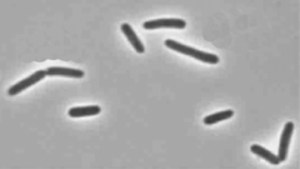
Friends or foes?

Friends or foes?

The first rays were focused on gut microbes by Elie (Ilya) Metchnikoff who introduced the concept of probiotics over a century ago. He studied people in the Caucasus Mountains reputed to live longer than anywhere else (their claims now repudiated), attributing their luck to fermented yogurt for conquering the putrefying bacteria supposed to release poisons into the body. He thought an unhealthy diet promoted growth of malign microbes with pro-inflammatory (pro-aging) effects that could lead to cardiovascular and other diseases which curb our years. Yogurt was proclaimed an elixir of life.

But his radical idea wasn’t sustained until modern bacteriology and genomics revealed the microbiome world and endorsed therapeutic probiotics. A recent study found that probiotics extended longevity in mice, but more surely they restore and rebalance the gut’s microbiome after antibiotic treatment and various intestinal ailments. It is easy to imagine that patients will soon take capsules packed with beneficial bugs for Crohn’s disease and irritable bowel, although cartoonists may rue the day when this more discreet treatment replaces fecal transplants for C. diff. infections.

Wilder speculations about the impact of microbes in mental health and ability were made by one of Metchnikoff’s contemporaries. Robert T. Morris who helped to bring aseptic surgery to America, wrote in Microbes and Men (1915): “A man is only what his microbes make him … freedom of the will is subject to dictation by the microbe.” He dared to suggest that microbes affect human character, psychopathy, and even genius. Sounds exaggerated?

He was not the first to notice that some of the most creative people had poor health—Nietzsche, Schopenhauer, and you name the rest. We might imagine a melancholic George Orwell inspired to write stories during his last tuberculous years, but is it really plausible that microbes themselves or their products boost the highest and the meanest achievements of the human mind? Morris’s big idea was nebulous, but at least a nice contradiction of Hereditary Genius (1869, 1892) by Francis Galton, the man leading the charge to eugenics who thought that genius and psychopathy ran in families. Since they occur rather sporadically, it is not quite so ridiculous to wonder if microbes play a role, or at least in combination with certain genetic alleles. Besides, we know the rabies virus affects behavior– rage, fear, and hydrophobia—and cumulating evidence suggests that Lyme disease and infectious mononucleosis cause chronic fatigue and other neurological symptoms.

So why not the microbiome too, which consists mostly of bacteria that vastly outnumber cells in the body? A gathering breeze of data supports the idea.

Tiny viruses slip easily through the blood-brain barrier, but bacteria can assault the fortress indirectly via fatty acid metabolites or triggering inflammation and powerful cytokine molecules from the immune system. The data are still far from sure, but animal experiments and association studies offer tantalizing clues that the microbiome affects the brain.

Germ-free mice have subtle neuroanatomical differences compared to normal animals—less serotonin (linked with depression in humans) and myelination (affecting nerve conduction), and altered transmission at synapses. More compellingly, gut microbes transplanted from one strain of mouse to another change the behavior of the recipient to mirror the donor’s.

Human populations are much harder to study but, for example, when Walkerton was flooded in 2000 the Canadian town’s water supply was contaminated with E. coli and Campylobacter many of its residents developed irritable bowel syndrome, anxiety, and depression. The question remains—were their symptoms “purely psychological” (a non sequitur?), or were they caused by inflammation from the original infection? Persistent, low-grade effects are hard to expose, as we know from the controversy over “chronic Lyme disease,” although science will eventually get to the bottom of it.

The neuroscience community with its refined sensibilities isn’t accustomed to musing about stool stories, but we hear murmurs about a relationship between the microbiome and autism, anxiety, Alzheimer’s disease, and schizophrenia.  The prospect of research grants is bending ears.

Next Post: Indonesia on Fire


Posted in Biomedical, Health | Tagged , , , | 1 Comment

Caffeine gives Bees a Buzz

Writers, as well as lots of other folk, believe they need to be caffeinated to discover their creative side and help burn the midnight oil. The downside of drinking coffee and other caffeine-rich drinks is physical dependence, with withdrawal symptoms starting at surprising low levels of consumption of one cup of strong coffee per day, or equivalent to 100 mg of caffeine.

Bees too get hooked on caffeine, because it boosts their memory.  Caffeine is found in many flowering plants where it can affect bee behavior at much lower concentrations than are present in coffee, tea, cacao, and yerba mate.Comb+ bees

When researchers at the University of Sussex at the University of Sussex offered nectar feeders to honey bees, the insects remembered the ones that contained tiny traces of caffeine and returned again and again. At first sight, it’s an odd finding because the compound is thought to be present in some plants as a deterrent against animals that might eat them, because it has a bitter taste and is somewhat toxic. The bees that found the caffeinated nectar performed the famous waggle dance when they went home to their hive, which was a coded navigation instruction for their sisters to find the source. But the bees returning from control feeders danced less and persuaded fewer of their sisters to find their food, even though the nutrients and energy in the nectar sources were identical.

The difference between the experimental and control nectar was like comparing a “sports energy drink” like Rockstar Energy Shot, which contains a whopping 230 mg caffeine and only 10 calories per serving according to Consumer Reports, with Crush Orange soda, which is caffeine-free but has 160 calories. The first drink provides the sensation of energy while the second provides real energy.

Our lesson is that plants can fool bees, because when flowers offer more caffeine they get more attention, and better pollination services. The bees get nothing out of it, and might even be losers if the caffeine-rich nectar they prefer is nutritionally inferior. Of course, a bee brain is so tiny it is easily fooled, but caffeine-rich plants are duping big brains too.

Caffeine boosts human attention and memory by potentiating neural traffic in the synapses of the hippocampus and neocortex. We enjoy its effects, but the coffee plant and other caffeinators are coercing us into helping them to proliferate, just as they do with the bees. Coffee plants probably originated in the Ethiopian Highlands, but our liking of the caffeine kick has made us propagate the plants across three continents, now generating over seven billion kilograms of coffee beans for our habit. That is the second most valuable traded commodity in the world, and has zero nutritional benefit.

Out of Africa

Out of Africa

Next Post: My Microbiome

Posted in Bee-line, Nature | Tagged , , , , | Comments Off on Caffeine gives Bees a Buzz

Mountaintop Removal

“Remember to remove the I Love Mountains bumper sticker before heading into coal country.” That was advice I gave myself before touring counties where mountaintops are being “removed” by open mining in the heart of Appalachia. I wasn’t a declared environmental activist, and didn’t want to be recognized as someone coming to antagonize the friends of coal.ILoveMountains

In youth 500 million years ago, the Appalachian Mountains were lofty and pointy like the Alps, and have slowly eroded into the smooth domes some 3,000 to 5,000 feet high we see today. But forty years of mining has scooped hundreds of feet off the tops of 500 mountains in eastern Kentucky, West Virginia, Virginia, and Tennessee (in that order).

Near Rawl, WV. By permission of Appalachian Voices. Photo credit: Kent Kessinger

Near Rawl, WV. By permission of Appalachian Voices. Photo credit: Kent Kessinger

As I drove to West Virginia I knew something about of this kind of mining. I had read about its impact on community health (cancer and birth defects), headwater pollution by mine tailings, and coal trucks dashing around quiet country roads. Topping a mountain exposes coal seams that are otherwise hard to reach, and it avoids the hazards of explosions inside deep mines—memories of the Sago Mine in 2006 and the Upper Big Branch Mine disaster in 2010 are still raw. It is an economical and highly profitable industry that employs fewer miners, and most profits go out of state. No change there.

I was drawn to coal country by the question of what happens to mountains after mining operations cease. If a permit requires the land to be returned to nature or improved for “economic benefit,” how effective are the actions and do companies drag their feet? The claims of the mining industry versus environmental activists (the NRDC and Appalachian Voices, for example) made me wonder if they were describing the same thing. Were the flattened tops being converted into golf courses and happy hunting grounds for local people to enjoy, or was the mining legacy sterile rock and toxic pools of impounded sludge from washed coal? My curiosity demanded satisfaction.

I visited two mines that are no longer active and are therefore ripe for reclamation. I had to imagine their recent history. Before mining could start, the trees were felled and carted away as lumber or burnt. Then the topsoil was pushed aside, perhaps to be returned but maybe discarded and a substitute used later on. Then the blasting began. Mountains up and down the valley would have echoed to explosions, as if in anguish at losing an old neighbor. The rubble of rock and subsoil, called “overburden” (a derisory name for the wonderful complexity of geological history), was pushed aside to expose a coal seam, and after the black gold was scooped out blasting resumed until the deepest seam was exposed. The overburden was dumped in pits from the last operation, or if they were unavailable it was pushed over the side of a ridge into a valley (“holler fill”) where it smothered headwaters and poisoned living things with heavy metals.

I was glad I hadn’t been a witness to that despoliation, and hoped to see mountaintops long past their surgery days and now reaching advanced stages of convalescence. Perhaps they would be beautiful, verdant, and harboring wildlife again. My destination was Nicholas County, WV, where I chose two mines that overlook the tiny hamlets of Hookersville and Muddlety (I kid you not!).

My topographic map didn’t show a route up the mountain at Hookersville, so I hailed an old man sitting on his tractor. A friendly soul, he apologized for forgetting to put his teeth in that morning and pointed to the low mountain across the country road. An ugly cell phone tower now stands on its top, supposedly representing the economic gain left by the departing coal firm. I expected to see the mountainside still scraped down to bare rock, like the face of a miniature El Capitan, but it was completely green.

“Finished takin’ out coal ‘bout twelve yarr ago,” the man told me. “Lots o’ deer, turkey, an’ barr now.” This news exceeded my wildest dreams.

His directions led me to a rutted track winding up the mountainside. I had to climb through a hole in the fence as the gate was barred. During my ascent, I did indeed see a couple of deer and a turkey, as well as goldenrod and asters flowering beside the track, and at least four species of butterflies. I was flummoxed by strong signs of nature rallying, especially when I found vegetation was covering the top.

Mountaintop "reclaimed." Near Hookersville, WV

Mountaintop “reclaimed.” Near Hookersville, WV

Had I immediately turned back I might have come home with a different impression, but I stopped awhile to look around. It was then that I realized the growth was unlike any secondary succession you expect when a patch of forest is clear-felled or burned. There was no riot of blackberry bushes, no understory trees like sassafras and American hornbeam sprouting up before the oaks, beech, and other canopy trees take over. And there was only one kind of shrub, and it was crowding out other plants, invading the last grassy space, and shading native plants and saplings as they struggled for light. This mountaintop had nothing like its original biodiversity, and was as uniform as a field of corn. The shrub was autumn olive, an invasive, alien species planted because it is tolerant of poor soil. It is regarded as a pest in other places, and hard to eradicate. It offers berries for birds to eat at this season, but the waxy leaves are unattractive to grazing animals.

My first impression of greenness had duped me into believing that a mountain that had taken millennia to mature was returning to its natural state within a few years. How foolish. How could it recover completely after losing its native soil and pristine drainage? I took a final photograph of the “hollow” below, wondering if its residents were too easily satisfied by the appearance of their mountain, green and silent again.

Bluffs of Muddlety

Bluffs of Muddlety

Seven miles away, Muddlety was a sparsely-populated ribbon of homes along highway 55 in a pretty valley. Mining operations ceased only three years ago, and where the mountain ridge came within a half mile of the road orange bluffs were visible where trees once stood.

As the mine entrance was open, I parked close by to wander up the dusty track, past boards announcing mining permits, blast warnings, and keep-out signs. A few hundred yards inside, I saw a guard house like a pill box with a single window, and as I drew close a guard sauntered over. He looked more surprised than surly, and probably hadn’t seen a visitor all day (or all year).

In settings where visitors might not be welcome I count on an English accent to put people off guard. Didn’t I look like a lost tourist? Doesn’t an “open mine” mean public access? And when a naïve manner fails, I guarantee that faked eccentricity will succeed.

Despite his suspicious eye, he gently told me I couldn’t go any further. Why not? Wasn’t it safe now, because blasting had ceased? I tried to engage a conversation by telling him that former industrial land in England was being reclaimed, and I was wondering how it was done here. When he replied only by lighting a cigarette, I decided not to press any more questions, and resisted the cheeky temptation of asking if he’d read John Grisham’s recent novel, Gray Mountain, about the chicanery of a coal company. I didn’t need his permission, because I knew I could hop over the fence down the road, perhaps with the landowner’s permission.

A middle-aged couple working in their yard directed me to a wee home across the road where I knocked on the door of a very old lady. I must have been too successful in putting her mind at ease because she kept me standing on her doorstep as she regaled me with a long life story before asking why I was there. Can I cross your land for a better view of the mountain, I asked? Of course, she answered, it’s barely a 15 minute walk.

She pointed to a distant ridge where the mining company had started replanting trees. Didn’t it look marvelous? I nodded, but was imagining another monoculture of autumn olive.  She told me the company used to come round to check that blasting hadn’t damaged her home, and when her neighbor’s stream was polluted from mine tailings they had dug a well for them. How very kind of them.

I struggled up her path for nearly an hour, all the while wondering what metal 90 year old ladies in the valley were made of. Dense thickets stood in my way of the summit, so I photographed some bluffs through gaps between trees. The hike was, however, worthwhile because I found a stream where I collected samples for testing water quality.

I had hoped to see more on the trip, much more, and wanted to know what local people really thought about the extraction industry banging around their hills, but I had seen enough to realize that claims of mountaintop “reclamation” are fabrications.  They may become green again, but are never the same and are biologically impoverished. It’s time to display that bumper sticker again.

Next Post: Tom’s Cabin

Posted in Environment, Nature | Tagged , , , , , | 2 Comments

Virginia Nature Journal for August

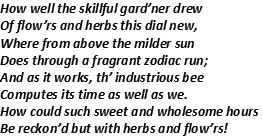
Cottage gardens were at one time part of the domestic economy, but now they’re mostly recreational. Like horse-riding, boating, fishing, target-shooting, and racing of various kinds, gardening has evolved from an occupation to a passion.

poem

Last stanza of The Garden by Andrew Marvell (1621-1678)

Besides the advantages of growing-your-own food, gardeners generally enjoy the reputation of being gentlefolk who are famously generous with advice, produce, and quite a few myths—like the Facebook fallacy that bell peppers with three bumps are female and those with four are male.bell pepper

Thomas Jefferson made gardening in Virginia sound like a noble pursuit: “No occupation is so delightful to me as the culture of the earth, and no culture comparable to that of the garden.” But gardening in Virginia is a struggle with soil (too much clay or sand) and climate (too hot or too wet or too cold by turns). A watering system saved our cornucopia of green, red, and purple vegetables in the raised beds during the baking heat and semi-drought of August, but, as Hurricane Joaquin draws up the Atlantic freeway, the remainder of the crop will likely be drowned or ripped out of the ground by its roots. Gardeners have to be many things, including philosophical!

Veggies-fruit from garden-smallA crowning crop for August includes tomatoes, bell peppers, eggplant (“aubergines” if you prefer), and potatoes (if you bother). Staggered planting extends the harvest, with the surplus stored in the freezer or laid out on neighbors’ doorsteps as decorative surprises. Harvesting these vegetables (botanically speaking they are fruits) is not the only reward, because gardeners love watching the annual miracle of seeds and seedlings growing to maturity.

It hardly ever pays for the trouble of growing-you-own, except perhaps for flavor and the knowledge of what the crop has not been exposed to. And perhaps the crop of nightshades is healthier than from the grocery store.

Nightshades! Yikes! Yes, the main crop of vegetables (fruits) belongs to the Solanaceae or nightshade family. Apart from grain crops, it’s the family that provides staples for our diet, and is ubiquitous in meals at home and in restaurants.

“But nightshades are poisonous.” That’s how they were regarded when they were first brought back to Europe from Peru. Native European nightshades were used in witchcraft to create hallucinations, and even mandrakes with an ancient reputation as aphrodisiacs didn’t salve their reputation. Tomatoes were particularly feared as “poison apples.”

Shakespeare was no botanist, but knowing about nightshades he bumped off Hamlet’s father with hebenon, which might have been henbane, a nightshade.


The ghost of Hamlet's father

The ghost of Hamlet’s father

Nightshades contain solanine and other toxic alkaloids, such as nicotine in tobacco. These compounds deter pests from eating the plant and its fruit. Potatoes exposed to light turn green for danger, not that chlorophyll is harmful of course, but the color is a sign that more solanine is present. It’s good advice to avoid green spuds, although legal history has yet to record them in murder or suicide, and the Attack of the Green Tomatoes is just another Terminator movie.

Next Post: New book

Posted in Nature, Seasons in Virginia | Tagged , , , , | Comments Off on Virginia Nature Journal for August

Flight of the Eagle

Not the Swedish film, but the release of female bald eagle #15-1667.

Almost two hundred people gathered at York River State Park for the arrival of the veterinary director from the Wildlife Center in Waynesboro. He was returning a V.I.B. to her home in the Coastal Plain of Virginia. Two months earlier, a park ranger found her lying sodden on the ground and unable to fly. After passing through the care of a licensed “rehabber,” she was passed to the Center for a physical exam, X-rays, blood tests, and rehabilitation.

Her vital signs and tests were negative apart from slight bruising, and no one was the wiser about what had brought the bird down. It took time to recover strength for an independent life again. That time had come.

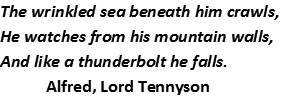
The vet held on firmly with thick gloves around her neck and legs as he lifted the great bird out of a box in the back of his wagon. We were told to line-up in two rows about 20 yards apart, like guests at Buckingham Palace come to gawk at the Queen passing regally down the middle. The public is forbidden to touch the Monarch; the same for the eagle.

Bald eagles are common again, but never regarded as two-a-penny. You can guarantee to see them in most places along the York and James Rivers, and there are two nests on Jamestown Island where visitors have a grandstand view if they lift their heads for a minute from gazing into the archeological pit. Along with ospreys, eagles have plenty of sport diving for fish close to the shore.

poem_Tennyson

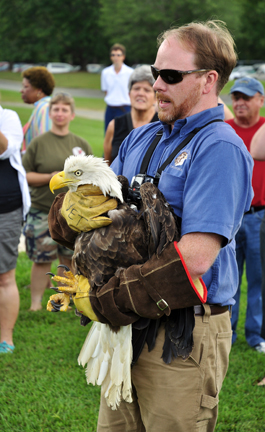
Vet with eagle-smallThe bird struggled in the vet’s arms, her wild nature still looking untamed. Fortunately. She cracked open her hooked beak and flailed the ebony talons on her long legs, as yellow as egg yolk. I expected to hear an aquiline snarl, but she was all gesture and scowled silently. When white feathers were raised on her head I thought she looked fierce, but a bystander said, perhaps more sympathetically, it was anxiety. Is there always a difference?

We couldn’t see the tiny GPS transmitter strapped to her back because it was hidden by feathers. The bird joins dozens of other avian soarers carrying transmitters that send tracking signals to ornithologists. The data show where, when and how high they fly in this region thick with domestic and military airports and flight paths.

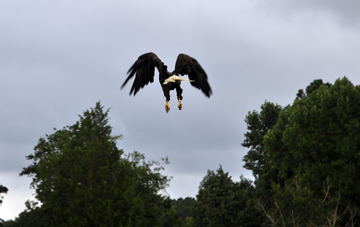
The vet prepared us for the launch. One…two…three, and then he tossed her in the air. Without hesitation, her wings opened and undercarriage dangled as she started flapping magisterially down the flight path prepared between us, gaining height, never looking back until a turn into the forest left us standing on the green.

Eagle take off-small

Next Post: Virginia Nature Journal for August

Posted in Animalia | Tagged , , , | Comments Off on Flight of the Eagle