Is there anything about the pandemic that hasn’t been said a hundred times already? It is no secret that one of the healthiest places to rest from screen fatigue and lockdown lethargy is outdoors.
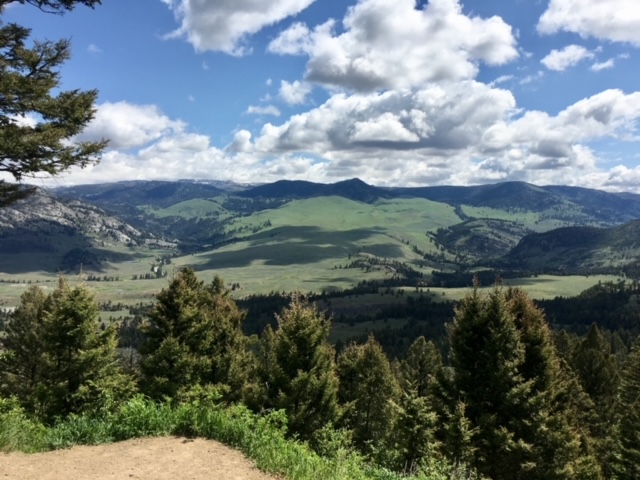
People have rushed to national and state parks and to the coast for a dose of ‘nature.’ Take, for example, Yellowstone National Park. Gate registrations of recreational vehicles surged every month in 2020. In the peak month July 2020, 365,937 were recorded compared with 320,464 12 months earlier. When this post goes out, I too will be breathing mountain air, except in the ‘Mon.’ Phew. That feels better!
Seeking peace through a mindful stroll among trees has a long history among forest-loving Celtic people and forest-bathing Japanese. So important is it in Germany that a new word was created by conjugating two unrelated words, for which the language has a facility. Waldeinsamkeit (forest plus loneliness/ solitude) captures an entirely positive feeling with no English equivalent.
Nothing green and vegetable is more loved than a tree. Perhaps because we venerate their long lives—counting rings and planting saplings to memorialize life events. Perhaps out of gratitude for what they provide—permaculture food and the most versatile material for crafting our needs. They keep on giving: hardly something we can boast. It’s hard to imagine a civilization emerging without them or human beings even evolving. Weren’t we molded from the genome of an arboreal ape?
To go to the woods and forests is to go home, as if on a family visit to a third parent. They grew deep roots in mythology and religion. The Druids had their sacred groves and other cultures cherished the Banyan tree, Bodhi tree, and Christmas tree as symbols of growth, decay and renewal. Dryad spirits of the woods populate poetry and literature while Tolkien’s Ents guarded the forest. And, despite casting off superstition in the modern age, the mystique endures through scientific discovery of the wood wide web in which vibrant communities connect tree to tree and tree to fungus and microbe.
Recent best-selling books about trees or set in forests add to a perennial genre: The Overstory, The Hidden Life of Trees, Game of Thrones, etc. Children’s books too: The Magic and Mystery of Trees, The Tree Lady, etc.
I close in contradiction. One of the goals of going outdoors is to leave paper and screen behind, but hurry home to one of the finest short stories for children and adults. The Man Who Planted Trees by Jean Giono is an inspiring story of a shepherd living as a hermit in the desolate mountains of Provencal. He transforms the landscape by planting acorns that grow into a forest. A CBC cartoon movie narrated by Christopher Plummer and available on YouTube captures the story beautifully of how an unselfish activist can make a difference for humanity and the environment.