If you hear ringing in your ears this month it could be the chorus of millions of cicadas, so don’t worry about getting tinnitus!
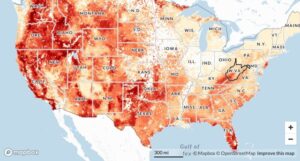
The last time periodical cicadas emerged in southeast Virginia was the spring of 2013. See the blog archives for the post I wrote at the time (“Seventeen-year anniversary”). I wondered then if I would live to hear the event repeated in 2030, but the species distribution map is wrong. It shows the thirteen-year brood expected this year would be west of Richmond, but it is here too.
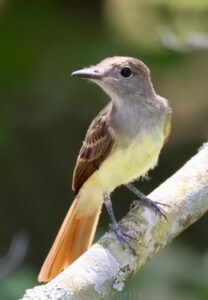
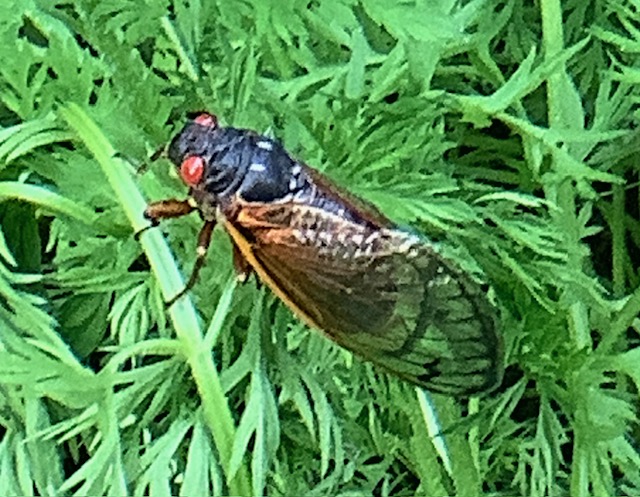
Males have been singing on warm days in the tree canopies for a week and will continue to the end of their lives, another week or two. Birds are feasting on cicadas easily caught when the meaty insects launch from branches like slow-flying gliders. Soon the ground will be littered with their corpses and fertilize the soil.
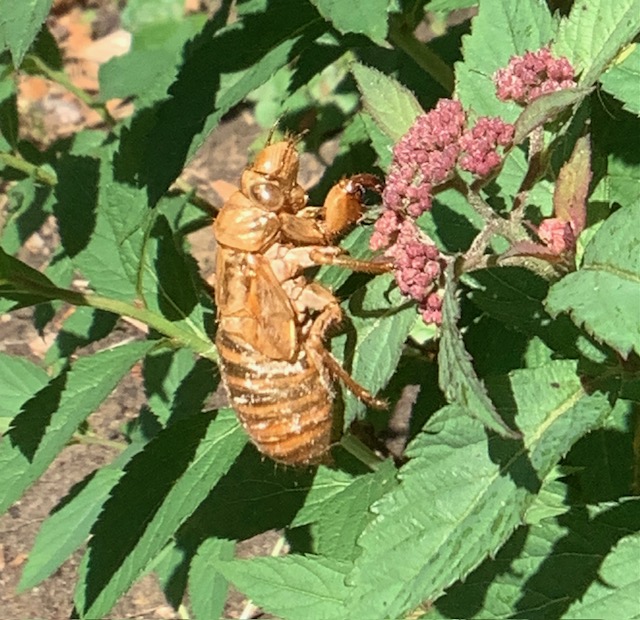
They might hold the record for the briefest adulthood as a percentage of lifespan (0.3%). Hatching from eggs laid in the treetops during the 2011 courtship, nymphs fell to the ground where they dug furiously with relatively huge front legs before predators could get them. They found a root of a tree to tap sap for nourishment as we tap maple tree trunks for making syrup. They continued sucking for more than a decade, shedding their exoskeleton each time they outgrew it and replaced with a new chitinous shell. The fifth stage has emerged above ground en masse with amazing synchrony. They crawl up a plant or vertical surface to halt a couple of feet above ground. Then the thoracic shell segment splits open for the adult cicada to emerge. After drying its wings it looks for the rest of its clan with big red eyes.
They are singing heartily in every direction today. I heard people grumbling about the constant noise although I only recorded 60 dB compared to a big diesel truck on the highway nearby that makes nearly 90 dB (on a logarithmic scale). I will never complain about a marvel of nature.