The King of Serendip (Sri Lanka) sent his three sons away to a foreign country to experience life in the real world. They got into trouble, as boys will, when a merchant accused them of stealing a camel he had lost. Although they had never seen the beast, the boys came under suspicion after cleverly figuring clues from chance observations – it was lame, one-eyed, missing a tooth, and carrying a pregnant woman with a jar of honey.
The Three Princes of Serendip is a Persian fairy tale, like Aladdin and Sinbad of the One Thousand and One Nights. When Horace Walpole translated the story over two hundred years ago he coined the word “serendipity” which Webster’s dictionary defines as an aptitude for making happy discoveries by chance.
The word did not become fashionable until the last century, so there is evidently more serendipity around now! I have heard scientists, including myself, declaring they had made a serendipitous discovery, so it does not necessarily imply anything superstitious. But I have also heard people say that a discovery coming by accident or out of the blue was a “miracle”. Whether that was meant to be taken literally I don’t know, but the mind of science has great difficulty understanding how anything can break the basic laws of physics. But I could call something that happens naturally a miracle if it comes most unexpectedly just when I needed it. Timing was important for the three princes too, because someone stumbled on the lost camel just in time for them to be pardoned by the ruler of the country.
If readers of this post were asked to share their best serendipity stories I guess we could publish a book far more absorbing than the Three Princes (which I never finished). Everyone I know has a cache of them. I can’t explain why one I heard a while ago stays at the forefront of my mind, but I did find it arresting at the time.
It was a story of an old man in his final hours. His daughter seated at his bedside asked if there was anything she could get for him, perhaps thinking he was thirsty. The only thing he wanted was to hear once more the old hymn, Amazing Grace, but he didn’t have the CD or even a music player. She said that barely a few minutes later they heard through the wall of the next apartment a choir singing that very hymn. It is admittedly a popular piece, but the chance of a neighbor playing it at the “right” moment was astonishingly slight, and left her with a wonderful memory of the last moments shared with her father.
Serendipity popped into my mind because I have had a strange series of happy discoveries lately. The story started unassumingly twenty years ago in Edinburgh, Scotland. I was working on a new research project to test ovarian transplants in sheep (the very same flock that later produced Dolly the cloned sheep). When the newspapers ran the story I felt like scalding water had been poured over me, but the project turned out well in the end. The experiments helped to launch transplants for helping young women to conceive who would otherwise have remained sterile.
Unlike most of my peers who steadily ignore library archives and only access journals online from their desktops, I love to blow the dust off an old book. I suppose there is something of an antiquarian inside me. One day, soon after completing my experiment, I was perusing the 1895 issue of the New York Medical Journal when I stumbled on a brief report by a New York surgeon, Robert T. Morris, M.D. He described two ovarian transplants he had recently performed with mixed success in women. I had been scooped a century ago! On the one hand, I felt delighted to have an opportunity to show off my scholarship by referring to his arcane paper when I came to publish my own work; on the other, I was disappointed to have been beaten. Every young scientist wants to be first for something.
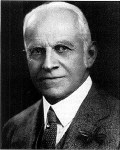
Bob Morris
I got over the disappointment and in 2010 published a short biography of Dr. Morris in a medical journal. I thought nothing more about it until the day I received an unexpected email.
It was sent by his grand-daughter on behalf of her mother, Mary, who had been striving for years to bring more attention to her father’s achievements. Since neither of them had worked in medicine I was surprised they had noticed my work, and amazed that the daughter of a man born before the American Civil War had contacted me.
I corresponded with Mary until she passed away last autumn, but her mission continues as I work with her daughter to republish some of his work together with his unpublished manuscripts. The deeper I probed the more spellbound I became by the man’s life story which reflected almost everything I cherished or ever wanted to do and be. Not only was he a famous surgeon with a rare scientific outlook for his day, but he was an explorer, a naturalist, a conservationist, and a gifted writer and poet. The final serendipity, or should I call it irony, was the most affecting. I found that our families are related by marriage.
If Horace Walpole will be remembered down the ages for giving us the word “serendipity”, perhaps I can take credit for coining “super-serendipity” for a string of chance happenings. Come on Mr. Webster, give me immortality!
Next Post: Bob Morris outdoors