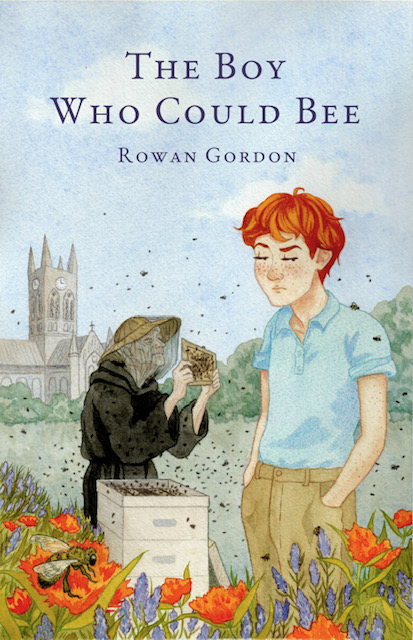
After I published THE BOY WHO COULD BEE under the pseudonym Rowan Gordon, I wondered if an artificial intelligence bot could invent a better story than the one I created. This is how it launches a story using the keywords: boy, monk, beehives, Devonshire monastery.
Once upon a time, there was a small boy named John who lived in a small village in the Devonshire countryside. He was an incredibly curious and adventurous young lad, and he was always looking for something new and exciting to do. One summer day, John stumbled upon a monastery situated in the hills of Devonshire. He was immediately drawn to the peaceful atmosphere and he decided to explore the grounds. As he was strolling around, he noticed a monk tending to several beehives. John was fascinated by the monk’s work and he decided to approach him and ask what he was doing. The monk explained that he was looking after beehives to help ensure that the bees had a safe place to live and make honey. He asked John if he wanted to help him and John eagerly agreed. For the next few weeks, John and the monk worked together to tend to the beehives. They would check the hives for disease or pests, and make sure that the bees had plenty of food and water. They would also clean out the hives and make sure that the bees had enough space to move around and build their hives. John learned a lot from the monk about beekeeping and he was very …
It’s a very different story from the one I published, although an impressive start and is grammatically perfect. I am glad I let my imagination flare rather than use a bot to trawl the internet for themes. I pasted below a synopsis of the book I published for middle-grade and older children. It is available at Amazon and on order from booksellers.
A Devonshire monastery garden looks serene on a summer day where an old monk is pottering around his bee yard. He strives to breed perfect bees with a reluctant helper, the village boy, Joe. But the bucolic scene is about to be disrupted. The boy has more to cope with than grouchy Brother Adam, stinging insects, and his older cousin, Emily, from London. Brad, the village bully, is desperate to uncover a medieval secret buried on the grounds. Meanwhile, the monk’s prize hive is in turmoil after the birth of a mutant queen and two broods struggle for supremacy. The fate of the monk’s favorite hive and its secret hang on an unlikely alliance as the boy and the insect seek peace when all seems lost.
I doubt AI will replace a writer’s creativity for long while, though it may help when stuck for ideas.








 Roger musing about Peace with Nature