Clover isn’t a weed

White Dutch clover
White clover on my lawn

You know spring has arrived when the aisles of big-box stores are filled with sacks of grass seed, lawn fertilizers, and garden poisons. The suburban obsession with green lawns is not ancient; probably inspired by the manicured landscapes of grand estates in Britain and Europe. It fills the coffers of lawn-care companies. I read we have more acreage under lawns in America than farming.

The public is coming around very slowly to see the harm. Lawns are barren deserts for wildlife above and below ground. A lush sward requires pouring pollutants into the soil and hence runoff, as well as the air (from motor mowers). Nothing breaks a peaceful weekend in the garden more than a booming mower except a blasting leaf blower. And yet, homeowners are still in love with a green curbside view of their property. Moreover, local ordinances and home-owner associations sometimes impose penalties on those who neglect to give their lawns a regular short-back and sides. This is happening in the Land of the Free where people otherwise have a castle mentality toward their property.

I won’t preach the conversion of lawns to shrubbery and native plants because many “radicals” have already made the case. Besides, I still have beautiful green lawns, although they are undergoing a succession from grass to clover. Call clover shamrock if a glamorous Celtic name is more appealing.

Fescue browns under the hot summer sun, warm season grasses yellow in winter, and Zoysia enter hibernation. But white clover has the virtues of a perfect mantle. It is green all year-round and drought resistant. Fertilizers are redundant for a plant that improves soil fertility. Clover competes with weeds, resists plant diseases, and can be mowed or grown ankle-deep to make flowers that feed pollinators. Did you know clover is edible in a pinch? And it is a lucky plant that keeps children busy on their knees searching for a four-leafed clover. Lawns shouldn’t be defined by grass. Clover isn’t a weed since weeds are plants in the wrong place.
Posted in garden | Tagged , | 3 Comments

What is Pollution?

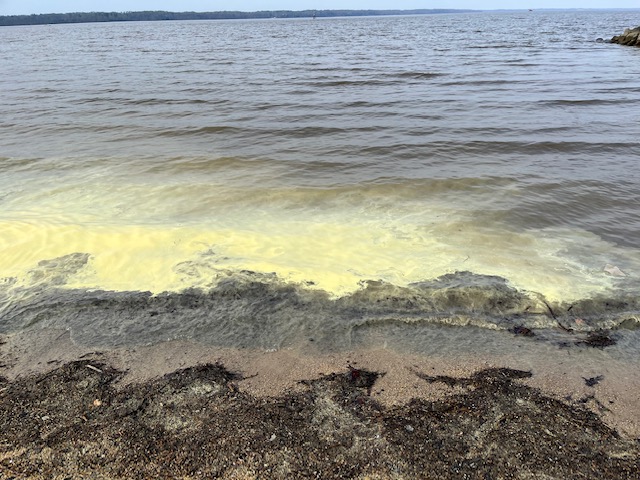
Pollen pollution in the James River
The James River

I prevented our dogs from wading at Jamestown Beach today. The rising tide carried a floating mat of yellow scum. I suspected pollution, which made me wonder about the meaning of the word.

Pollution is as hard to define as when Supreme Court Justice Potter Stewart was stumped for a precise definition ofpornography. He lamely replied, “I know it when I see it.”

So it’s in the eyes of the beholder. I remember the public outrage when the rock musical Hair came to the English stage from Broadway. The censors allowed it on technical grounds: it wasn’t obscene if the nude male and female actors remained perfectly still. How could they condemn it when Michaelangelo’s sculpture of David stood displaying a full frontal in a museum open to the public?

I asked a park attendant about the yellow scum, not though from idle curiosity. I am a registered River Rat, a volunteer monitoring river health for the James River Association. “You will see bigger slicks of pollen next week,” he said.

Aha! I should have guessed it was from pine and cypress cones shedding gobs of pollen. My weather app reported exceptional levels of pollen. Early next month our cars will have an annual coat of fine yellow dust, but I had never seen so much floating. And only seen in excess did I regard it as pollution, prompting questions.

Is pollution by definition man-made and harmful?

It flashes images of oil pouring from a damaged oil tanker and plastic detritus on the high seas. Only we are to blame! But we aren’t the only species that foul our environment. Gazing at the Bass Rock in the Firth of Forth last week I saw the island whitewashed with uric acid excreted by the gannet and gull colonies. The ammoniacal odor of bat guano has taken my breath away in caves and seals have deposited tons of guano on islands, especially the Lobos. It makes a fine fertilizer after dilution but is toxic in its raw state.

You can think of other examples of natural substances that might be called pollution. Of course, those examples don’t mitigate our guilt. No other species has polluted all seven continents and five oceans with myriads of artificial chemicals, some of which will persist for generations to come.

Posted in Environment, Islands | Tagged , , , , | Comments Off on What is Pollution?

First swallow of spring

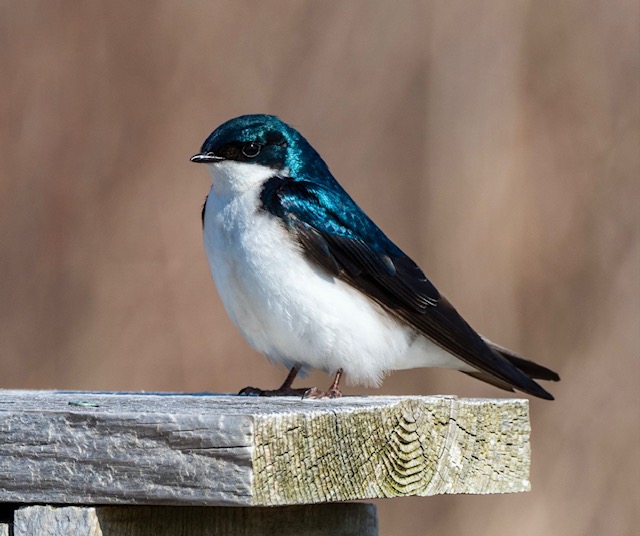
Tree Swallow
Tree Swallow. Photo: Patrice Bouchard, Unsplash

On the last day of winter, I saw my first Tree Swallow of the year. It flew beside the James River in the direction of Jamestown Island.

Sociable birds with an iridescent sheen that babble and chatter all day, these swallows sometimes breed in our nestboxes.

Silent winter’s end

Tree swallows dance through the sky

Spring’s symphony begins.

(A haiku)

Posted in Birding | Tagged , | 1 Comment

Spring offensive

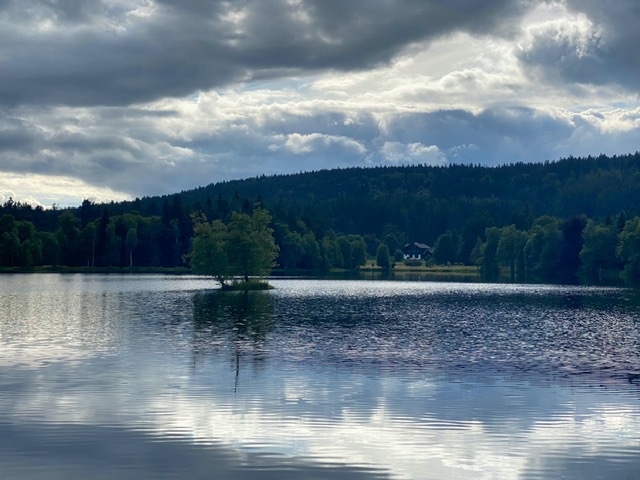
Bohemia
Bohemian lake: Unsplash

On this somber first anniversary of the war in Ukraine and anticipating a spring offensive, I expected to read historical reflections in the media about the invasion of Czechoslovakia by Soviet tanks and troops in 1968. So I am filling a gap with a brief memoir.

With two undergraduate friends, I crammed into a mini car to drive from London on a winding route through Warsaw Pact countries for a vacation on the island of Crete. As two biology students and a medic, we stopped in Brno to pay homage to the abbot who pioneered the science of genetics.

Curiosity drew us to a loud disco playing Western pop music in Horni Pena, Bohemia. The local youth gave the rare foreign visitors a huge welcome. They were eager to learn about Western lives they hoped to emulate after recent reforms by the First Secretary of the Communist Party, Alexander Dubcek, gave hope for a more liberal regime.

We heard ominous noises under the bonnet (hood) of our car during our onward journey. Thankfully we manage to limp to a campsite beside a beautiful lake and met a Prague family in a neighboring tent. They acted as our interpreters. They advised us to hitchhike to Vienna to buy a new front wheel bearing. We took the part to an automobile repair shop in the village. Our car fascinated the two mechanics who examined every corner and communicated through hand signs they had never seen front-wheel drive before.

The next morning, they had replaced the bearing, evidently after working all night. Then they refused payment, no matter how hard we tried to force banknotes into their palms. The gentleman from Prague sent us on our way with a farewell I never forgot: “Remember Czechoslovakia!”  

We drove east through Moravia into Slovakia and crossing the border into Hungary we entered a cheerless country. Later on our travels, we heard that Czechoslovakia was invaded the day after we left. Another friend didn’t get out in time.

The people fell under a grim regime that crushed hopes of reform and democracy. They waited more than twenty years to gain lasting freedom.

Parallels between the former state of Czechoslovakia and present-day Ukraine only go so far. Ukrainians enjoyed freedom for longer before a brutal invasion. They have suffered, far, far more from loss of life and property destruction than in the Prague Spring. May their bid to remain free and choose their destiny be confirmed much sooner than the Czechs and Slovaks had to wait.

Posted in History | Tagged , , , , | Comments Off on Spring offensive

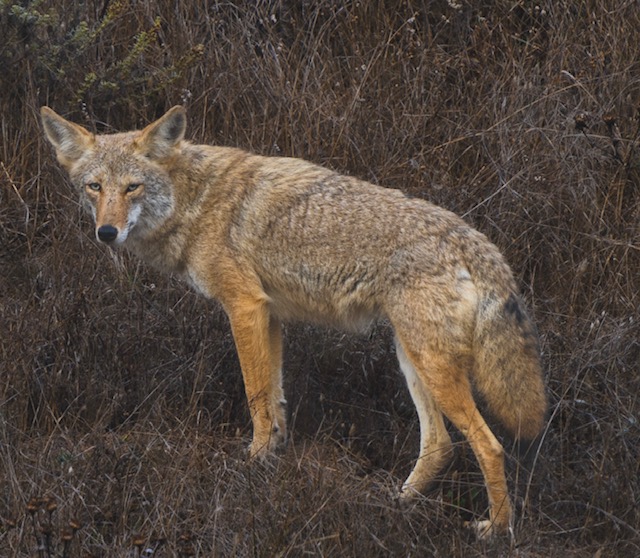
Cocky Coyotes

Coyotes
Photo: Unsplash (photographer unknown)

Two fully-grown coyotes crossed the road in front of us at 10 AM today before I turned into Jamestown Beach. A patrolman told me he had seen others. The boldness of these sleek canids in shaggy coats the color of dry oak leaves took me by surprise. Their cousins in the mountains are far shier because they are hunted.

Minutes earlier, I disturbed a pair of Red-tailed Hawks feeding on what little remained of a deer carcass in our yard. A kettle of vultures waited patiently nearby.

When a new carcass appears, I assume a road accident victim crawled away to die and attracted scavenging birds to our yard. But coyotes in a pack less than two miles away might have been the primary scavengers or even come here to prey on deer. We are visited by red tooth and claw.

While walking our dogs, Ben and Reg, on the beach, I heard two Great Horned Owls calling to each other in the pinewoods. And the morning’s entertainment finished as a pair of eagles soared acrobatically in the blue sky.

2 + 2 + 2 + 2 wildlife sightings the same morning remind me that Valentine’s Day falls this month.

Posted in Animalia, Birding | Tagged , | 2 Comments