Who’s seen a Thylacine?

Only Aussies born more than 90 years ago can make a plausible claim to have seen a living thylacine: according to official records, the last of them died in Hobart Zoo in 1936. And, yet, thylacines still live! Few “extinct” animals cling so doggedly to public consciousness or attain cult status as the so-called Tasmanian tiger/wolf.

Thylacines feature on the Tasmanian coat of arms where two of them support a shield depicting their favorite prey (a sheep). They have been adopted by a pop group and are emblems on car registration plates. They are cartoon characters in children’s stories. They are mascots of the Tassie cricket team. They have a huge following on Facebook, and are pursued by a Tasmanian research team which is struggling to verify sightings of these shy animals. They are regularly seen or captured as fuzzy images looking like yellow labs darting into cover after the sun has gone down and cocktail hour is over. And where else, apart from Australia, would a government choose to humor motorists by erecting signs warning about extinct animals crossing the road?

Watch out for thylacines

Watch out for thylacines

I doubt thylacines would be so beloved today if they were not hated yesterday. Perhaps we feel guilty for having pushed a species over when it was already on the brink of extinction. A bounty of ₤1 per head was offered on behalf of 19th century farmers when thylacines were already rare. But who should blame a predator for supplementing its diet with mutton when hunters were thinning out its natural prey?  They also attracted attention for having the stripes of a tiger, the gape of a wolf, and the habits of a hyena. And they had cachet as genuine Australian natives with pouches like other marsupials, but unlike other species they were worn by both sexes, which is a rare example of political correctness among Aussie males.

Why else would thylacines attract attention? Every continent except Antarctica is inhabited by at least one cryptid species. There is the Sasquatch (Bigfoot) in North America, Mapinguari in South America, Yeren in China, Yowie in the Australian Outback, etc. As we tame the shrinking tracts of wilderness and clear jungles for our own wants, we are still wont to preserve some mysteries passed down by tradition and from folklore. We aspire to all knowledge of the universe and strive for all control of our environment, yet still harbor a love of mystery and curiosity about the unknown, for a world in which everything is known would indeed be dull. Ape-like critters on two feet fit the bill, and for the merest shard of plausibility they require a large territory for cryptids to hide in. But a small, highly-populated island like Britain does not have enough cover for them so they must keep their heads discreetly under water in Loch Ness. As for Tasmania, it still preserves old forestland, enough to conceal a critter the size of a dog, providing it never prowls after daybreak.

Thylacine-a portrait

Thylacine-a portrait

Thylacine hunting is a serious endeavor and a mighty passion for its followers. It stirs emotions like watching for ghosts or stalking for Bigfoot, but these animals are in a class of their own because they were never phantoms. More than a fading memory, evidence of their existence stands on all fours in museums today, and they may even hold out in tiny numbers. If Bactrian deer can come back from “extinction” in the wilds of Afghanistan, why not thylacines in Tasmania’s quiet forests or somewhere else?

Australia was originally part of a continental land mass combined with the huge island of New Guinea. The fauna and flora could come and go within the same ecozone, where they evolved differently to animals in mainland Asia north of the “Wallace Line.” New Guinea preserves descendants of a common marsupial stock, including some kinds of kangaroo that adapted to a life in trees. Perhaps thylacines still survive in its tropical forests. On my first trip to West Papua nearly twenty years ago, the western half of the island colonized by Indonesia and then called Irian Jaya, I met a man who was the provincial medical director and a keen naturalist. His brother in the Merauke area had recently seen in good light a critter looking like a thylacine. I didn’t know until recently that around the same time missionaries reported sightings by tribesmen in the Puncak Jaya region, although they had no idea it was a sensational claim. May the mystery endure, and thylacines hiding in the woods keep their heads down.

Next Post: A root to cure all


Posted in Animalia, Environment, nature | Tagged , , , , , , | Comments Off on Who’s seen a Thylacine?

Who’s Afraid of Artificial Gametes (Eggs and Sperm)?

In the dystopic Brave New World of Aldous Huxley, he did not add artificial gametes to the bevy of reproductive technologies for replacing natural fertility in his future World State. Nevertheless, they might find a place one day for helping people build their families. I get stares when I ask what others think about artificial eggs and sperm. Perhaps they darkly imagine “Frankensperm” as DNA packages propelled by miniature motors, or “Frankeneggs” with DNA coiled around a silicon chip with a door to admit sperm. But biologists are not that creative!

The technology I have in mind, and which I addressed this week at a meeting in Israel, will only be judged successful if engineered gametes are biologically indistinguishable from “wild types” in normal ovaries and testes. This prospect may seem an odd subject to post from here (pictured), but it will never be a lasting controversy compared to the likes of theology and politics.

City of Jerusalem

Jerusalem by Berthold Werner (Own work) [Public domain], via Wikimedia Commons

Artificial gametes are a huge step towards the total conquest of infertility. They will bypass the deficiency of eggs and sperm in people unlucky to be born sterile, or rendered sterile by surgery and cancer drugs, and many others who are sterilized by age and an early menopause. The first revolutionary treatment for infertility (IVF) was received with a mixture of joy by childless couples and horror by people believing it would harm children and be an affront to “human dignity.” The record has been very positive for millions of IVF babies, and the harshest critics of IVF have mellowed. For who can be so hard to say a child should never have been born?

I suspect after a bumpy ride through sensationalist headlines, artificial gametes will follow a similar course, and possibly help to damp down the demographic anxiety now sweeping the globe. Back in the 1960s, there was a panic about spiraling population growth (The Population Bomb by Paul Ehrlich), but, although our numbers are still climbing from the momentum of high fertility in recent past, fertility rates are declining almost everywhere. Women have fewer babies and start their families later or not at all. Conception is more a matter of choice than chance, and smaller family sizes are desirable because raising children is expensive.

Such private decisions have public consequences, and nervous governments are encouraging parenthood again. Some countries offer free childcare and longer maternity leave. China has relaxed its one-child policy. Japan is in the vanguard of the demographic implosion, but not alone in having a birth rate below replacement levels. And in all but one Western country polled by The Economist (August 27, 2016), the expected average family size was lower than people aspired to as ideal. This reversal of attitudes to family building encourages services almost everywhere for folk who are involuntarily childless. There are now over 1,000 fertility clinics in India, a country long depicted as the epitome of overpopulation. If depopulation of young, working age people continues, surely we will see even more sympathy for these folks, and a greater welcome for the next revolution in fertility treatment than for the first.

Creation of gametes for those who have none would be such a revolution, and would surely bring joy to those who have no rosy options. At present, they may adopt a child or opt for gamete or embryo donation, but neither is an automatic entitlement and comes with financial and social obstacles. Moreover, the desire to have a genetically-related child is compelling because it is biologically grounded. But creating gametes de novo from patients’ own somatic cells is not a light undertaking as it is a turning back to a competence that was lost hundreds of millions of years ago in our evolutionary history.

The chief difficulty is that eggs and sperm are the end-products of slow, complicated processes that first started in our days as embryonic balls of cells. The germ cell lineage that leads to a mature gamete starts with a special type of cell which is “pluripotential,” meaning it is the stem of every cell in the body—brain, bone, blood and so on. It is like a joker in a card game, because it is not a member of a suit but can join any of them. But once a germ cell sets off on its journey of development it doesn’t look back—it loses the pluripotency of its parent cell and can’t switch to another “suit.” Neither can a nerve cell or red blood cell become a germ cell after they have differentiated. At least, they couldn’t until discovery of the trick of injecting nuclei into egg cells, which have “juices” for turning DNA back into thinking it is pluripotent again. That was the amazing lesson Dolly taught us.

When we engineer somatic cells (say, skin cells) to make clones or artificial gametes, both have reversed developmental time to the pluripotent state, but the goals are entirely different. The purpose of reproductive cloning is to duplicate individuals with genomes that are identical to the parent cell. On the other hand, making artificial gametes requires the parent cell to undergo a reduction division for halving its DNA so that it has a genome complementary to a gamete of the opposite sex with which the full chromosome complement is restored at fertilization. And before that division occurs the cell must go through a process of genetic recombination to generate daughter cells with different combinations of genes. Generating diversity is the game of normal reproduction, while uniformity is the hallmark of cloning. Artificial gametes are welcome in theory, but clones are scary.

Although it is very difficult to reverse a somatic cell into pluripotency and then drive it forward make a gamete (among the most specialized cells), two routes are open, although one is guarded by a traffic stop light.

The first involves injecting a nucleus from one of the patient’s somatic cells (e.g., skin) into an egg, which divides to create a ball of cloned cells looking very much like an embryo. It has to be killed, however, if the pluripotent stem cells are to be extracted for making germ cells and, hence, gametes. The moral uncertainty of these embryonic entities and debate about their rights to protection as “human” may never be resolved, thus I believe embryo stem cells are a route to nowhere.

The more attractive candidates by far are the famous iPS cells (induced pluripotent stem cells). They earned the head of a Kyoto University lab the 2012 Nobel Prize for Physiology and Medicine because iPS cells can be made from almost every type of cell in our body, and they are equally pluripotent as embryo stem cells.

In a nutshell, their story is that when a somatic cell is infused with special bunch of molecular transcription factors that are involved in the ground state of pluripotency, its nucleus will “think” it’s inside an embryo stem cell. Once an iPS cell is created it multiplies over and over to make millions of copies, and these daughter cells can be induced to differentiate outside the body along the developmental pathways of all other cell types in the body, including germ cells. The original molecular cocktail was only four factors, but two of them have oncogenic capacity. Oops! Shakespeare would mutter, The course of true science never did run smooth! Researchers are busy replacing them with less threatening ones, and the prospects are good. But there is another challenge for safeguarding health.

When differentiated cells are turned back to become pluripotent they express a different set of genes, which are said to be “epigenetically” controlled. The switches for gene activity lie in the cloud of proteins and methyl groups surrounding the DNA molecule, but what happens if this reprogramming process is incomplete? Is this why iPS cell development is inefficient and can go awry? Almost certainly it is. More to the point of this post, some iPS cells can’t make germ cells, although there is proof of principle.

Another lab at Kyoto University generated gametes from iPS cells made from fibroblast cells. When they were fertilized in vitro with gametes from healthy animals the embryos were transferred to surrogate mother mice which delivered healthy pups. This gold standard for proof is, however, a very long way from a technology for helping patients to conceive with their own gametes, but it does signal the path of progress, just as pioneering IVF studies with mice in the 1960s laid the groundwork for the first revolution in fertility treatment two decades later. It may take that long to bring iPS cells to clinical practice, as the Japanese scientists warn. There are not only technical hurdles to cross, but potential hazards to negotiate, the known and the known unknown.

And yet, there is already some progress towards making sperm from human iPS cells. Once a male germ cell has reached the stage of halving its chromosome number (to haploid), it is potentially ready for fertilization, which can be accomplished by the sperm injection technique (ICSI) before it becomes a motile cell. It is easier to make a sperm than an egg possessing a complex and voluminous cytoplasm, so the problem of equity between the sexes even exists at the cellular level.

A sensational technology that can revolutionize reproductive care is bound to attract huge publicity and suffer from the temptation of a few to push it ahead of biological understanding. The rewards in science go to the first at the finish line. A few years after Dolly was born, the Raëlian cult claimed to have cloned a human baby called Eve which, of course, was never confirmed. No doubt we will hear more stories of reproductive technology gone feral that were first inspired by Huxley. Such stories create anxieties that can arrest progress, and without the resolute pioneers of IVF technology the fertility treatments we now take for granted would have been delayed. Perhaps there are more justifiable concerns about artificial gametes than I have mentioned. Perhaps they will open the door to germline therapy, which is widely feared. And perhaps Huxley was prescient in anticipating human cloning and growing babies in bottles by the “Bokanovsky process!” To put those alarming thoughts to rest and sleep peacefully at night, I put my faith in future generations to make good decisions that we have no need of making as yet.


Posted in Assisted reproductive technology, Fertility, Health | Tagged , , , , , , , , | 1 Comment

An Axolotl with a Tale for Regenerative Medicine

Who would imagine that a salamander could offer clues for regenerating human limbs after amputation in an accident and on the battlefield, or even show how to thwart human cancer?

Mexican axolotl

Axolotl by th1098 (Own work) [CC BY-SA 3.0 (http://creativecommons.org/licenses/by-sa/3.0)%5D, via Wikimedia Commons

Axolotls are the kind of weird creature you might expect Alice to find in Wonderland. The first one I knew was an albino called Axel. It was a pet in an Edinburgh University aquarium belonging to a colleague who was an expert on the brains of octopuses (not octopi!). Although that was many years ago, I still remember how at the end of day he would wander into my office unannounced and bearing a plate of fried octopus legs leftover from his latest experiment. It was hard to look other octopuses in the eye when I visited his lab, so I hurried over to say hello to Axel, who always had a faint smile of Buddha-like intelligence curved over his chin.

Adult axolotls grow a foot long from nose to tail. They look like giant tadpoles still sprouting the same gills they acquired in youth, like bunches of ornaments growing out of their necks for breathing in water. Once met, they are never forgotten, except perhaps when you have to spell their name, which the poet David McCord made fun of in nonsense verse. Ozelotl. Axelbottl. Ottalottal.

Biologists call them neotenous because they become sexually mature without ever undergoing metamorphosis like other amphibians. It is very rare in animals, but Axel was rarer still because he was a perversion of his kind. He was a fully-actualized axolotl, which greatly added to my fascination.

Instead of breathing through gills like a fish, Axel sucked air into his lungs like a frog, and like us. And, thus, he was no longer confined to life underwater and could climb out onto rocks to warm in the “sunshine” of a lamp under the aquarium roof. He looked like a living fossil, a relic of the first land animals in the Devonian Period.

Axel was no mutant, only the subject of a scientist’s curiosity. He arrived in the lab looking like others of his tribe, but my colleague gave him a shot of thyroid hormone which dramatically replaced his gills with a pair of lungs. It is an evolutionary enigma why axolotls don’t undergo normal metamorphosis in the wild, unless it was an adaptation to a low iodide diet in Mexican mountain lakes. Flicking the metamorphic switch with a hormone is, however, the least amazing fact of their biology. The best trick up their sleeve is regenerating a perfect limb or tail after one is amputated. They can even repair a damaged spinal cord, and the renewed organs seem biologically younger than the rest of the body. Such facts deserve serious research attention.

Lost a fingertip? Call an axolotl.

Lost a fingertip? Call an axolotl.

If my leg is cut off at the knee I don’t expect the stump to regrow bones, muscle and skin so I can walk unaided again. The ability to regenerate organs and tissues was almost completely lost long before our kind evolved. I say almost because skin wounds in human fetuses early in pregnancy are perfectly repaired without scars, and a child who loses the tip of her finger may see it regrow if some of the nail bed remains, with help from local stem cells and nerves. Of course, our deep skin wounds can be repaired after birth, albeit with scarring, but even this capacity weakens with age.

Axolotls have none of our limitations. When one of their limbs is amputated, fibroblast cells in local connective tissues turn back to a more primitive and potent stage. These stem cells multiply to create a bulge or “blastema,” the foundation of a limb bud that forms a fully-functional limb with digits. How come?

The mechanism that was active at embryonic stages for instructing cells to make a limb is switched on again. Early in the process, a family of proteins called “Wnts” activate “Frizzled” receptors which pass on the signal to “Disheveled” proteins inside cells for changing their behavior. The growth factor families FGF and TGF-beta telegraph between cells to mold the changes. I won’t test your patience with cell biology any further, except to say the most important takeaway message is that all these players still exist in humans. If only we could get our hands on the molecular levers!

As usual in science, there are more questions than answers. Two that I find particularly intriguing are why axolotls are resistant to cancer and how they avoid creating tumors when they are regenerating tissues? It seems paradoxical because we expect vigorous cell growth in response to embryonic-like signals would make them more vulnerable to runaway cell proliferation. The signals are remarkably similar in embryonic and cancer cells, and injury that repeatedly stimulates cell proliferation raises our cancer risk. There is also the related puzzle that chemicals known to trigger tumor formation in humans don’t affect axolotls—except occasionally to cause an ectopic limb to form at the site of injection. We might envy their tolerance of chemical hazards, but not at the price of generating a superfluous limb or tail!

When the tale of the axolotl is unraveled there will be lessons for regenerative medicine and repelling cancer—although I wonder what trade-offs will have to be navigated if we try to tinker with ancient, tightly-regulated cell signals. But at least we can answer whether Axel had lost the privileges of regeneration after he metamorphosed. It is reasonable to guess that regeneration is tied to the “embryonic” stage that normal axolotls remain in throughout life, and, moreover, that it can never be recovered in humans after birth. But Axel never lost that power, and although the mystery deepens the fact may timidly hold hope for us.

Next Post: Artificial Gametes

Posted in Animalia, Biomedical, Other | Tagged , , , , | Comments Off on An Axolotl with a Tale for Regenerative Medicine

National Dog Day

“Every dog has its day” was coined before Shakespeare, but centuries passed until dogs were given their Day. Not until 2004, and a dozen years after National Corndog Day, were they given a deserved honor, and National Dog Day came around again today.

"Lilah" by the author's cousin Jo Bemis

“Lilah” by the author’s cousin Jo Bemis

There are lots of reasons to be grateful for man’s best friend, whether it is a pedigree pooch or mushy mutt. This is my tribute to our duo, Lilah and Ben. Most human allegiances tend to be binary— we are for the political left or the right/ for globalization or against it / like Marmite or loathe it, and my loyalty is with single heart and mind to the canine tribe. Do I hear exasperated meowing?

So familiar is joyful barking and tail-wagging when we come home that it is easy to forget to be astonished that we give dogs not only safe harbor and a free rein in our homes but an intimate place in the lives of our family. They originated not so many thousands of years ago from a common ancestor with the wild wolf. In a previous post, I likened that genome to a Swiss Army knife because it had the potential for molding by selective breeding to create the huge range of body types and temperaments in modern dogs. It was not only their intelligence that made them attractive for domestication, because there are smarter animals, but no other beast is as willing to please or matched in loyalty and companionship.  Perhaps most remarkable of all is their “preadaptation” for a long list of services they render us: therapy dogs, sheep dogs, rescue dogs, guide dogs, guard dogs, drug/ bomb sniffing dogs, racing dogs, hunting dogs and circus dogs. It is even claimed their superior sense of hearing and smell can give us early warnings of earthquakes, diabetes and cancer. Canine science is currently resurgent to understand these innate talents.

When did this mutual affection between species grow to the proportions we enjoy today? Starting as casual camp followers, dogs evolved to be our “best friends,” sharing our food, fireside and, dare I say, bed!

Before the 19th century, there were plenty of street dogs, and our fear of rabies gave them a wide berth. Pet animals were mostly regarded as the frivolous lapdogs and playthings of aristocratic homes. Lady Isabella Wentworth wrote: “Fubs is a mighty favourite, at first my niece was afraid of her jumping upon her, but Fubs is so subtle as to fawn upon her, and kiss her, and comes gently to her …” (Twickenham, April 2, 1705). A century later, Lord Byron eulogized his dead dog, Boatswain, in a poem which, although possibly satirical, reads heart-felt:Byron

Industrialization of Victorian Britain probably contributed to an earlier warming of relations between man and dog than in other countries. Prosperity and cities were growing, familiarity with rough farm dogs was a shrinking memory, and “dangerous” wild animals were extirpated from the countryside long ago. It was okay to be sentimental about pets that were obedient and courageous guardians of the home, and everyone loved stories of canine heroism. Queen Victoria and Prince Albert started a royal tradition of keeping dogs, which became a fashion that trickled down to every social class. The celebrated painter Edwin Landseer created a portrait of the Queen sitting with her favorite dogs, and was commissioned by upper crust families who wanted to immortalize their own. The arrival of photography in mid-century offered an affordable image for other people, and the family dog often featured on the front of penny postcards for mailing.

Our Ben & Lila - chums

Our Ben & Lila – chums

The same was happening in American towns and cities, causing Mark Twain to quip, “The more I learn about people, the more I like my dog.”

Our sensibilities to animal cruelty grew with proximity to animals as we recognized and sympathized with their experiences of pain. Humane societies were launched, and the Battersea Dog & Cat Home in London rescued strays from vivisectors and dognappers who ransomed them back to their owners. As the poets Elizabeth Barrett and Robert Browning were secretly preparing to marry in September of 1846 her spaniel Flush was stolen a third time, and the couple had to pay six guineas to recover the pet from seedy characters in Whitechapel. Valuable breeds of dogs are still targets for thieves. (Philip Howell: At Home and Astray: The Domestic Dog in Victorian Britain).

A surging demand for animals bred to type created the ancestors of today’s pedigrees and professional breeders and, sad to say, puppy mills. Local and national dog shows soon followed, the first in Newcastle in 1859. The Westminster Kennel Club Dog Show in New York City was inaugurated in 1877 where, like Cruft’s Dog Show in London, dogs are judged by breed standards and an overall champion is chosen annually. Promoted from the cur on the street, dogs’ days have gotten better and better and for many of us our home is incomplete without this furry friend. Some dogs are considered elite, a few have become TV celebrities while others are fashion accessories for the masses, though all of them are too innocent for conceit.

There is so much to celebrate about these animals that I have not yet reached the bottom of my list, but before closing I must mention one last virtue. After years of mutual affection and intimacy between owner and dog, the passing of one leaves whichever survivor as a chief mourner.

Old Shepherd's Chief Mourner by Landseer (1837). V & A, London [public domain]

Old Shepherd’s Chief Mourner by Landseer (1837). V & A, London [public domain]

Posted in Animalia, nature | Tagged , , , , , , | Comments Off on National Dog Day

In memoriam – Howard W. Jones, Jr. M.D. (1910-2015)

 FROM SUN TO SHINING SEA

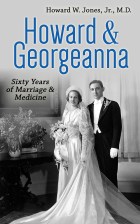
Dr. Howard Jones passed away a year ago today in his 105th year. The following is extracted from the prologue I wrote for “Howard & Georgeanna” (2015) to remind us of our loss. 

Since pioneer days, very few doctors and scientists have left a legacy large enough to be remembered for long, or one that endures beyond their lifetime. For most people who make a great discovery, their sun suddenly breaks out of obscurity to shine brightly for a while before it is eclipsed again by clouds. There are not many men or women whose sun glows constantly from a series of discoveries through a long working life. The Joneses were those kinds of doctors, and their story reads like a history of 20th century reproductive medicine. When Howard was still working into his 105th year, it seemed there would always be a Jones shining in the sky.

Howard Jones Jr.

The Joneses on their wedding day, 1940

Georgeanna made her first research breakthrough in the 1930s during her days off as a student. Howard’s career as a surgeon and gynecological oncologist took off at the same time until he was deployed in the 1940s to care for dreadfully wounded soldiers on the Western Front. From the 1950s through the 1970s, Georgeanna was discovering new causes and treatments of infertility, while Howard pioneered reconstructive surgery. Together, they wrote numerous papers and edited books and journals. And in the 1980s, they established the first in vitro fertilization clinic in the nation, and trained many of today’s leaders in assisted reproductive technology (ART). When I recently asked Howard which advance was most important, he had no hesitation. It was ART because it “conquered the grief of infertility and has a huge societal impact.” I can’t think of any other pair of doctors whose crowning achievement was made after “retirement.”

When they hung up their white coats in the 1990s, they were still busy in the field of human reproduction, or at least Georgeanna was as far as the hard road of her final illness allowed. People like us who were lucky to spend parts of our careers with them remember how they encouraged junior staff and visiting faculty, and had an uncanny knack for solving problems.

Howard Jones and Georgeanna Seegar Jones

Georgeanna and Howard in debate

I was a beneficiary of this wisdom when I joined their faculty in 2001. I hoped to launch an online master’s degree in clinical embryology and andrology, because it seemed a good fit to the reputation of the Jones Institute and I had created the first program in the UK. But the school was unwilling to invest a penny in the idea. It would have been stillborn had Howard not persuaded the Jones Foundation Board to stump up funds to get us started. Now, a dozen years later, the course draws embryologists and physicians from around the world, and almost three hundred have graduated. Where others saw risks Howard grasped opportunities, and his judgment was rarely misplaced.

We wondered what philosophy animated their energy, boldness, and generous hearts. Perhaps owing to the experiences of living through World War II, they were eager to make the world a better place, and when resources were limiting they knew how to make do.

Howard and Sir Bob Edwards, Williamsburg, VA, 2003

Howard and Sir Bob Edwards, Williamsburg, VA, 2003

Their paths to medical careers were paved by family members who worked in the profession before them. But being raised in comfortable homes wasn’t a preparation for the physical and emotional suffering they encountered in their medical practices, which, although such is the lot of everyone in the caring professions, they faced abundantly in combat injuries, oncology wards, birth abnormalities, and infertility. Their devotion to work was, I think, driven by an existential belief in the nobility of labor after witnessing hard times in the 1930s and ‘40s. They understood Chekhov’s Irina, who told her sister: “The time will come, and everyone will know the meaning of all this, why there is all this suffering, and there won’t be any mysteries, but meanwhile, we must go on living… we must work, we must work!” (The Three Sisters, Act IV).

Their work was demanding in time and energy but never a grinding existence, because they had help for managing their household and raising three children. They were passionate to apply their knowledge and skills, and took immense pleasure in helping people build families with the new reproductive technologies. Howard once said, “If I have a legacy, it is of someone who thoroughly enjoyed his work.”

After his first residency in general surgery at Hopkins, he switched to gynecology so he could be closer to Georgeanna. From then on, they were almost inseparable apart from his military service in Europe and Asia, and their collection of letters in the memoir War and Love shows what an extraordinary bond they enjoyed. And yet they were more like the opposite sides of a coin than two identical peas in a pod. She had the more scientifically penetrating mind, and he had the charisma to lead and inspire people; he was the organizer and she was more quietly and effectively laid back; he was fun-loving and she was elegant and decorous. Perhaps it was these opposite natures that attracted, but in every other way they were soulmates. This success as a pair fascinated us as much as their careers. We thought their communion was an art form, like a harmonious pair of dancers who deftly spin around a hall and never let go.

See how the couple whirls along the Dance’s buoyant tide,

And scarcely touches with wingëd feet the floor on which they glide…

Friedrich von Schiller (trans.)

People who never knew the Joneses might wonder if they had out-sized egos on their shoulders to match their achievements. No, not all! They were as much at ease with the office janitor or a child as they were with a visiting dignitary, and they embraced their clinical team like a second family.

At staff journal clubs at their home, Georgeanna was the gracious hostess while Howard sat cross-legged on the floor, only raising his authoritative voice at 9:00 pm sharp with a clap of his hands, announcing “Time for bed!” to scoot everyone out! And when the Jones Institute hosted baby reunion parties, they would mingle with former patients and their children on the lawn, and on one occasion he dressed up to look silly like the clown they invited.

House guests always received warm hospitality, but after Asbury and the Joyners retired as their helpers, you couldn’t count any longer on a fine home-cooked meal. They never had time for that, but he might pull out some dusty bottles of wine given by grateful patients years and years before. They may have been a fine vintage at one time, but age had turned them to vinegar. He thought this hilarious.

It was this attitude that reminded us they were not judgmental people when others blundered, and they always tried to put a positive spin on a mistake. There were life lessons to be learned in their company for people who didn’t think they already knew everything.

Everyone who knew them has a favorite story about the Joneses, and many wonderful vignettes appear at the end of this book. Lucinda treasures stories from the times she traveled with them to conferences overseas.

On a trip to Taiwan, the trio was collected in a limousine by a professor from a local hospital who asked with a heavy accent how a “wombat” was used in the Norfolk lab. That was what Howard thought he had heard after lately taking an interest in a marsupial of that name during a stop in Australia. When he realized his mistake, that the question was really about a “warm bath” for preserving cells, he bent double laughing and alarmed the man, who thought his distinguished guest was having a seizure.

On another occasion, they were together in Stellenbosch, South Africa. The desk clerk at the hotel apologized that the Joneses and Lucinda would have to share a bathroom with another couple from an adjacent room. As there was only one other couple in the dining room, Lucinda marched over to ask if her group could have first use of the bathroom in the morning because they had an early flight. Unfortunately, this was not the couple next door, but another who were occupying the bridal suite, and they immediately ran to see the clerk. Howard almost passed out laughing that time too. Georgeanna said he never could control himself in a droll situation, and remembered embarrassing episodes from his days in amateur opera. If someone accidentally knocked over a prop during the performance, he started giggling uncontrollably on stage.

Graduation day humor shared by Howard, Georgeanna & Lucinda Veeck

Graduation day humor shared by Howard, Georgeanna & Lucinda Veeck

Howard reserved at least a day on conference trips for exploring the city or countryside. He planned every hour for the party, which Georgeanna accepted in good grace even if it was occasionally an ordeal. When they arrived with Lucinda after a 31-hour journey from Norfolk to Auckland, the women were ready to collapse into bed, but he wanted to leave the bags unopened in the hotel and for everyone to head straight for a museum before it closed. He was then already in his late seventies, but never lost a combination of verve and curiosity!

Like other energetic people, the Joneses understood the importance of relaxation and would go swimming at the end of a long day. They had a gift for shifting from the gravity of the clinic or laboratory to the conviviality of home and recreation with friends. When they arrived at my home for a Devonshire cream tea they looked serene, like graceful Southern aristocrats. And at my Burn’s Supper where we had country dancing and bagpipes, they were eager to try a Scottish haggis manufactured in Florida.

Friendships struck with team leaders often wither when the juniors move away, like scions cut from a tree, but the Joneses were different. They kept up a large correspondence with many of their former associates, who were often promoted to friends for life. People craved to be close to Georgeanna and Howard, and we loved them. They had an amazing way of making visitors feel important by giving them undivided attention, and Howard drawing from his memory the tiniest details from their last meeting. They sent Christmas cards to many of their former patients, some of whom remembered how Georgeanna would comfort them in the O.R. by holding onto an anxious hand during a surgical procedure. When we visited their home in Portsmouth in later years, he still greeted us from his wheelchair with outstretched arms, exclaiming in a huge voice that hardly faded since the days he sang opera, “Hey, Cinda and Roger!” and bundling her in his embrace for a kiss. On our final visit, he was lying dreadfully weak in a hospital bed on his last full day, but one of the first things he asked was, “How are your families?” He also inquired about the manuscript for this book: “Is it worth pursuing?” Of course!

The Joneses were around so long they seemed immortal. Some of the staff they had trained was already retired, and most of their peers had passed while they still occupied their offices, although only Howard remained for the past decade. Their longevity and lasting good health baffled us. Perhaps it helped that they had no worries at home, and never seemed to be stressed. They didn’t offer formulas for a long life or dietary advice, and stopping at a fast-food outlet for fried chicken or an occasional hamburger and fries was okay! In an interview for Yale University the year after he became a centenarian, Howard said the secret of longevity is “unique to the individual,” and it takes “the right genes, an exciting and interesting profession, and a serene family life.” Sadly, it is not a combination we can engineer.

When Georgeanna died at age 92 in 2005, he was looking frail after a bout of flu and everyone worried that he too would sink, as elderly carers often do. How could he dance any longer without his life partner? But a few weeks later, he was more his old self again; his voice was coming back strongly, and there was the old twinkle in his eyes. He returned to his office nearly every day for the remaining decade of his life. He read medical journals, attended the journal club, received visitors and journalists, made calls and texts on his iPhone, and dictated manuscripts to Nancy Garcia. There were three more books he wanted to write, including this one, and he was mentally engaged with ethical and legal controversies in medicine. His office looked the same as ever. The desk was well-ordered, usually with an open manuscript he printed from his own computer, the shelves behind his desk were lined with books, and the framed degree certificates still hung on the wall alongside a sword in its scabbard, gifted by a Middle-Eastern friend. Of course, there were pictures of Georgeanna.

She began slipping away mentally more than a decade before she died. She was diagnosed with Alzheimer’s disease, which is no respecter of intellectual brilliance, and during those final years Howard cared for her at home. The image of two bright people, one caring for the other who is fading away intellectually, brings another famous couple to mind. The philosopher and novelist Iris Murdoch was cared for by her husband too, the Oxford don John Bailey, and their story is widely known through his book and the movie, Iris. But theirs was a very different “open” marriage, and neither of the Joneses would have understood Iris when she wrote, “The absolute yearning of one human body for another particular body and its indifference to substitutes is one of life’s major mysteries.” The Jones marriage was complete and sufficient.

Howard managed the challenge as he had so many others in life, with sagacity, patience, and love. The first signs of her illness were subtle. She began losing her place in lectures, which was so extraordinary that those who knew her were first to notice the difference. She admitted to her former office nurse, Doris Gentilini, she was forgetting things, and this became obvious when she lost her way home from a hair appointment at Ward’s Corner in Norfolk, just three miles away. At the tenth anniversary celebration of the first IVF baby in Norfolk, she was uncomfortable in the crowd and retired to rest.

Howard knew that patients with this disease suffer from anxiety, becoming distrustful and suspicious, so he kept their lives highly structured and predictable to give her security as she grew more disoriented. She retired from work, stopped driving, and they moved to a one-bedroom condominium. He watched her diet so she wouldn’t lose weight, and gave her a couple of hours to finish a meal, if necessary. Doris came out of retirement to help. Yet, they still traveled together to conferences around the country and overseas, where she recognized old friends. She seemed to be engaged when listening to lectures on highly technical subjects if they were familiar from years gone by, even as she forgot if she had ordered a salad.

Howard initially kept her diagnosis private for the sake of those who loved her, but the story couldn’t be hidden forever and eventually he spoke openly of it because her memory loss was obvious.

She could joke in the early stages about her confusion, like the time they were in Egypt when she asked if they were on the River Severn or the Chesapeake Bay.

Howard replied, “No, Sweetie, it’s the Nile.” She chuckled heartily.

On another occasion, when he was unfolding a napkin before a meal, she pleaded, “No, no, no!” He reassured her it was alright.

“That belongs to my sister,” she said, staring at the napkin.

“It’s OK, Ginny,” he replied. She then dropped the objection.

Flashes of humor continued for a long time, and her old graces were well-preserved because lifelong social skills are deeply engrained. He was never heard to raise his voice in frustration, and always looked on the positive side, trying to make a tough situation special. But he admitted, “She was a wonderful conversationalist, and that’s what I miss most.”

In those days, she still occupied an office next to his, but instead of editing papers and arranging slides of ovarian tissue, she worked on jigsaw puzzles or drew with colored pens that were laid out in neat rows with their caps carefully replaced. After a while, she would nod off in her chair, and Howard would say, “Look at her! She’s so darned sweet!” He believed Alzheimer’s disease laid bare a person’s true nature.

He was still interested in scientific riddles, social concerns, and family matters. Why do eggs age? Why don’t more insurance companies cover infertility? How were his children’s jobs doing, and his granddaughter’s soccer league? If he had frustrations with growing immobility and the complications of diabetes he hid them, perhaps along with other conditions only shared with his personal physician, but which must be expected at a great age. He never whined except to say that perhaps it is easier to pass from life in the way his wife had rather than decay with a fully preserved mind to the end.

Have you noticed how towards the end of life people are often drawn towards water? Some settle in retirement communities overlooking a river or lake, others downsize to a home in a seaside town. Perhaps it is the peaceful flow that pulls them to the waterside like time itself, or the infinitude of the sea and pounding of surf against round pebbles on the beach. Sometimes, it is the happy memory of vacations around water that is so fascinating.

The people along the sand

All turn and look one way.

They turn their back on the land

They look at the sea all day.

Robert Frost

The Joneses kept their membership of the Norfolk Yacht and Country Club long after their sailing days were over. When I joined the Jones Institute, they often invited me to join them at the club for casual dining in The Deck. We would meet on the upper floor with Mason and Sabine Andrews, an admirable gynecologist and his wife, a founder of EVMS, and former city mayor. We chose Thursday evenings because it was quieter and we could take a window seat to look down on the marina and out towards the Bay.

Our table was spread with a white cotton cloth and neatly arranged cutlery and napkins. A waiter soon arrived to pour ice-water into our glasses and take our orders. Maryland crab cakes, chicken, and salad were popular choices, and Howard always chose soft-shelled crab soup for Georgeanna’s starter.

Then the conversation would start up about almost anything. We’d talk about town politics, the hospital expansion, medical care, and even my stem cell project. While we talked, Georgeanna sat silently watching us and smiling to show she was engaged. These four were old friends from Hopkins days, but they never made a younger buck like me feel out of place, and did much to help me settle in Norfolk. They were lively spirits and enlightened company who, as much as they enjoyed looking back on past achievements, looked forward to new goals. They had not stopped working as Improvers and Encouragers.

After the meal, we’d rearrange our chairs in an arc in front of the full-length windows to enjoy the scene. Below us, hundreds of white boats of all shapes and sizes were drawn up in tight rows along the slips at the end of day. The rigging of yachts slapped against their masts, and sea rods on motor launches leaned forward like the antennae of giant aquatic bugs gently nodding in the breeze. A fisherman lugged a heavy bucket of fish from his boat over a gangplank with its water sloshing over his gumboots. He waved at a friend on a late boat chugging into an adjacent berth. It was often like that.

The conversation would fall quiet as we’d study activity in the dock below, but as the light faded we would raise our eyes to the skyline. Georgeanna would gaze very intently into the distance. Perhaps she hoped to see the sail of a yawl coming into harbor; then perhaps she could climb onboard and sail off once more to the Chesapeake Bay of deep memory.

Our meal was timed to finish with the sun setting over the shining waters of the Lafayette River until it dropped behind the silhouettes of dockyard cranes at the container terminal. Those evenings always seemed miraculously clear with barely a cloud scudding across the sky. If you ever watched a sunset closely on such an evening you will know how slowly it traces an arc to earth. It starts as a fiery yellow orb which was high in the heavens all day, but makes its descent almost imperceptibly until you notice some of heat has gone out of it and it is turning orange before becoming blood red. For a moment it looks like it will rest on the edge of the earth and scorch it. But then, and rather suddenly, it is swallowed up and the horizon where earth meets sky turns a royal purple.

When the show was over, we’d rise and take the elevator to the ground floor. There was nothing more to say after the spectacle and we stepped outside in silence, Howard leading Georgeanna with her arm curled around his. Walking into the darkening parking lot, we looked for their car with the “2DOCS” license plate. The first evening stars twinkled overhead.

Posted in Academia, Biomedical | Tagged , , , , , | 2 Comments