Demography of IVF and World Population

Predicting the future is fickle, as Stephen Hawking once observed: “it exists only as a spectrum of possibilities.” And, yet, divining the future is irresistible and physicists strive to forecast the future of stars, black holes and climate. Biologists are more chary, although even they venture to predict extinctions. I recently indulged my curiosity, not by straining at tea-leaves or astrological charts but using math with the help of my son and a statistically-sophisticated friend. We are interested in an aspect of world population that hasn’t stirred much attention. Yet.

The United Nations projects world population growth to the year 2100, but no one has previously estimated the contribution of infertile people. “Eh?” I hear you say. That sounds absurd.

Infertility is an original scourge. Didn’t Jacob’s wife cry, “Give me children or I die!” It was always a private grief with few options, and even fewer effective remedies. I remember a generation or two ago hearing whispers, like, “Why didn’t Uncle Joe and Auntie Jane have children?” No one dared ask them. It was less embarrassing to ask some poor soul if they had cancer. Thankfully, infertility has ‘come out,’ mainly due to attention on revolutionary in vitro fertilization or IVF.  The revolution started a few minutes to midnight on July 25, 1978, when Louise Brown was born as the world’s first test-tube baby.

Male infertility, premature menopause and some other relatively common problems were resistant to standard treatment with pills and surgery, but starting with the hub of basic IVF for bypassing blocked Fallopian tubes, a bevy of new technologies has sprouted. Almost no one is now denied a chance to become a parent if they want, provided they can afford to pay in countries where no subsidy is offered. There is now egg, sperm and embryo donation with freezing for longer-term preservation, sperm microinjection, IVF surrogacy for women without wombs, and genetic testing to avoid a blighted conception (PGD).

Since Louise Brown, about seven million babies have been conceived who would not otherwise exist. The children grow up to be as healthy as the rest of the population, and they become fertile adults. The first ones are now having babies of their own.

How will this industry making babies grow in future? We wanted to know how many will be added by technology to the world in decades to come up to 2100. We were even more interested in the broader question of how many people will owe their existence to IVF either directly as test-tube babies OR as their children and grandchildren as IVF services rapidly expand across the globe. We chose conservative data for our calculations, and expect our predictions will underestimate growth, unless there is a global catastrophe. But our estimates still surprised us.

The paper came out today. It is short, readable and currently offered free until May 15 by the publishers. Click Science Direct. I will send a pdf if you have problems connecting.

Next Post: Calamity in cryopreservation labs

Posted in Assisted reproductive technology, Biomedical, Fertility | Tagged , , , , | Comments Off on Demography of IVF and World Population

Pug Marks in the Snow and Mind

Winter still grips the Allegheny Mountains. Rain alternates with snow as the days creep toward the official opening of spring. Snowshoe Mountain has accumulated 159” of snow this winter, which is far below the record although we are not yet finished with winter.

Cabin fever feels most febrile when clouds hang low with drizzle, and I wait for bright sunny days with fresh snow to go outside and strap on snowshoes for a hike in the forest and open spaces called ‘balds.’ I spend a couple of happy hours looking at fresh tracks that tell stories about the night-life I rarely see.

There are no tracks of red, gray or fox squirrels because the animals are asleep in leafy dens. Chipmunks are curled up in hollow logs and flying squirrels are nested in my bird boxes. Mother bears stay in their dens for suckling tiny cubs that only weighed a pound at birth, although a juvenile will occasionally wander out to stretch and look for a snack. The day I wrote this log in my nature journal there were no bear tracks.

But there were tiny prints from mice scampering over the snow for a few feet before they dove under. Of all the animals here, I would expect the smallest to hibernate or go into that borderline state of torpor; they must keep their metabolic fires burning to avoid hypothermia. Foxes and bobcats are grateful the rodents are awake, and a hole dug through the snow down to the grass was probably where one pounced on an unseen victim after hearing a murine ultrasonic courtship call. Sex behaviour is often unsafe.

I haven’t seen opossums or rabbits in daylight for months, but their tracks show they were abroad last night. The distance between prints shows they were sauntering across open spaces with a confidence they lack in daytime when they hurry on their way and are ready to dash for cover. One set of rabbit tracks led across an old field where they suddenly vanished, as if the animal had been snatched into the air, but there were no signs of a predator or an Olympic jump. The mystery still dangles.

Our resident striped skunk wasn’t out last night, nor was the coyote pack that patrols the area. As I walked round in a great circle I came upon prints two feet long made by a lumbering biped. Yikes, Bigfoot is here! If only I had brought children along to kid them about the imprint of snowshoes.

The footprints I dream of finding (maybe die to find) look like those of a coyote with four toe pads, but larger and wider and without protruding claws. A panther.

Many local people believe a few still hold out in Appalachia more than a century after they were officially declared extinct. But what is extinction? Is it a complete absence of a species, or the absence of a sustainable breeding population? There have been rare sightings over the years, and a few are hard to deny.

A friend in the DNR was called out one night to a report of a panther feeding on a sheep kill, and he captured it after anaesthetizing the beast with a dart gun. Isolated cases probably escaped from captivity or were deliberately released when they grew too large and wild to be managed. So, it is true that panthers haunt our forests, but mostly stalk our minds. People who live in and around these forests are reluctant to surrender that ultimate symbol of nature’s wildness, and I admit that even the slimmest chance of stumbling on pug marks in the snow brings spice to a walk in the woods.

Next Post: A Costly Thaw

Posted in Animalia, nature | Tagged , , , | 1 Comment

Shelterbelt Trees in Snow and Fog

Have you noticed how trees hollow out melted sleeves from snow around their boles as our arms would if we could hold them long enough in a snow blanket? And have you wondered why winter fog sinking over open fields is denser than in adjacent woodland? I never gave them much thought until a recent winter walk, but isn’t it often so that the familiar and banal is suddenly thrust to attention to look fresh and strange?

The brain suppresses absorption with too much detail until the detail becomes important or something or someone points it out. I can’t put my finger on what drew my attention to melting snow and thinning fog one day, and it wasn’t more important than the other stimuli bombarding my sense organs. Most noise is filtered out in the conscious brain to avoid being swamped and making us go crazy. But looking intently at something commonplace for the first time can stir uncommon curiosity.

Almost everyone prefers a simple explanation to an obscure one, which is the wisdom of Occam’s razor. When I had students in class they loathed to hear me say: “I have several hypotheses to offer for this observation, and there is evidence for all of them …” That was a way of admitting ignorance without sounding ignorant. Nature is more complicated than we are sometimes wont to admit or accept.

Foggy morning at Jamestown Island

We are drawn to the single explanation, but when we look more closely and are better informed we often find two, and on even closer examination we realize there are four, and then we begin to wonder if we’ll ever get to the bottom of the mystery. We are tempted to turn back to simplicity and turn our backs on provisional knowledge to cling to intuition. I don’t believe in fairy stories, but I know the temptation to be willfully ignorant and it must be resisted.

There is a bottom to the pit of curiosity, a place where facts are finally robust against doubt, but plumbing the depths can take a long time, even generations of science and philosophy. If we boast about our knowledge we fool ourselves because science is still young. Besides, isn’t mystery something to celebrate except when it holds down human welfare or harms our environment (basically the same things)? Mystery is a call to act and understand and is often more intriguing than the mere appearance of knowledge, and perhaps that’s why it is so popular in fiction.

I started musing about snow crystals melting around trees and foggy water droplets vanishing in shelterbelts. Why do they?

Elementary physics offers an easy first answer to my sudden curiosity. Tree bark absorbs some radiant energy, especially the darker shades, even on a cold day when we hardly feel heat of the sun on our faces. It may seem too trivial to change the physical state of water in snow and fog, but the heat stored by day is slowly released to help a slow thaw continue at night. The scientist wants to test a bare theory by experiment. Next time it snows I will check a natural experiment by comparing the melt around maples and oaks with the lighter boles of silver birches, which should in theory remain snow-bound longer.  And here is another question for an inquisitive walker. Does snow melt as quickly on rocks as tree trunks of the same color, and if not why the difference?

A second explanation is that trees offer shelterbelts against chill winds. More heat is lost by radiation from open ground on cold days and freezing nights than among trees, which also reduce wind velocity to stabilize a warmer zone. If you ever get stranded on a bitter night in the countryside it’s wise to find shelter in woods. But it’s hard to see how shelter accounts for melted ‘sleeves’ of snow around trees.

Casting around for other explanations, I wonder how much heat is generated by the thin cylinder of living cells under the bark when trees are looking dead in winter. To be alive is to be engaged in combustion because heat is the by-product of metabolism, generating 500 kJ per mole of oxygen when complete, to be precise.

It seems unlikely the low ebb of metabolism in sleeping winter trees warms the snow, and heat is more likely to be generated on tree bark than under it. To think of microbes and fungi is to remember hot compost and sweaty manure, as well as bubbles of carbon-dioxide popping in the air trap of a home brewer’s dewar. They can be sources of prodigious heat, and commercial breweries sometimes struggle to keep temperatures down.

Tidewater Virginia is marching toward spring and unlikely to see more hard weather so my questions about silver birches and rocks will dangle until I am trudging through snow again next winter.

Next Post: Snow tracks


Posted in Environment, nature, Seasons in Virginia | Tagged , , | 1 Comment

Human Egg Farming

We called the ambitious program, ‘Egg Farming,’ over 30 years ago when I worked at Edinburgh University. That goal drew a step closer today as my graduate student from so many years ago published results of growing human eggs in vitro, to a blaze of publicity.

We started by growing mouse and rat eggs in Petri dishes. They were tiny cells nested in follicles that nurse their development, and some reached full size in a week and even ovulated a fertile egg into the culture medium. Our sole competitor in this new science was in the USA where John Eppig developed a more efficient method, and he called the first pup conceived from an egg grown in vitro, ‘Egbert.’ He was a strange and obese animal, and we worried if egg farming was too risky to apply in veterinary or human medicine, but many healthy mice were born later.

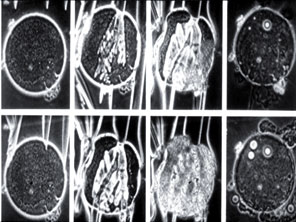
Human egg (oocyte). Courtesy: Lucinda Veeck Gosden

It seemed a huge leap from mouse to clinic. Human eggs grow more slowly in the ovary, and we expected the cultures would take weeks or even months and be risky. Progress was agonizingly slow because human ovarian tissue is rarely available for research, especially at the premenopausal ages required. Instead of relying on rodents, we needed intermediate species to forge better methods, and turned to sheep and cow ovaries. Visits to the local slaughterhouse for discarded tissue from butchered carcasses were some of the most unpleasant experiences ever, and almost turned me vegetarian from hearing the crack of the bolt-gun followed by a heavy slump. But they helped us to gain new knowledge when human tissue was unavailable.

A view of Edinburgh and its castle

Professor Telfer’s team in Edinburgh has succeeded with human eggs through careful work with clinical colleagues who asked consent from women to donate tiny slivers of ovarian tissue during C-section. The biopsy doesn’t harm them.

They watched eggs growing in dishes from the earliest stages to full size when a nuclear division occurred and signaled they were ready for fertilization. It is puzzling why the growth is much faster in vitro than in the body, though it is welcome if the eggs are no less competent for making babies. They look normal, but we know from experience how deceptive appearances can be. The only sure test is to fertilize eggs to see if they create healthy embryos, and that will require a special license under UK law.

Why is farming eggs worth the trouble and long struggle?

Progress will continue at a dawdling pace because a mature egg is the rarest cell in the body. For every egg ovulated each month, a man makes 3 billion sperm cells which offer researchers enough material for galloping discoveries in testes. Animals that fertilize eggs outside the body, like frogs and most other species, release as many eggs as they can make because the cost to them is small while superovulation maximizes the chance of making babies. But ovulation in mammals with internal fertilization and pregnancy is restrained by the limited accommodation of the uterus. Nature has arranged a bottle-neck in the egg production line to ensure that few eggs, or only one or at most two in humans, ripen at a time. The rest are consigned to the trash, which egg farming aims to rescue.

If more eggs can be ripened in vitro there will be benefits for animal breeding technology and young patients will have a better chance of preserving their fertility after freezing ovarian tissue during sterilizing treatment for cancer and other diseases. Egg farming will work better for child patients with their larger stores of eggs than in adults. Nearly a quarter-century ago, our first patient at an infant age had ovarian tissue stored while she was treated for Wilm’s tumor. The news from Edinburgh today was welcome for her and others with investments in the frozen ovary bank.

Next Post: Snowy tracks

Posted in Assisted reproductive technology, Fertility | Tagged , , , , , | 2 Comments

Fall Colors in Appalachia

Most people in this region look forward to the fall more than any other season, despite this being the prologue to winter. Starting in September at the atlas or far end of Appalachia, color changes ripple down the spine to the coccyx at the southern extremity a month later, but the finest sights are in the north and at high elevations. Colorful sugar maples like it cool.

Fall colors in Appalachia

People have probably marveled at the spectacle ever since they first set eyes on it eons ago, and long before they wrote about it. I find it perfectly understandable if Native Americans believed fall beauty was the deliberate artistry of a Great Spirit who painted the trees, flowers and creatures for human pleasure, like the Huron story of a great bear’s blood dripping on the forest from heaven and other stories passed down in tradition and lore. More than anyone else, Charles Darwin deposed humans from the center and purpose of creation, but accommodated his feelings for natural beauty in an evolutionary perspective (‘There is grandeur in this view of life …’), which is surely true though we have paid a price by losing a naïve and supremely arresting joy out of mystery.

When the first people saw the Appalachian Mountains there were no trees because the land had been scraped by glaciers and it took centuries for forestland to replace retreating plants that were the first colonizers after the last Ice Age. We are lucky to live in an era when conditions favor trees with fall splendor, though probably one of the last generations to witness them as climate warming pushes back the season and trees struggle with summer heat. The change is not so much a loss to the tourist industry as to the human spirit.

This year’s weather has muted fall colors in Central Appalachia. The maples were almost denuded a month ago, although the oaks are still green and beeches golden-yellow.

Leaf color chemistry is molded by weather. For the most brilliant display, summers should have plenty of rain because drought triggers leaf abscission. Then, late summer should have warm, dry days and cool nights with little wind. Those conditions prevailed this year, save one—the nights stayed mild. We had our first frost on October 17, but it was slight and night temperatures were mostly above average. An Indian summer spoiled a painted fall.

The closer you look at leaf chemistry the more complicated it seems. This is surely a principle in science as, for example, whether physicists study elementary particles or the cosmos the closer their examination the deeper and further they are borne. Science mines nature, but we never get to the end of the seam. We celebrate this richness, but it must be frustrating for politicians who commission research because they hope complexity will turn into neat answers, yet at the end of a study the conclusions are often provisional and there are plenty of new questions.

Once upon a time, fall colors were regarded as consequences of healthy biochemistry yielding to organic decay. The fact of the matter is half opposite because they involve a rather active process. Some genes switch off while others turn on. Each leaf is more in command of its fate than left to the consideration of entropy. Of course, photosynthesis does shut down in the absence of enough sunshine or moisture, and, to add complexity, deciduous leaves are more responsive than evergreens. It’s a familiar story because a sun-loving pot plant left in a shady place when we go on vacation will be a pile of dry leaves and bare stems when we return. It is a protective mechanism for plants and deciduous trees in autumn to withdraw vital nutrients and minerals from leaves into their ‘body’ for storage until needed at the start of the new growing season when the sun breaks out.

When the green pigment disappears, the yellows and oranges that were present all along are revealed. Beech leaves go a step further when the pigments turn into brown tannins that we notice dangling on stems all winter. But the red and purple pigments of maples and gums are synthesized de novo shortly before their leaves fall.

These are anthocyanins, which are molecules that are abundant in ripe berries and grapes and lend red wine its virtuous reputation. They are beneficial for leaves too where they serve as sunscreens and antioxidants to protect valuable molecules synthesized in the summer from solar rays shortly before the fall. There is another theory that bright colors warn away pests, as if rouge leaves can tell insects they ought to buzz off to find a less vigorous tree. It doesn’t square with the widespread lack of receptors needed for seeing red.

Despite its brisk pace, I believe science will never end and its ambition will never find a final goal. That’s worth celebrating. Life would be boring, almost pointless, if everything was predictable and nothing was mysterious. Mystery is sacred.

Fortunately, there are still countless enigmas in nature to stimulate our curiosity, and keep scientists employed. In this post I can mention only one, though it is relevant here. I wonder why evolution hasn’t given all deciduous trees the same glorious reds and purples in the fall if those pigments are so beneficial. Isn’t natural selection supposed to steer genetics to an optimum fit for the environment? Europeans must be satisfied with their yellow fall leaves and no native reds at this season compared with the hot colors we enjoy most years in eastern North America and Asia. Are there any bright theories out there?

Posted in Environment, nature, Seasons in Virginia | Tagged , , , | 5 Comments