Into the Wild at Knepp Estate

Isabella Tree and her husband Charlie Burrell loved to travel from West Sussex to the fauna of wilder places in the world. No longer. They have re-envisioned their ‘backyard’ as semi-wilderness. Some backyard! They own the Knepp estate of 3,500 acres where, until the year 2000, they struggled to keep an arable and dairy farm out of the red, only turning a profit twice despite the tools and chemicals of intensive management.

The land was impoverished after centuries of farming the famously sticky Weald clay (local people have 30 adjectives for the mud). Vagaries in market prices and dependence on subsidies have plunged many small and mid-sized farms into bankruptcy, but they drew back from defeat with an original idea, though it inflamed tradition-bound rural neighbors.

They sold their livestock and farm equipment to let natural processes rule. People grumbled at the eyesore and wicked waste of food production, but over the next two decades the experiment in land ecology rolled forward to win plaudits. Isabella’s account of the makeover is acclaimed by the Daily Mail as the ‘most inspirational book of the year’ (2019).

The couple was inspired by the Dutch ecologist Frans Vera who championed a controversial rewilding project on reclaimed land near Amsterdam, the Oostvaardersplassen. There are other large projects across the continent, but none in England apart from Knepp. Vera dismissed conventional belief in northern Europe under uniform tree cover before human immigration. He imagined a cool savannah with indigenous red deer, wild boar, extinct aurochs and other large herbivores grazing in a mosaic of forest and grassland. Without a tightly-knit canopy it was a more biologically diverse and productive environment.

Knepp estate
Fallow deer

Strictly speaking, Knepp is not rewilded, which is why her book is titled, ‘Wilding’. Regulations, public opinion and feasibility forbade reintroduction of some native fauna. There could be no brown bear, wolf, lynx and of course auroch that might escape into local gardens, and even wild boar and beavers were excluded, though some feral animals already lurk in the English countryside. The environmental entrepreneurs had to find mimics for the original inhabitants: ancient breeds of cattle (English longhorn) and pigs (Tamworth) and they introduced fallow deer. Wildflower seeds were broadcast and Victorian drains were removed to recreate wetland, which would have horrified ancestors. Nature claimed land back rather quickly considering how long heavy hands ruled there. Herds of herbivores became self-sustaining, so much so they had to be controlled by harvesting or transfer to other estates.

Knepp estate
Tamworth pig and Longhorn cattle

Vera predicted browsing herbivores and the shovel noses of pigs would reshape the landscape. Animals and plants that were rare or extinct returned in remarkable numbers, many for breeding, including nightingales, purple emperor butterflies and two of the rarest bats.

Even the more pigheaded detractors have admitted the couple’s courage and fortitude. Government grants were beyond reach, even from agencies founded to promote nature, and the whims of nature offered numerous obstacles and setbacks, but support was won from leading naturalists and ecologists who continue to help the project evolve. The estate is now a place of pilgrimage, safari tours and so-called glamping (glamorous camping). The prime organic meat is in demand and helps to provide economic stability that once seemed a dream.

A large estate with a castle isn’t an ideal model for other farms with marginal land and strained budgets, but Knepp is shining example for them to consider formerly unthinkable options that frighten bank managers. There is no more conservative base than the countryside where people will often resist change by appealing to aesthetics. But the beauty of landscape is in the eye of the beholder and the image of fields clothed in monoculture and hills (called downs) cropped to the dirt by fluffy sheep has changed, and quite perceptively even in my memory from intensive farming. This is a matter of Shifting Baselines, described in a much earlier post. The southern English countryside is more bereft of wildlife and open spaces for spiritual refreshment of local and visiting folk than any European neighbor. It lost wilderness thousands of years ago to cultivation of almost every fertile acre.

Young people were always a source of hope for a brighter future and more daring imagination. There are many more today who want to reset our relationship with nature, shifting from the absolute domination of enslaved land to a gentler and more sustainable partnership. Some people ask if this moment of history in a pandemic is an opportunity not to be missed. It is a work in progress, like the Knepp project, and to that I say, Amen.

Photos courtesy of Knepp estate

Posted in Environment, nature, Other | Tagged , , , , , | 2 Comments

Death of a Lawn Mower

The novelist F. Scott Fitzgerald knew that Americans find public expression of their successful lives in a neatly groomed lawn. Jay Gatsby was so horrified at Nick Carroway’s ragged lawn next door that he sent his gardeners over to mow the offending sward. As the nation was more prosperous by the 1920s and homes were set back from the road, owners mimicked the greens of Mount Vernon, Monticello and the great estates of 17th and 18th century Britain and France. Inventions of mechanical and powered mowers to replace laborious scything offered much encouragement.

A lawn is an expensive investment, but realtors know the kerbside appeal of perfectly manicured grass helps house sales. It is a sine qua non for the modern suburbanite. Impressions of something familiar we grow up with are hard to budge, and when lost we feel bereft, but if we can step back mentally, it may be seen in new light. When I look at a ‘perfect’ lawn now my mind toggles between lawn and desert (call it cognitive dissonance if you like).

Looks more like a barren landscape on second thoughts

Why desert? Because among nuanced meanings lawns and golf courses are desolate and barren landscapes. If anything tries to nestle in a monoculture of non-native grass it is quickly doused in herbicides and pesticides, which gardeners use even more profligately than farmers. We fight frantically to conquer every weed and bug. Striving for perfection is a virtue better reserved for indoors because outside nature hates uniformity and tidiness.

Nick Carroway is more my kind of guy than his rich neighbor, although I came round lately. I am letting my lawn grow long and wild, like my hair and coronabeard. You might wonder if they are all reactions to the current contagion, yet I argue it is mindfulness and not just a lazy mower.

I love to watch knee-high stems swaying in a breeze. The sward is too dense for weeds to anchor, except the pretty polkadots of white clover and a few wildflowers on the lawn. Did I say lawn? I can now call it meadow. Deer and cottontail rabbits feed and fertilize; butterflies dance by day and lightning bugs cruise at night; goldfinches cram on seed heads; our dogs love to romp and nuzzle there. And, so, besides aesthetics and entertainment value, new and more abundant life sprouts from the death of lawn.

Ben approves of the lawn transition

It is no longer a source of noise and atmospheric pollution (gasoline mowers produce 10x more per hour than a new car). Clover is a bugbear of lawnists, but the virtuous plant boosts soil nitrogen and protects the crust in drought. Without a sprinkler system no water is wasted (more an issue in the West). Overseeding is natural and spontaneous instead of broadcast by hand from a packet, and better quality because the seeds originated from parents that thrive by natural selection. There are obvious savings from lawn chemicals, and precious time is captured from edging, raking and aerating. No more is surplus phosphate drained into streams that open into the Chesapeake Bay.

Lawns only feed pride, yet their collective acreage exceeds that of any food crop in America. What a terrible waste of resource! There is still no shame cultivating a chemical lawn (not yet!), and some homeowner associations and local authorities levy outrageous penalties when people neglect their front lawn, like the retired Florida man threatened with foreclosure when he didn’t pay fines. Lest my readers worry the lawn police will turn up on my doorstep my experiment is neither overlooked by neighbors nor is it kerbside. But I still need to observe politics at home.

There is another reckoning, however, when land is left fallow, and mine will arrive later in the summer with the scorching Virginia sun. That is the time to mow, and not a light task even with a lean and keen Austrian scythe. But it will be a day for looking back with satisfaction and enjoying a rare kind of pride by mowing as our ancestors did in the great estates of yore. 

Posted in Environment, garden, nature, Other | Tagged , , , , , | 4 Comments

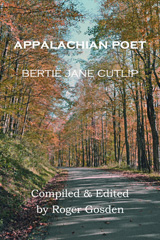
Appalachian Poet – Bertie Jane Cutlip

Outside a country store in the Allegheny Mountains, she stood behind a table covered in mason jars of home-made apple jelly and pickles. It was one of those glorious fall days in

Pocahontas County, West Virginia

Sharp’s Country Store, Slaty Fork, WV

West Virginia, so I lingered to buy some of Bertie’s homemade apple jelly and a stapled booklet of poems. Seeing my interest, she recited a couple from memory. I recall one was an ode to her home state and the other a tragic-cum-humorous story about a mouse. I was told she memorized over 100 of her poems, most of them end rhymes or couplets that celebrated country life, family, friends and animals over a long and often hard life. I listened to more over the years whenever I visited her mobile home in a quiet hollow (‘holler’) of Webster County.

Eventually, I offered to help her reach a wider audience. I recorded videos in her home and have now compiled her best poems in a published anthology for her 96th birthday in June 2020.

My favorite poem is ME, A MURDERER:


Posted in nature, West Virginia | Tagged , , , , | 6 Comments

There’ll Be Bluebirds Over

The American composer of “There’ll be Bluebirds over the White Cliffs of Dover” either had the excuse of poetic license or didn’t know that bluebirds are absent from the British Isles. But the song became one of one of Dame Vera Lynn’s signature performances for stirring patriotic hope in 1942.

There are three species of bluebird in North America (all thrushes). Someone who grew up in Tidewater Virginia doesn’t remember seeing Eastern bluebirds here in the 1960s, probably because urban sprawl and competition from introduced species robbed them of natural cavities to make home. But no longer.

nestboxes

Male Eastern bluebird (photo: Inge Curtis)

The friendly songsters are now common in local meadows and suburban gardens thanks to human interference, sponsored by the Virginia Bluebird Society and kindly people who provide nestboxes. The best boxes are not the kind found in knickknack stores, gaily painted (for predators to find) and with a perch close to the entrance hole (to help predators look inside). Constructed of rot resistant cedar, an ideal box has a 1.5” entrance hole protected by a wire mesh predator guard and a snake guard on the pole. While these safeguards are not 100% effective, most broods reach the fledgling stage for the most dangerous days of their lives.

Bluebirds are nesting in two of our four boxes, each with five sky blue eggs. I don’t peep inside again until the chicks have flown after gorging on countless insects and arachnids brought by doting parents. Then, I clean out old nests that might harbor parasites, and usually find the lodgers have made new ones of pine straw and small sticks a few days later for a second brood. Even if I trained for months using forceps to weave the straw I doubt I could craft anything that would pass a bird’s inspection.

Our third box is still vacant and the fourth has a house wren sitting on brown speckled eggs.

Bird eggs are among the most beautiful objects in nature. They are delicate works of art, sometimes decorated with pigments as if squirted from paint guns in the oviduct on the day before laying. It is no surprise that ground-nesters have camouflaged eggs or that eggs laid further north tend to be darker to absorb more heat. We might expect cavity nesters, such as owls, kingfishers, woodpeckers, and wood ducks, would have pure white or buff eggs as coloring provides no obvious advantage. The colors of bluebird and wren eggs are among the exceptions, which goes to prove that nature hates uniformity and ruins our simple hypotheses.

Box taken over by house wrens

Adopted by house wrens

Data from over 4,500 nestboxes on 410 trails across Virginia are compiled by the Bluebird Society. Our local chapter of Master Naturalists monitors a few hundred boxes in parks and around golf courses every week between March and July. On a trail where I help to monitor 41 nestboxes, there were 63 bluebird fledglings in 2018  (a wet spring) and 97 last year, plus a few broods of chickadees and tufted titmice. Nestboxes raise thousands of extra birds.

This year the coronavirus pandemic disrupted our survey, but not the breeding season, which may even benefit from less human traffic and noise. But human nature doesn’t seem to change as I heard that three of our boxes have been vandalized. Who could do that to bluebirds?


Posted in Birding, garden, nature | Tagged , , , , , , | Comments Off on There’ll Be Bluebirds Over

Pepysing back at the 1665-66 plague of London

I aimed for a weekly post about the health of the natural world, but here I am dwelling on coronavirus again. Is anyone undistracted by this pandemic?

This time I dusted off my copies of Samuel Pepys diaries in which he recorded the bubonic plague in the city I grew up in. Londoners were familiar with the scourge. The Black Death carried off most of the population across Europe in the 14th century and made other appearances. Although believed to be carried in the air (‘miasma’), human contact was a known agency too. Inbound merchant vessels had to rest at anchor for 40 days before disembarking (a number straight from the Bible). Plagues then took months to sweep across the known world in merchant sailing ships as we became more connected by trade, but it only takes a few hours or days by air travel today.

Pepys wrote in August 31, 1665: “the plague everywhere through the kingdom almost. Every day sadder and sadder news of its increase. In the City died this week … 6,102 of the plague. But it is feared the number of the dead this week is near 10,000”. He had little confidence in statistics because the poor were often unrecorded and Quakers forbade tolling the bell for their losses. Nor will the true number of coronavirus deaths be known for a long time.

Two weeks later: “To hear that poor Payne, my waiter, hath buried a child, and is dying himself. To hear that a labourer I sent but the other day to Dagenhams is dead of the plague and one of my watermen …” Epidemic is merely numbers until its meaning is wrought in suffering people you know and care about. Willful ignorance and denial of science we currently witness in the news will surely be tested with the fire of personal tragedies to come.

Church on the hillA shipment of cloth from London to a tailor in Eyam, a small village near Sheffield, carried infected fleas in 1665. Dreaded buboes erupting with pus appeared on the skin of villagers. The Eyam community led by an Anglican priest is hailed as an example of self-sacrifice where quarantine was imposed to avoid spreading the contagion outside.

Beautiful myths grow up where facts are scarce. The priest sent his children away and the poor could not afford to go. But it is a fact that only a quarter survived, and maybe the odds in neighboring villages benefitted from ‘lockdown’. According to a math model, quarantine may have made matters worse for Eyam by prohibiting dispersal if closer contact led to a more deadly pneumonic (pulmonary) plague. If there is a hero in the story, it is the priest’s wife because she stayed and died.

We constantly ask how the current ‘plague’ will end, and when?  In Eyam it burned out by running out of victims (from herd immunity?), but no one imagined it would take a literal fire in London.

Pepys wrote on September 2 of the following year: “With my heart full of trouble, to the Lieutenant of the Tower (of London), who tells me that it began this morning in the King’s baker’s house in Pudding-lane, and that it hath burned down St. Magnus’s Church and most part of Fish Street already … and did tell the King (Charles II) and the Duke of York what I saw; and that, unless his Majesty did command houses to be pulled down, nothing could stop the fire.” It seemed perverse to add to the physical and economic destruction but in the end was the best policy.

Sometimes we have been lucky in history with leaders who rose to the challenge of crises with coordinated, compassionate and effective responses. This time we have seen dithering politicians scared that bold responses might dent their standing and blind to the bigger picture. This coronavirus emergency is terrible and a vaccine is an urgent goal, but unless its roots in careless stewardship of nature are acknowledged the ancient cycle of plagues will be repeated, because everything is connected.

Posted in Environment, Health, History | Tagged , , , , , , , | Comments Off on Pepysing back at the 1665-66 plague of London