The warblers are coming! We don’t notice them until they land in the yard because they mostly fly through the night when it is cooler and safer from predators. This male Prothonotary Warbler is a little gem who declares his territory with repeated tsweets from perches close to a stream or standing water. Like many other birds, this species is named for its appearance. The word ‘prothonotary’ means first notary in Greek, originating in Roman Byzantium and adopted for Catholic prelates in the Middle Ages. Still used as a title for law clerks and officials, none today wear the gorgeous yellow apparel of ancient office holders.
As a cavity nester, the pair in Inge’s garden sets up home in a nest box with a snake guard. So closely does she observe them that she believes the same pair return annually. And so familiar are they with her home that one slipped inside her house to sing for her from the top of a table lamp. Had she not grabbed a camera in time to record it no one would have believed the story!
Imagine my shock. I poured a glass of fine wine for a French neighbor in New York and, before showing him the bottle, he identified it by a sniff – the region, vineyard, and almost got the vintage. My nose humbled by this feat, I gazed at a man who missed a vocation as a master sommelier.
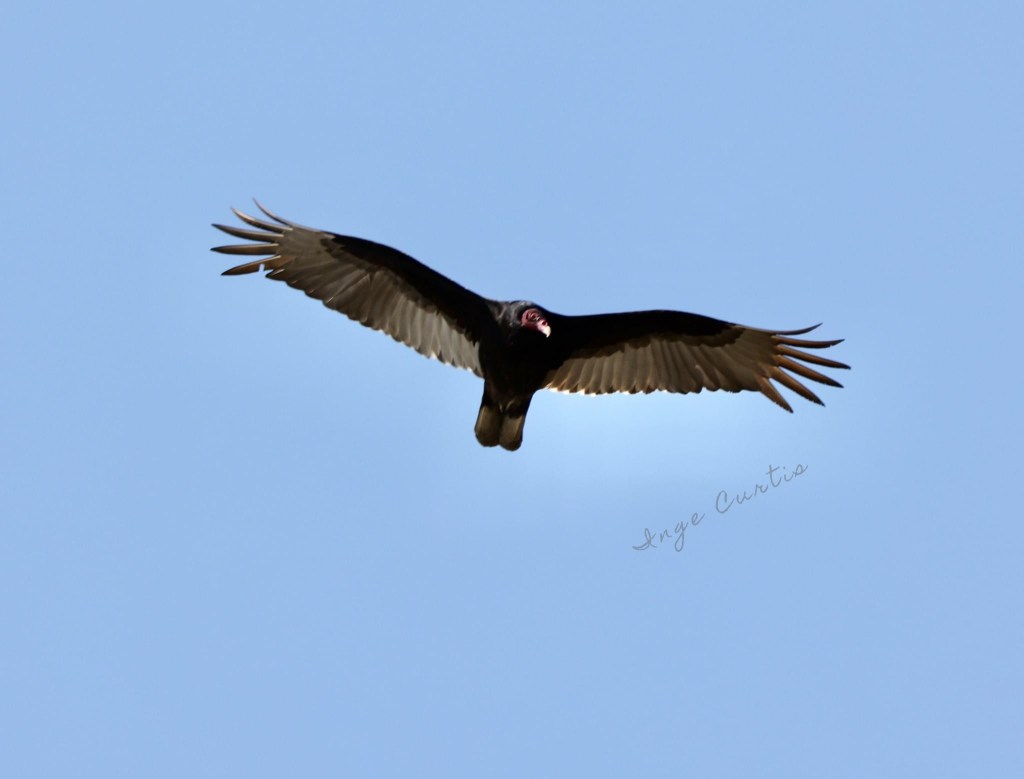
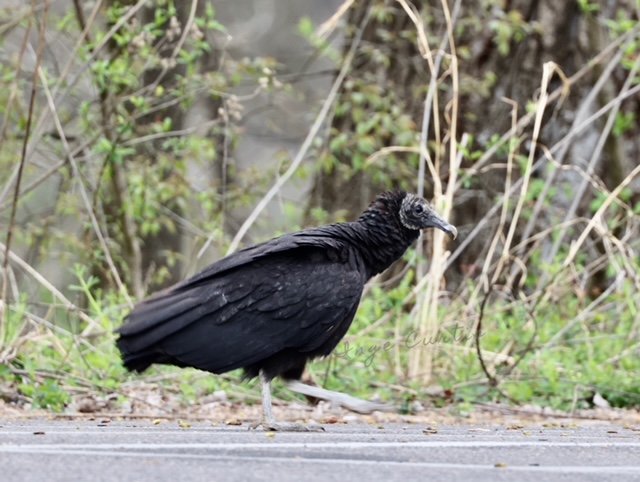
Smell is our least sense (same for apes) that never garnered much public attention until becoming a symptom of covid-19 infection. An odor must be pungent for my nose to take notice, so I didn’t detect anything unusual in the air in our back forty. But my heart missed a beat when a dozen Black Vultures flew up on heavy wingbeats from behind a brush pile, looking like medieval plague doctors with a hooded beak.
I found a white-tailed deer lying on the ground, so recently dead that ants hadn’t found it yet. After moaning about the population boom of hooved locusts that devastate gardens and farms, I felt sad to see the beautiful animal, whose death is still a mystery. I left to bury it another day.
The story goes that birds, including Black Vultures, have a poor a sense of smell like us. But for every rule there seems an exception, and in this case several. The obvious one is the Brown Kiwi with nares at the tip of its long bill for sniffing earthworms in the dirt. Olfaction makes sense for a nocturnal species. The Turkey Vulture is a diurnal counterpart, and seldom is the hour when one isn’t patrolling overhead in wobbly flight.
Their large olfactory bulb with dense connections to receptors suggests an acute sense of smell. But discovery of their talent for smelling carrion up to a mile away came not from dissection but more serendipitously in 1938. They were spotted gathering at the site of a gas leak from pipes of the Union Oil Company, attracted by traces of mercaptan, a sulphurous additive that smells like rotten eggs.
Turkey Vultures are often first to find a meal not in plain sight, and Black Vultures tagging along never needed to evolve olfactory acuity.
Both species returned to feed, and repeatedly. They hadn’t waited for the meat to be tenderized, not because their stomachs can’t sterilize rotted food, but other scavengers might get there first. In four days, the deer weighing about 150 pounds was reduced to bare bones by the most efficient and discreet disposal agents around town. On average, each vulture feasted on a few pounds each day. They saved me the trouble of burying a corpse before neighbors with a finer sense of smell than mine complained.
We start this series of Birds of the Week with a species of sublime beauty and a harrowing history of persecution. The Snowy Egret is a mid-sized heron with plumage so brilliant it looks bleached except for black legs and bright yellow feet. A dagger-like bill extracts food hiding in mudflats where it is often a solitary feeder and occasionally seen in flocks up and down the East Coast or the West Coast through Mexico where this individual was spotted.
You almost hear Tchaikovsky playing when you watch an egret dancing along the shoreline, elegant as a ballerina. Over a century ago this species, and other herons and ibises, were decimated by a millinery trade making elaborate feather head-dresses. But hats off to other women who were appalled at the slaughter and campaigned to abolish the fashion. They helped to build the National Audubon Society and the Migratory Bird Treaty Act of 1918. The Snowy Egret is an icon in bird conservation.
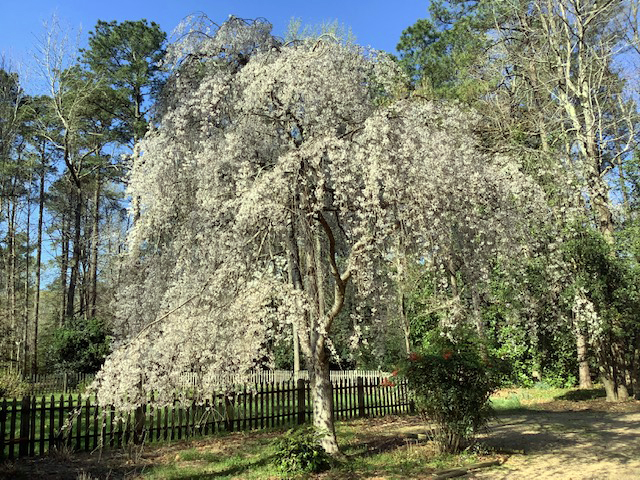
Our Weeping Cherry tree started to bloom on March 28, an old lady now yet still graceful. She has a voluminous floral dress spread wide from her ‘hips’ by branches like the hoops and side panniers of a woman in the court of George III. She cheekily displays through the cascade the one silvery leg she stands on. We hope she dances in the spring breeze for more years.
The same day, the National Park Service announced the famous lines of cherry trees lining the National Mall reached peak bloom. Fewer people stroll there in a pandemic year but can view them at #BloomCam. This year the blossom that celebrates beauty and grace is a brilliant contrast to the chaos and violence viewed from the Mall of the Capitol steps on January 6. But it also symbolizes the impermanence of life.
The trees were gifted to Washington DC in 1912 by the Japanese, who celebrate bloom time with spring festivals (hanami). This year the peak occurred in Kyoto on March 26, earlier than usual, as in the Mall. Bloom times have been recorded in Japan for 1,200 years. The date varied depending on when winter lost its grip, but on average stayed constant over centuries or rose slightly until the 19th century since when it has steadily advanced.
The ancient recorders of first blooms and shoots could not imagine why they should interest us today. But there are no more blazing signs of a warming planet than trees exploding in color. On March 28, Red Maple buds burst at Mechanicsburg, PA and Pawpaw at Gibsonville, NC, although Redbud is still dormant at Spring Hill, TN (already rose pink here in Williamsburg, VA). If you doubt our climate is changing, ask the trees.
The blogger is back after pausing to finish a novel
Even if some days still feel wintry, birds and bees think otherwise. Carolina wrens and bluebirds have started nests in our boxes. My hive boiled with insects, rising like steam out of the opened hive when I inspected it, every frame covered with industrious bodies filling the comb with pollen and nectar. To avoid them swarming to find more accommodation I need to ‘split’ the hive soon.
After losing some every year (40% on average for Virginia apiaries), I decided to abandon beekeeping if I failed again, but bees won’t let me go this time! Among the threats, careless gardening is high on the list of suspects. Since bugs and weeds flourish in hot and humid Tidewater summers, a huge market exists for pesticides and weed killers.
Some years ago, I wrote to the manager of our local Lowes store asking to draw customer attention to products that can harm pollinators. I didn’t get a reply, but perhaps someone in a distant office had the same thought. Plants for sale now have warning labels in case they have been exposed to pesticide residues in nurseries.
Neonicotinoids (neonics) are synthetic analogues of nicotine and among the most deadly insecticides (think how smoking deters bugs). They affect nerve transmission via the nicotinic acetylcholine receptor (nAChR), a molecule I am familiar with from research on electric rays at the Stazione Zoologica in Naples. Their electric organ has such an extraordinary density of these receptors it helped biochemists to characterize a protein of great medical significance. Rays need them to stun their prey with an electric shock but made me wary of dipping a hand in their tank.
Skipping the digression, our nACh receptors are different to insects, making us less vulnerable to neonics. If only honeybees were more like us! Mounting evidence shows they have multiple impacts on development, sleep (yes, they do), navigation (finding home) and diet (preferred flowers). Absorbed into the vascular system, they are distributed systemically, including the nectar carried in the crop of bees.
Neonics are used worldwide, except in the EU where they are banned. A backyard hive is not safe from the range of products sprayed on gardens even when a beekeeper carefully avoids them because his/ her bees forage for miles from home. The practices of neighbors, lawn care companies and farmers can destroy bee colonies, often unknowingly. Gardens are supposed to offer a connection with nature but are killing fields to beneficial insects. Home owners bothered by a biting species reflexively call Mosquito Joe to mist their yard and the street, making victims of honey bees, butterflies and other pollinators. To love these insects you must live hopefully and prepare for grief.











 Roger musing about Peace with Nature