Male Alligators & Crocodiles like it hot

Nile crocodile
Nile crocodile: Pixabay

I might live to see gators from North Carolina colonize our local swamps and creeks. Warmer winters from climate change will entice them and torrid summers push them north. Or maybe not. After recovering from overhunting for making leather handbags, they may now face a stranger crisis. Too many males for available females.

That’s not just a dilemma for crocodilians. The Chinese government frets about a skewed sex-ratio from a rural preference for boys, access to illegal abortions, and the aggravating effect of the one-child policy (now relaxed). The primary sex-ratio presents a sterner challenge to change. It is set at fertilization according to the type of sperm cell, either male carrying the Y chromosome or female with an X. A single gene on the Y, called Sry, makes the difference.

Not so for alligators, crocodiles, turtles and some lizards. The temperature of eggs in the nest decides whether a pair of testes or ovaries form, although the downstream processes are comparable. When croc or gator eggs are incubated at 30° degrees C they turn out female, but mostly male at 34°. Any higher makes a few more females before the lethal zone. Their parents have minor control by shifting materials to make the nest warmer or cooler.

Some species have turned turtle. A higher temperature favors female turtle hatchlings. In a very narrow sense, global warming is welcome news for males seeking a mate and perhaps for population stability since females are arbiters of reproduction. The female sex hormone is evidently key because an injection of estrogen into eggs produces all females, whereas treatment has no such effect on mammalian fetuses. Pollution of waterways by estrogenic plasticizers (phthalates) could make a potential skew of the sexes even skewier.

It might seem logical that during evolution a species like ourselves would abandon a trigger that wouldn’t register because body temperature is constant. But that can’t be the reason because birds, snakes and some reptiles, most of which incubate outside the body, have adopted a genetic method too (though different genes).

The advantage of a genetic trigger is stability for balancing the sex ratio in an uncertain environment. Why, then, if it is so beneficial haven’t crocs et al switched? They have persisted with the supposed ancestral method because it still works for them, and the alternative does have at least one limitation. It might be called the ‘Shrinking Male’ (feminists love it).

Designating a chromosome for maleness runs into a problem when it gets inured to that role. It gathers genes for making sperm while other essential genes transfer to other chromosomes. Hence, it finds little to match on its partner chromosome for exchanging segments of DNA, the process of meiosis that preserves fitness. The Y consequently shrinks and accumulates mutations in genes affecting fertility (common in men). No longer being a married pair, the X chromosome drifts away to become an ‘ex’, and a time can be projected when the Y shrinks to oblivion. The process has gone farthest in dasyurid marsupials (think of Tasmanian devil), which have only one-fifth of the equivalent DNA in humans, and that mostly degenerate DNA babble.

This fuse burns slowly, so there is no risk of the human Y disappearing soon. Our species has devised much faster routes to extinction.  

That last word brings me to dinosaurs. They likely had a thermal trigger to decide their sex, like crocs today, but died out from a cataclysmic bolide 65 million years ago. If they didn’t all perish immediately in a fireball, the following impact winter could have finished them off in a generation by skewing the sex-ratio to all-male or all-female. It’s pure speculation, and questionable, because crocs, who existed from long before, survived the impact and will likely again as temperatures rise, provided we preserve some habitat for them.  

Posted in climate change, Fertility | Tagged , , , , , , | Comments Off on Male Alligators & Crocodiles like it hot

Bald Eagle

Bald Eagle
Inge Curtis

I often look up to check for a flash of white on the head or tail of a large bird soaring overhead or ascending a thermal. Not so many years ago, it was a red-letter day to see a Bald Eagle in this district (let alone over your house!), but now it is a common sight. Perhaps one time out of fifty the big brown bird in the sky is an eagle instead of a vulture.

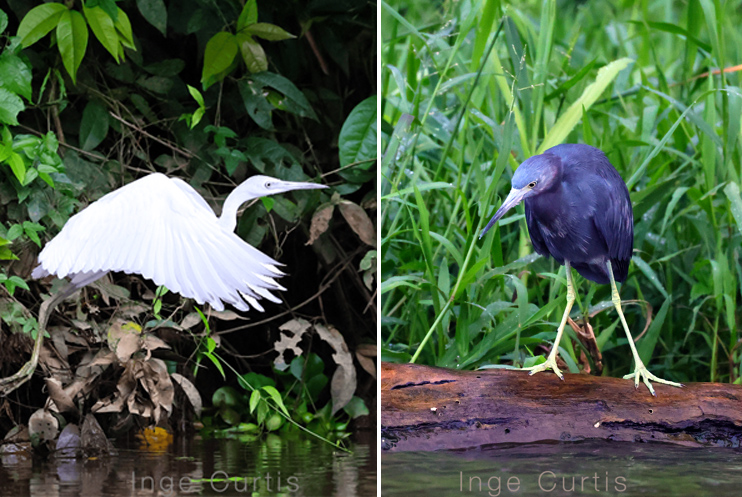
Inge photographed this pair in a loblolly pine tree. Monogamous like many large, long-lived birds, the sexes look alike although they know the difference (the female is larger).

Posted in Birding, Inge Curtis birds, nature | Tagged , | Comments Off on Bald Eagle

COP26 – Are we Hopeful or Cooked?

Wildfire
Wildfire: Pixabay

I had first sight of Jane Goodall decades ago at Edinburgh University where an excited audience gathered for her seminar. Looking like a slim owl in brown plumage, she wore a signature ponytail even then, though not yet grey. She spoke of her beloved Gombe National Park in Tanzania and described the pivotal moment when the chimpanzee she called David Greybeard made a tool to catch termites. The observation woke anthropologists to a deeper understanding of our relationship to animals and the realm of nature.

In those days, she spoke mainly to academics and conservationists, but now to a world audience. Then, she spoke about habitat preservation for chimpanzees in Africa, now about the threat to a sustainable planet.

This week thousands of children marched with Greta Thunberg through the streets of Glasgow for a gathering of world leaders at COP26. Some were accompanied by parents, not for security but in solidarity. This week seemed timely to listen to The Book of Hope by Jane Goodall and Douglas Abrams.

She offers four reasons for hope—human intelligence, nature’s resilience, powerful young voices, and often refers to the ‘indomitable human spirit.’ Examples of that spirit are taken from history earlier in her life—the threat of Nazism and the Cold War. She might have chosen the lamentations of Jews exiled to Babylon or the prayers of enslaved people in the Americas from a long list of tragedy and suffering, although none is particularly apt for our times. Then, we recognized the enemy as the ‘other’ and formed alliances to combat it. Now, we are the enemy, and potential saviors.

To believe we will surrender the most wounding aspects of the economic and social status quo in time to protect life on Earth and intergenerational justice demands a tremendous leap of hope. Faith in institutions that served us in the past now wobbles and nation states seem unfit for global solutions. But cynicism is defeat; only brave hope will do.

Known as an activist, she conceals passion in a measured tone, trying to persuade with old-fashioned grace instead of a strident voice like those on the streets accusing governments and industries of copping out or greenwashing. It takes all kinds of voices to create movement.

Something else I learned about Dr. Goodall in this book. She enjoys a dram of Scotch at bedtime, perhaps as a hopeful toast for a healthy planet in future. ‘Slang-ge-var’ (to pronounce the Gaelic Stàinte mhath).

Posted in climate change | Tagged , , , , | Comments Off on COP26 – Are we Hopeful or Cooked?

Hermit Thrush

Hermit Thrush
Inge Curtis

I love the thrush family. Friends of gardeners, they are wonderful songsters too. Many family members have bold spots on their breasts to help identification, along with a rufous tail in the Hermit Thrush.

Like last week’s kinglets, this bird probably arrived recently for wintering here. We sometimes see them in the garden, turning leaves for worms and insects, but skulking under trees and shrubbery they often go unnoticed.

I am more familiar with this thrush in spring and summer in the Allegheny Mountains where they nest on the ground. We hear them call chup in the woods and at the end of the day they sing like a melancholy flute.  

Posted in Inge Curtis birds | Tagged , | Comments Off on Hermit Thrush

Androgenic Anxiety and COVID-19

sperm quality
Normal (left) and abnormal forms of sperm

Early this morning, January 1, 2021, three minutes after midnight, the last human being to be born on earth was killed

Thus begins Children of Men, a dystopian novel by P.D. James (1992). A sudden and unexplained loss of human fertility tipped the world toward apocalypse. Whereas the book held testes to be responsible, the movie version directed by Alfonso Cuaron switched the cause to gynecology, sparing those precious nuts from blame!

It’s possible for a scientist to suspend disbelief in science fiction, but he/ she always prefers to have facts. I had a professional interest in fertility, both female and male. When I first read about a dip in sperm counts, I dismissed it as a statistical quirk or fiction, but no longer. A study combining 185 studies amounting to 42,000 men found average sperm counts have dropped almost 60% in 40 years to 2011 in Western cultures. The trend continues. The paper didn’t report sperm quality (depicted above), a pity because ours is much poorer than in any other species.

The cause is unknown although experts offer similar suggestions to James—lifestyle and/ or pollution. The average count has fallen below 50 million per milliliter, the range of subfertility. While worrying for people who plan to start a family, I wonder what else it portends. Not a plunging population, but possibly raising other alarms if sperm are honest biomarkers.

During development, sperm are shorn of the apparatus that protects and repairs other cells. Short-lived, they only live a couple of days under the best conditions. They could be harmed by toxins in testicular fluids or further along from glandular secretions that contribute to semen. Bad enough if only these specialized cells are harmed, but what if the damage is already done to their stem cell parents? If they are vulnerable to a hidden threat perhaps other cells are affected, and in women as well as men. Could discovery of the affliction of sperm lead to a better understanding of today’s prevalence of some chronic diseases and impacted immune systems?

One in four men who develop mumps have orchitis as fluid builds up to create pressure inside the rigid capsule of testes. Hence, they lose fertility. That the MMR vaccine has greatly reduced the risk of the disease makes the population-wide decline in sperm counts more striking.

But what role for other airborne RNA viruses, especially from the onslaught in recent SARS epidemics and now a pandemic? Cells in testes and ovaries express the ACE-2 receptor, the spike protein that binds the SARS-COVID-19 virus so it can step into cells. A recent study at Columbia University, New York, reported only one covid patient with a low sperm count and virions in his semen, so the risk of infertility or sexual transmission of covid seems slight. Science is still pending a final decision but already concluded the vaccine does no harm to fertility, quashing anxieties in the media.

The human population won’t crash even if every living person became infertile overnight. Vast numbers of semen samples are stored in freezers around the world and frozen cells are good for decades if not centuries. Besides, a few sperm can be found in almost every clinically sterile testis, all that is needed for fatherhood by injecting eggs using the ICSI technique launched the same year as James published her book.

Posted in Assisted reproductive technology, Fertility, Health, nature | Tagged , , , , , | Comments Off on Androgenic Anxiety and COVID-19