A light went out in Scotland on Christmas Day. Marion Fraser passed away. In a cynical age we have low expectations of “virtue” in our public figures whose ranks often seem unattainable except to those with the privileges that come from wealth and connections. We put more faith in the life stories of humble achievers like Dorothea of Middlemarch, the “invisible” heroine of George Eliot’s novel which closes with the most moving and beautiful tribute in Victorian literature. Marion had the same pure qualities and desire to make the world a better place, but without Dorothea’s disadvantages in marriage because she wedded one of the finest men in Scotland. It was inevitable that she would rise from her middle class roots in Glasgow to VIP status.
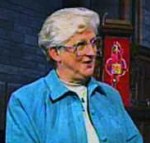
Marion Anne Fraser, LT (1932-2016)
I first met her thirty years ago when she joined a subcommittee of the Kirk’s Church & Nation committee, which then had a greater voice in public affairs before the Scottish Parliament opened for business in 1999. We had an interesting membership from across Scotland. There were many good men in the group (few women), a few activists who tried to turn the subcommittee into a political pulpit, and I suspect one or two from remote parts of the Highlands who came for the shopping opportunities on Princes Street after meetings. I was the convener not because I was qualified in any way (I was a physiology lecturer at the University), but chosen by default because no one else volunteered. I thought Lady Marion was appointed as a decoration because of her title and marriage to the man who then ran the Scottish Office of government. I was never more mistaken.
We were commissioned to publish reports on the state of Scotland’s housing and prison service. She was one of the few who joined us on field research around the country, including the infamous Gorbals slum in Glasgow and maximum security prisons where we met with officers and notorious inmates. For someone with the genteel background of a music teacher she was amazingly at ease in every type of company, but underneath we saw a steely determination to improve the lives of ordinary folk.
Her wisdom and energy didn’t go unnoticed elsewhere. She was in demand as a director of numerous organizations, institutions and charities across Scotland, even representing the Queen on one occasion, and came to international notice as chair of the board for Christian Aid, which took her on arduous foreign tours to see the charity in action. The Queen appointed her in 1996 to Scotland’s Order of the Thistle after the Queen Mother and as the first non-royal lady of that ancient and noble Order. But she was still the same modest Marion after a meteoric rise in public esteem and attention. If you bumped into her you might assume she was a kindly older lady like any Mrs. Smith or MacDonald you might meet in the street.
She would laugh if I told her she reminded me of a bearded wizard. The Shire looked up to Gandalf who cast a wise and caring eye over the hobbits, and although he went away on a journey they never felt he was really gone. Marion left us in her 84th year, a ripe age for anyone but too soon to lose a precious soul in unsettled times.
Next Post: Autumn Leaves have Fallen