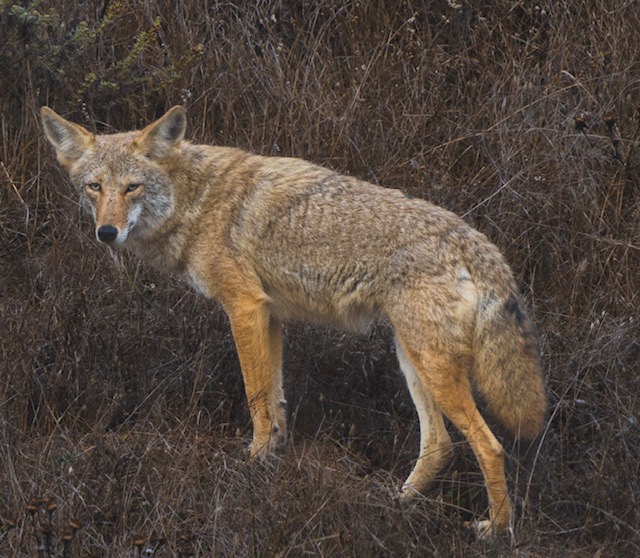
Two fully-grown coyotes crossed the road in front of us at 10 AM today before I turned into Jamestown Beach. A patrolman told me he had seen others. The boldness of these sleek canids in shaggy coats the color of dry oak leaves took me by surprise. Their cousins in the mountains are far shier because they are hunted.
Minutes earlier, I disturbed a pair of Red-tailed Hawks feeding on what little remained of a deer carcass in our yard. A kettle of vultures waited patiently nearby.
When a new carcass appears, I assume a road accident victim crawled away to die and attracted scavenging birds to our yard. But coyotes in a pack less than two miles away might have been the primary scavengers or even come here to prey on deer. We are visited by red tooth and claw.
While walking our dogs, Ben and Reg, on the beach, I heard two Great Horned Owls calling to each other in the pinewoods. And the morning’s entertainment finished as a pair of eagles soared acrobatically in the blue sky.
2 + 2 + 2 + 2 wildlife sightings the same morning remind me that Valentine’s Day falls this month.