Did you ever regret you hadn’t met someone after hearing it was too late? I did today. James Lovelock was one of my scientific heroes. He died on Tuesday at age 103.
I knew people who worked with him at the Medical Research Council in London in the late 1950s. His research on cryopreservation laid foundations for freezing tissues, sperm and human embryos for in vitro fertilization technology. I wrote about this contribution in the biography LET THERE BE LIFE (2019). With hindsight, I am sorry I didn’t reach out for his personal recollections when I interviewed other pioneers for the book. Perhaps I felt too timid to approach a saint.
He didn’t receive universal acclaim for his theories and projections for the global climate. But I admired his courage to be an outsider and able to admit a mistake. Taken as a whole, his works have had immense impacts for science and society.
After prestigious institutions in Britain and the USA, he set up a private laboratory for independent research in a barn close to the county line between Cornwall and Devon. It was a fitting place for a man who began life in a humble home and as a Quaker when careers in British science were hard to pursue without a privileged background for attending university.
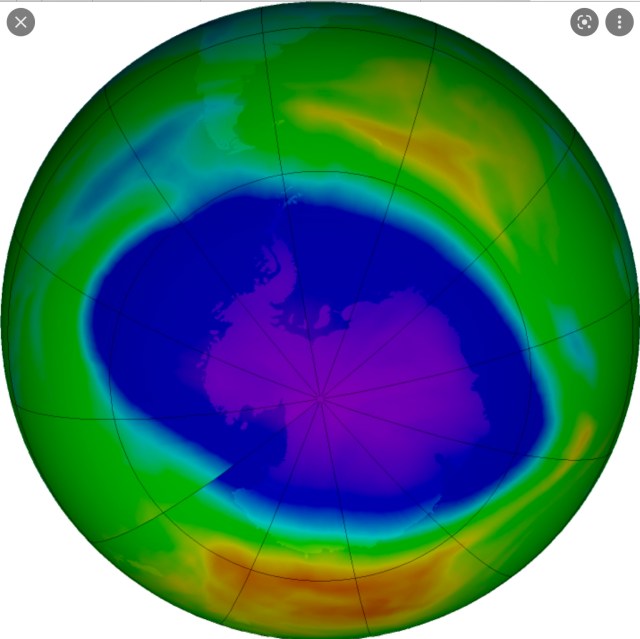
He was as much an inventor as a scientist. After pioneering cell freezing in London, he turned to atmospheric research and, then, to environmental science. His electron capture detector became the go-to technology for monitoring atmospheric pollutants, such as chlorofluorocarbons (from refrigerants). CFCs were ‘eating’ the atmospheric ozone layer that shields life from ultra-violet light. Detection of the ozone hole earned Nobel Prizes for two chemists. The Montreal Protocol of 1987 that banned CFCs is a model for global environmental policy.
Lovelock became widely known for the Gaia hypothesis (named after the Greek god for Mother Earth). He regarded the Earth’s atmosphere as a self-regulating whole that maintains homeostasis by feedback between the atmosphere, oceans and life forms, by analogy with physiology. Critics asked how such a state could have evolved through natural selection of countless species (the major forces being phytoplankton, grasses and trees). Nevertheless, the idea is influential and embraced by environmental activists.
Although he declared himself a ‘Green’, he was too much his own man to mind standing outside the mainstream. He ridiculed renewable energy sources now heavily invested by governments and advocated nuclear energy instead. Time will tell which is the better policy, if not already too late for a tipping point in global warming. He persuaded me that the time for sustainable development (i.e., ‘growth’) is past and human society needs to concentrate on resilience and preserving biodiversity.
James Lovelock deserves a seat in the pantheon of environmental guardians.