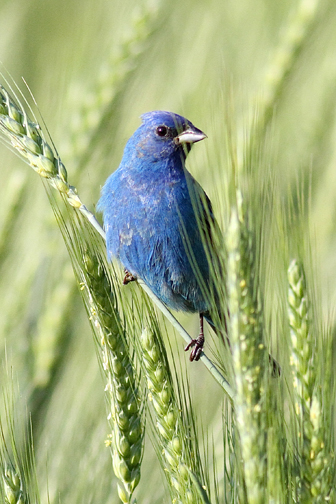
The canary yellow of goldfinches in summer may be more eye-catching, but the male Indigo Bunting is an attention grabber, far more than the female who might pass as a brown sparrow unless you noticed her white throat.
It takes its name from the blue pigment extracted from plants for dyeing clothes (think of denim jeans), although the blue feathers are unpigmented. We might call it a structural color because the hue is created when light is refracted by passing through keratinous filaments filled with air pockets.
Other species of buntings have been recorded in Virginia, although uncommon or rare. The euphonious word ‘bunting’, also used for a flag, has been around for such a long time its origin is lost.








 Roger musing about Peace with Nature
I love this one – such an incredible blue – almost too blue to be true! As an all-over colour it’s not all that often seen, though there are a few exceptions with patches and flashes of intense blue in the parrot world, as well as some kingfishers and our little blue splendid or fairy wrens here in Australia.
I wonder why the blue – eye-catching as you say, but how or why did it evolve this particular colour?
LikeLike